Fire safety for seniors rests on four habits: working smoke alarms, safer cooking and heating, a practiced escape plan, and someone who checks in. We wrote this guide for adult children and family caregivers who want a room-by-room routine that keeps an aging parent safer at home.
Why fire safety for seniors matters more after age 65
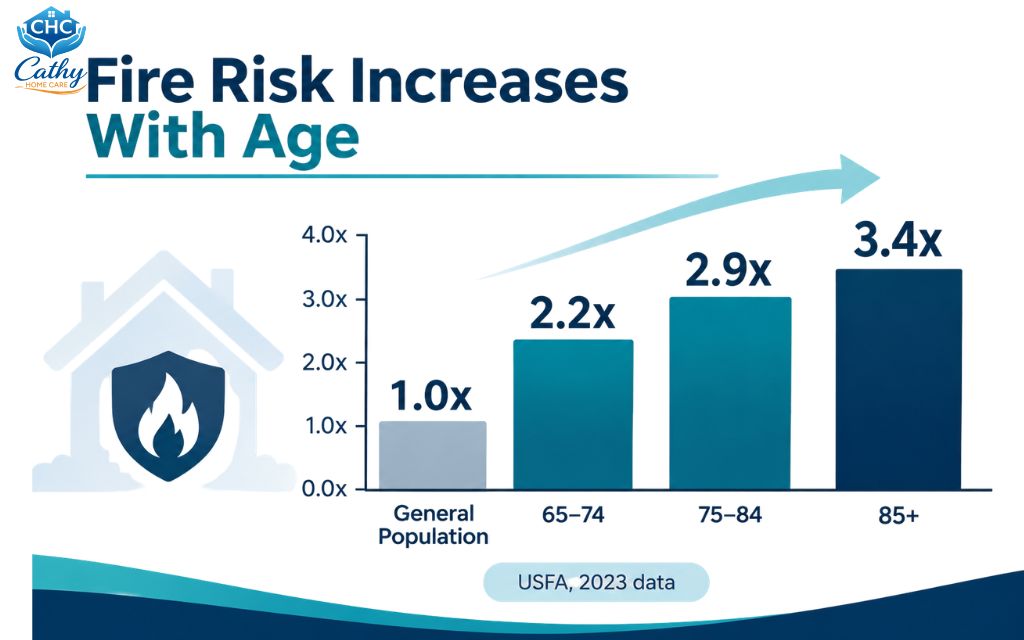
Fire safety for seniors matters because adults 65 and older are 2.5 times more likely to die in a fire than the general U.S. population. The U.S. Fire Administration (USFA) counted 1,955 fire deaths in this age group in 2023.
Risk climbs with each decade of life. Adults 85 and older carry the highest relative risk, at 3.4 times the national rate.
| Age group | Fire deaths (2023) | Deaths per million | Relative risk |
| 65 and older | 1,955 | 33.0 | 2.5x |
| 65 to 74 | 989 | 28.5 | 2.2x |
| 75 to 84 | 688 | 37.5 | 2.9x |
| 85 and older | 277 | 44.7 | 3.4x |
Four age-related changes explain most of this gap:
- Hearing loss muffles a standard smoke alarm, especially during deep sleep.
- Slower mobility stretches the time needed to reach an exit with a walker, cane, or wheelchair.
- Drowsy medications dull reaction time. The Texas Department of Insurance advises older adults to skip cooking after taking medicine that causes drowsiness.
- Memory changes lead to a forgotten burner, a heater left running, or a cigarette set down on a sofa.
The fire death rate for adults 65 and older rose about 26% from 2014 to 2023. That trend makes fire prevention a core part of every conversation about elderly safety at home.
Smoke alarms that every senior can hear and act on
Working smoke alarms cut the risk of dying in a home fire by 60%, according to the National Fire Protection Association (NFPA) 2024 report. An alarm protects an older adult only when that person hears it and has time to respond.
Where to install smoke alarms
Install smoke alarms on every level of the home, inside each bedroom, and outside each sleeping area. Add a carbon monoxide (CO) alarm on each level when the home has gas appliances, a fireplace, or an attached garage.
How often to test and replace them
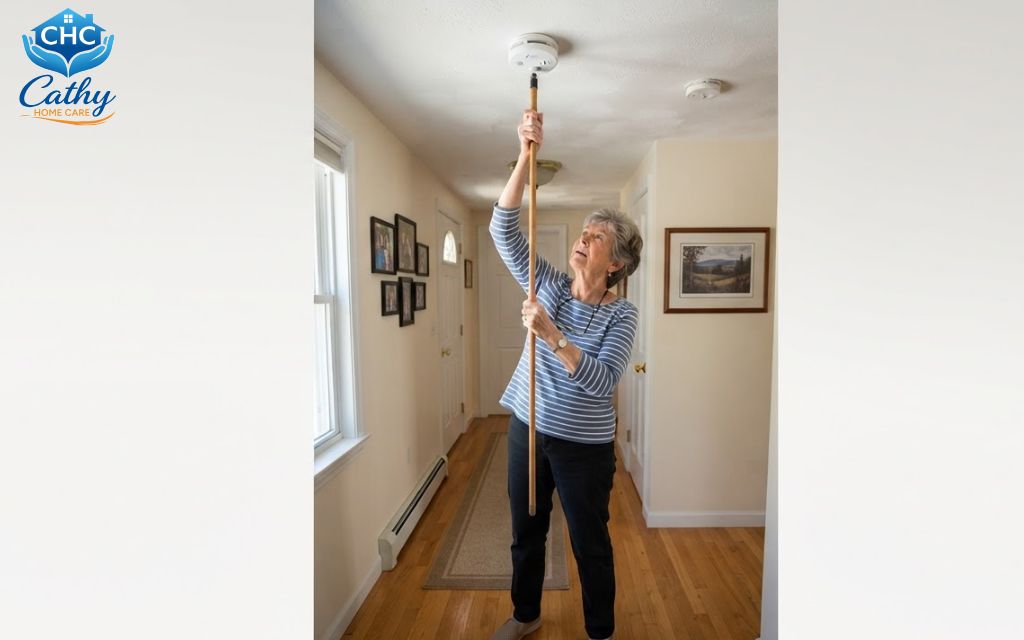
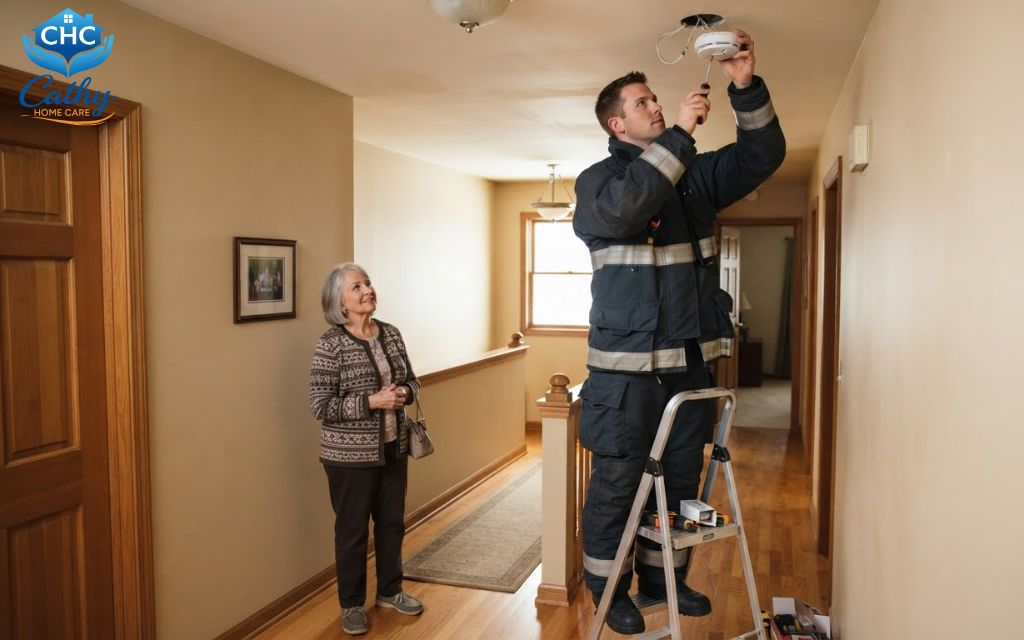
Press the test button once a month and vacuum the alarm vents once a year. Replace the whole alarm after 10 years. The Houston Fire Department recommends alarms with a sealed 10-year lithium battery, which removes the need to climb a ladder for battery swaps.
Interconnected alarms and remote alerts
Interconnected alarms sound together, so smoke in the kitchen triggers the alarm beside the bed. This link matters in larger homes, where a closed bedroom door blocks sound from a distant hallway. Smart alarms can also send a phone alert to an adult child who lives across town.
Alarm options for hearing loss
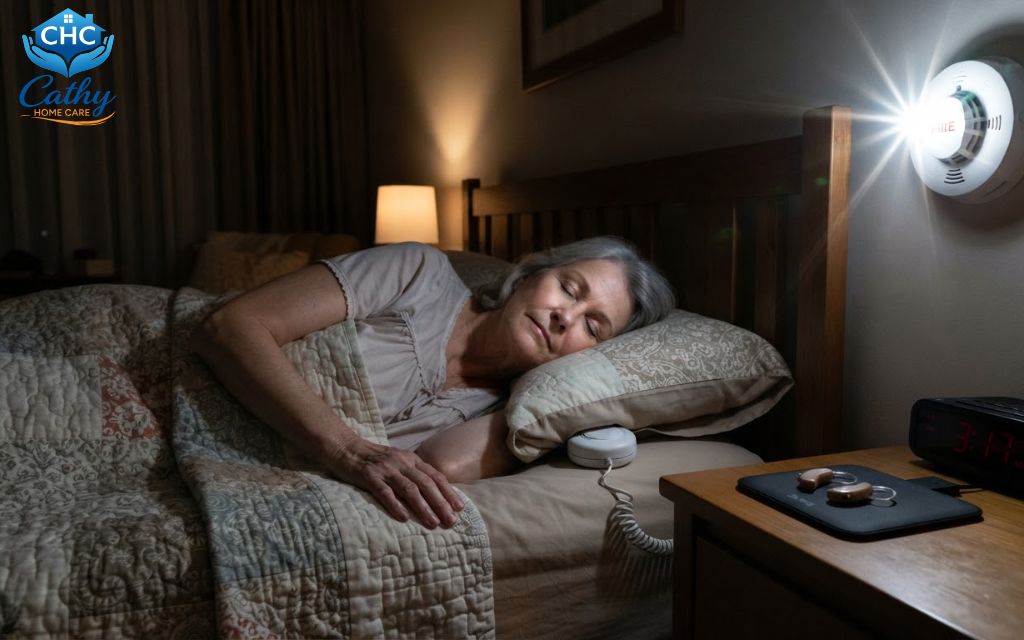
Strobe-light alarms and bed shakers wake people who sleep without hearing aids. The USFA recommends these devices for anyone who has trouble hearing a standard alarm.
Fire prevention for seniors, room by room
Most home fires involving older adults start with 5 daily activities: cooking, heating, electrical use, smoking, and open flames. Cooking causes the most fire injuries among adults over 65, according to Massachusetts fire officials.
Kitchen
Stay in the kitchen while frying, grilling, or boiling food, and set a timer for anything in the oven. Wear short or fitted sleeves. Keep dish towels, oven mitts, and paper packaging at least 3 feet (0.9 m) from the stovetop.
Smother a pan fire with a lid and turn off the burner. Water spreads a grease fire, so keep it away from the pan.
Heating
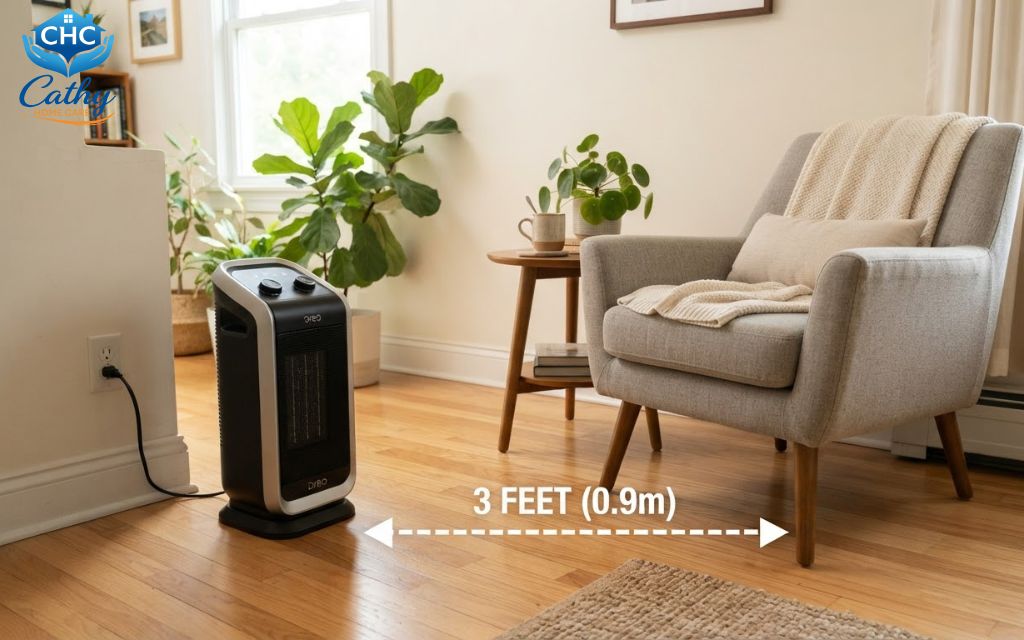
Give space heaters 3 feet (0.9 m) of clear space from bedding, curtains, and furniture. Plug each heater straight into a wall outlet, choose a model with automatic shut-off, and turn it off before leaving the room or going to sleep. Schedule a furnace and chimney check once a year.
Electrical
Replace any cord that is frayed, cracked, or warm to the touch. Run cords along walls, not under rugs, and plug only one heat-producing appliance into each outlet. Use extension cords for short-term needs only, and retire electric blankets that are more than 10 years old.
Smoking, candles, and open flames
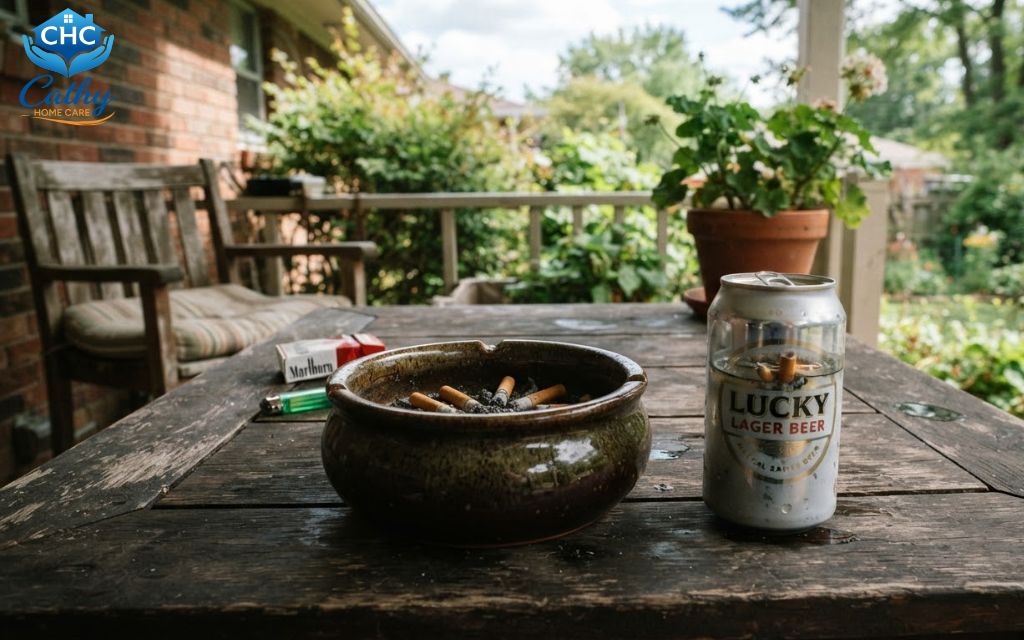
Smoking materials start the most fatal fires among older adults, per state fire officials. Smoke outdoors, use deep and sturdy ashtrays, and soak butts in water before disposal. Swap wax candles for battery-powered flameless candles.
Bathroom and scald prevention
Set the water heater to 120°F (49°C) or lower, and test bath water before stepping in. Thinner skin burns faster, so a lower setting protects against scalds.
Home oxygen fire safety: 5 rules for families
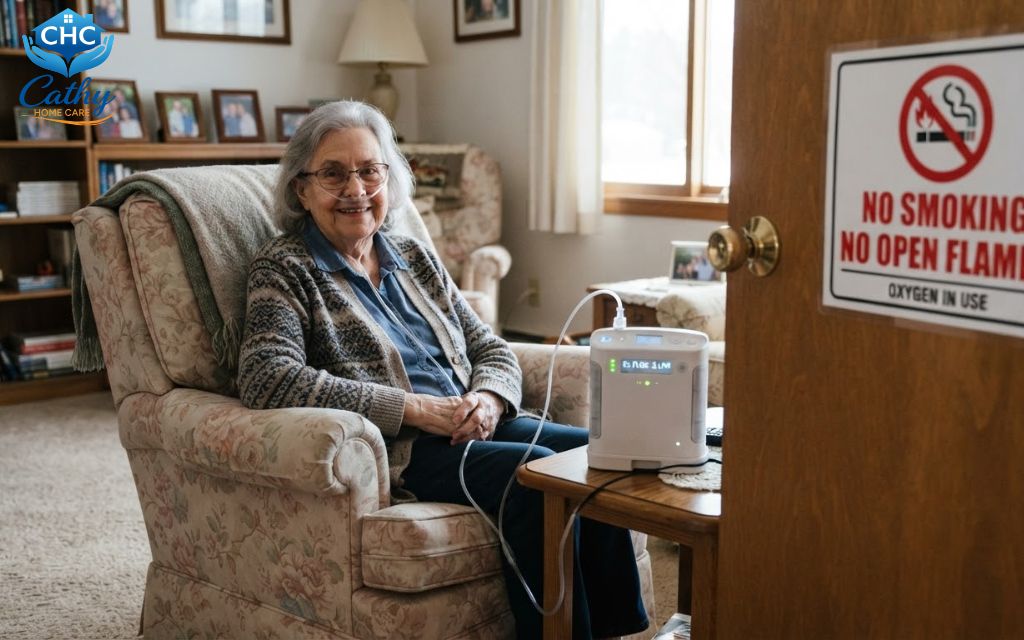
Home oxygen does not burn, but it makes clothing, hair, bedding, and fabric furniture ignite faster and burn hotter. NFPA identifies smoking materials as the leading heat source in medical oxygen fires. Follow these 5 rules:
- Ban smoking in any home where oxygen is in use, and post “No Smoking” and “No Open Flames” signs inside and outside.
- Keep 5 feet (1.5 m) between oxygen equipment and heat sources, open flames, or electrical devices such as heaters and hair dryers.
- Avoid gas cooking while oxygen flows, as the American Lung Association advises.
- Store oil-based lotions, petroleum jelly, and aerosol sprays away from the oxygen user.
- Follow the supplier’s instructions and never change the prescribed flow rate.
Ask the oxygen supplier or prescribing doctor about any extra safety devices for your parent’s equipment.
Fire safety for seniors with dementia or memory loss
Dementia raises fire risk because a person may forget a pan on the stove, misuse a space heater, or lose the sense of danger around heat. The Alzheimer’s Association advises families to adjust the kitchen and living areas as abilities change.
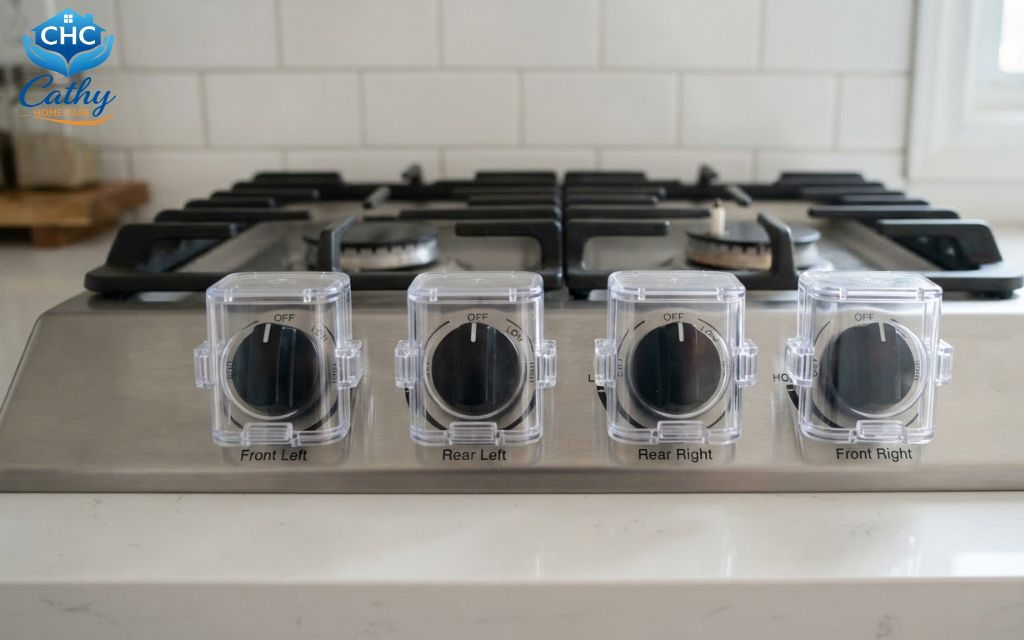
- Stove controls: install a hidden gas valve or circuit breaker, add knob covers, or use an automatic stove shut-off device.
- Lighters and matches: store them in a locked drawer or out of sight.
- Shared cooking: prepare meals together rather than leaving the person to cook alone.
- Night lighting: place plug-in night lights along the route from the bedroom to the exit.
Review these changes with your parent’s doctor, because safety needs shift as dementia progresses.
How to build an escape plan around a senior’s real abilities
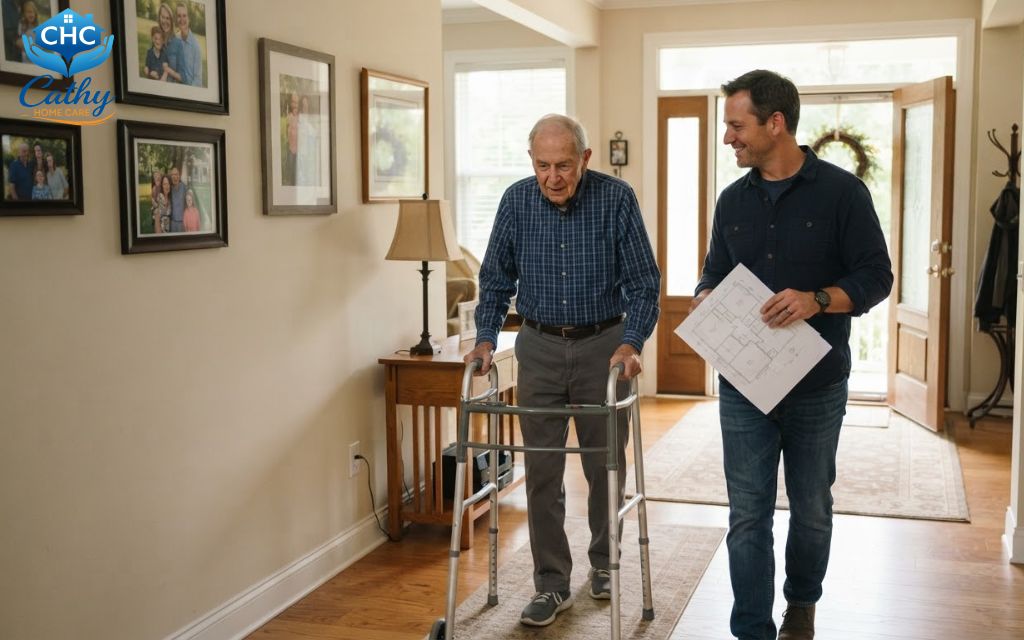
To build an escape plan for an older adult, start with what that person can do at 2 a.m., not at noon. Plan two ways out of every room, and practice the route at least twice a year. People may have less than 2 minutes to get out once an alarm sounds.
- Move the bedroom to the ground floor if stairs slow your parents down.
- Measure each exit door to confirm a walker or wheelchair fits through.
- Place glasses, hearing aids, a phone, and the mobility aid beside the bed every night.
- Practice opening window locks and releasing any security bars.
- Assign a helper and a backup, such as a neighbor, to assist during an evacuation.
- Choose an outdoor meeting spot, such as the mailbox or a neighbor’s driveway.
A written plan works best when every household member knows it. Tape a simple floor plan with both exits marked inside a kitchen cabinet door.
Update the plan after a hospital stay, a new medication, or any change in mobility. In apartment buildings, use the stairs instead of the elevator, and tell the building manager about your parent’s needs.
What to do if a fire starts at home
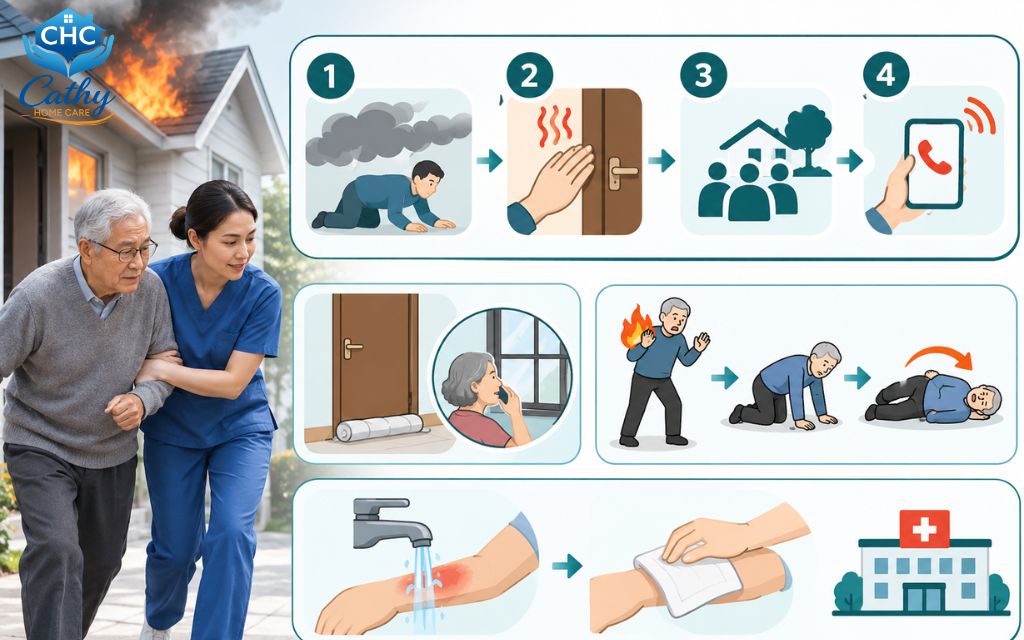
If a fire starts, get out first, stay out, and call 911 from outside. Leave belongings behind, and close doors as you go to slow the spread of smoke.
Follow these 4 steps to leave the home safely:
- Stay low under smoke: Cleaner air sits near the floor, so bend down or crawl as you move toward the exit.
- Check each door before you open it: Touch the door with the back of your hand, and use another exit if the door feels hot.
- Go to your outdoor meeting spot: Once outside, stay out and never go back in for pets or belongings.
- Call 911 from outside: Give the address and tell the dispatcher if anyone is still inside.
If you are trapped in a room, close the door, block the gaps under it with towels, and call 911. Stay by a window and signal for help so firefighters can find you.
If clothing catches fire, stop, drop, and roll until the flames go out. A senior who cannot drop to the floor because of arthritis or limited mobility should smother the flames with a blanket, coat, or rug instead.
If someone gets burned, run cool water over the area and cover it with a clean, dry cloth. Skip butter, grease, and ointments, and get medical care.
How family caregivers and in-home aides support fire safety
Family caregivers and in-home aides support fire safety by turning one-time fixes into daily habits. The USFA Fire-Safe Seniors Program rests on 4 elements: home assessment, smoke alarm installation, education, and follow-up.
A simple caregiver routine covers 6 checks:
- Test smoke alarms on the first day of each month.
- Check the stove and oven after each meal.
- Switch off space heaters at bedtime.
- Empty ashtrays into water before the evening.
- Clear walkways of clutter, cords, and laundry.
- Revise the escape plan after any health change.
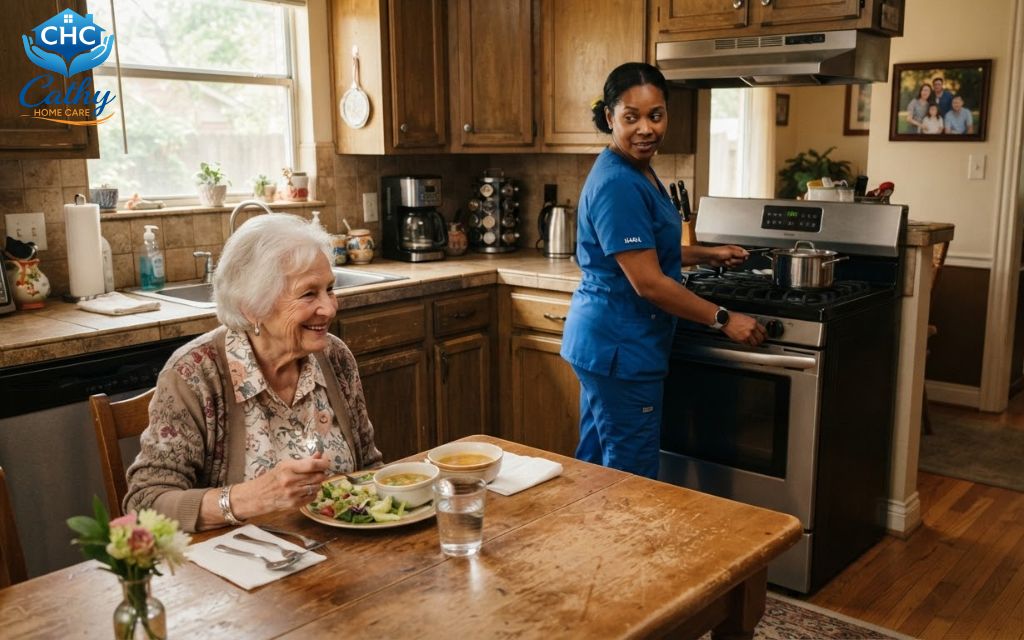
When we talk with Houston families, cooking and nighttime routines come up often. An aide who helps with meal preparation and mobility through personal assistance services adds a second set of eyes on these safety habits.
Fire safety resources for seniors in Houston and Texas
Houston seniors can request a free 10-year smoke alarm through the Houston Fire Department (HFD) Get Alarmed Houston! program. Supply is limited, so confirm details before you apply.
- Get Alarmed Houston! serves City of Houston homeowners who are low-income, physically challenged, or seniors on a fixed income. Call HFD Public Affairs at 832-394-6633.
- Renters rely on the landlord for a working smoke alarm. Call the HFD Fire Marshal’s Office at 832-394-6900 if the landlord has not installed one.
- Tenants with hearing loss can ask a landlord for an alarm that alerts a hearing-impaired person, under Texas Property Code Section 92.255.
- Visual fire alarms for deaf and hard-of-hearing residents are available through HFD and the Mayor’s Office for People with Disabilities.
The Texas Department of Insurance also publishes Steps to Safety tips for older adults. Call 911 for any active fire.
Fire safety at home vs. assisted living
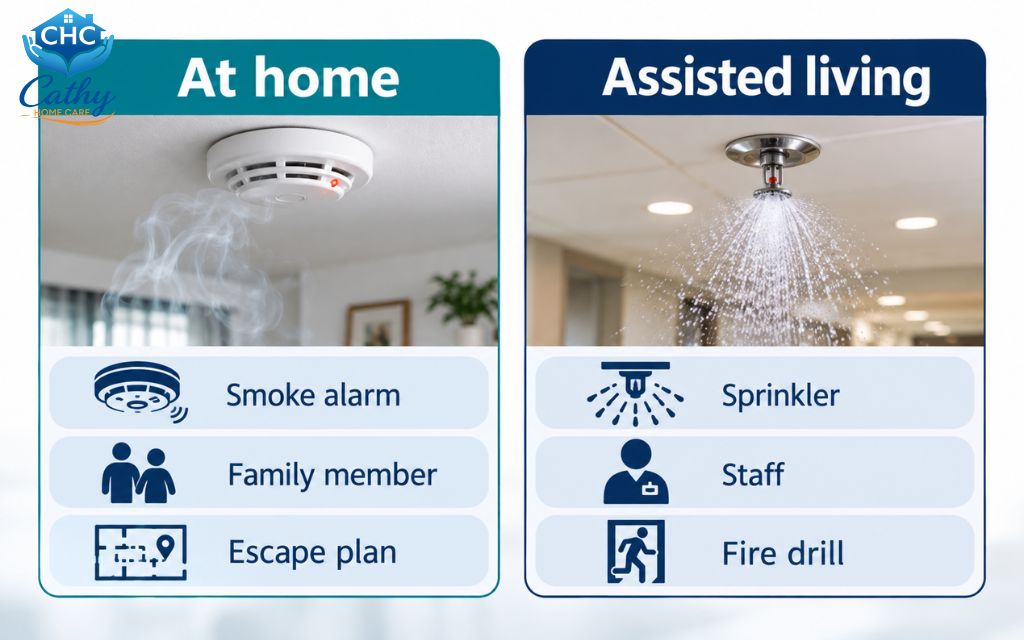
Assisted living fire safety depends on building systems and staff, such as sprinklers, fire alarm systems, and scheduled drills. State rules and fire codes set those duties, and requirements differ from state to state. At home, the family carries the same duties.
Families who compare care settings can ask a facility 4 questions: Does every room have sprinklers? How often do staff run fire drills? How many staff work overnight? How do staff evacuate residents who use wheelchairs or oxygen?
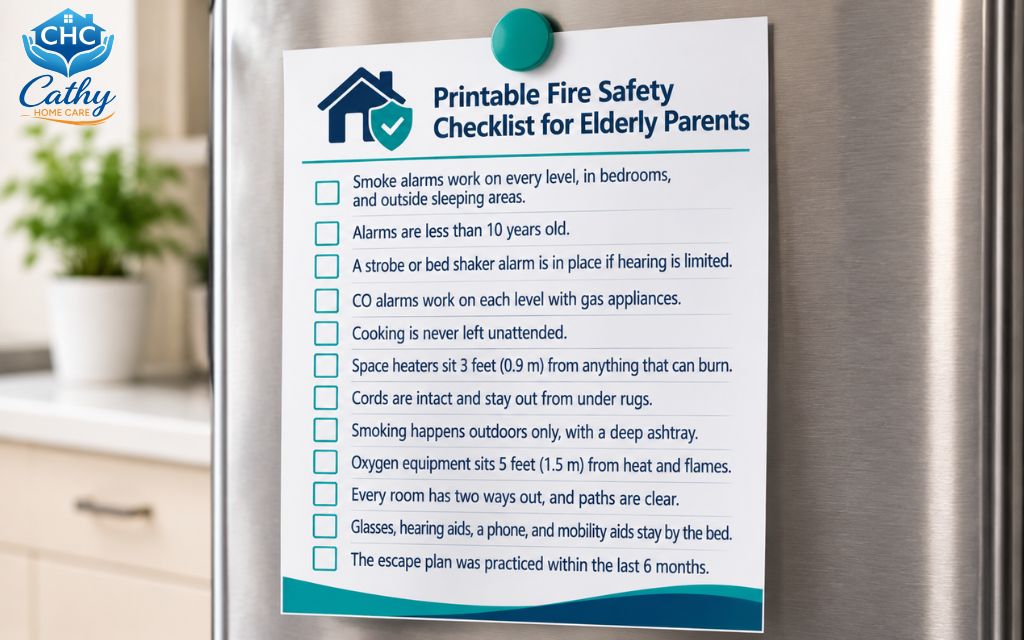
Printable fire safety checklist for elderly parents
This checklist turns the guide into 12 quick checks. Print it and review it with your parents once a month.
- Smoke alarms work on every level, in bedrooms, and outside sleeping areas.
- Alarms are less than 10 years old.
- A strobe or bed shaker alarm is in place if hearing is limited.
- CO alarms work on each level with gas appliances.
- Cooking is never left unattended.
- Space heaters sit 3 feet (0.9 m) from anything that can burn.
- Cords are intact and stay out from under rugs.
- Smoking happens outdoors only, with a deep ashtray.
- Oxygen equipment sits 5 feet (1.5 m) from heat and flames.
- Every room has two ways out, and paths are clear.
- Glasses, hearing aids, a phone, and mobility aids stay by the bed.
- The escape plan was practiced within the last 6 months.
How Cathy Home Care supports safer living at home in Houston
Cathy Home Care is a Houston home care agency that has served local families since 2002. Our Home Health Aides (HHAs) and personal care attendants help clients with bathing, dressing, meal preparation, mobility, and light housekeeping, so daily routines include steady safety checks.
Our HHAs work under nurse supervision and complete the 75-hour training that Texas requires. We also help eligible clients understand programs such as Primary Home Care (PHC) and Personal Care Services (PCS).
Working alarms, safer habits, and a practiced plan form the base of fire safety for seniors. To talk about in-home support for your parents, call (713) 779-8998 or contact our team.

FAQs about fire safety for seniors
How often should seniors test smoke alarms?
Seniors should test smoke alarms once a month and replace each alarm after 10 years. Ask a family member or caregiver to press the test button if reaching the ceiling requires a ladder.
What smoke alarm works for a senior with hearing loss?
A strobe-light alarm or a bed shaker linked to the smoke alarm works for seniors with hearing loss. The USFA recommends these devices for anyone who cannot hear a standard alarm.
Is it safe for an elderly person to use a space heater?
Yes, if the heater has 3 feet (0.9 m) of clearance, plugs straight into the wall, and shuts off when the person leaves or sleeps. Choose a model with automatic tip-over shut-off.
Can a person on home oxygen cook on a gas stove?
No, the American Lung Association advises against using oxygen while cooking with gas. Keep oxygen equipment 5 feet (1.5 m) from any flame or heat source.
Can I get a free smoke alarm in Houston?
Yes, qualifying City of Houston homeowners can request one through HFD’s Get Alarmed Houston! program by calling 832-394-6633. Renters should ask their landlord first.
Should a person with dementia still cook?
A person with dementia can cook with supervision while the skill remains safe. Stove shut-off devices and shared meal preparation keep cooking part of daily life and support fire safety for seniors.