Home routines for seniors give each day a steady rhythm of sleep, meals, personal care, movement, and rest. This guide is for adult children, family caregivers, and older adults who want to stay independent at home. You will get a flexible sample schedule, CDC activity targets, and clear signs that extra help may be needed.
Why home routines for seniors matter
Home routines for seniors matter because predictable days reduce daily decisions, protect sleep, and keep meals, medicines, and movement on track. Structure also helps an older adult stay independent at home longer.
Routine, mood, sleep, and memory
Regular daily patterns are linked to better mood and sharper thinking in later life. A 2022 University of Pittsburgh study in JAMA Psychiatry tracked 1,800 adults over 65 with wrist activity monitors for 7 days.
The 37.6% who rose before 7 a.m., stayed active about 15 hours a day, and kept a steady pattern reported fewer depression symptoms and scored higher on cognitive tests. The study shows a link, not proof of cause, since low mood can also disrupt a routine.
A routine makes help easier to plan
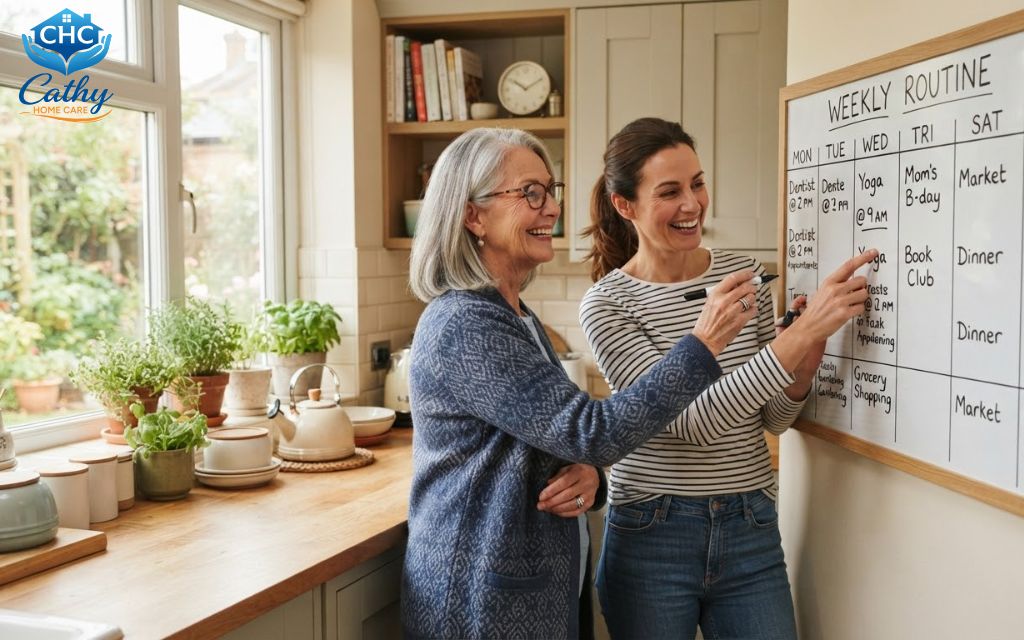
A written routine shows family members where a parent needs support and when. If bathing happens at 9 a.m. and lunch at noon, siblings, neighbors, and caregivers can cover the same time slots without confusion.
The schedule also exposes gaps early, such as skipped lunches, late bedtimes, or a missed evening medicine.
7 building blocks of a healthy daily routine
A healthy daily routine for an older adult combines 7 building blocks: sleep timing, personal care, meals and hydration, medication reminders, movement, connection, and rest. The table shows where each block may need support.
| Building block | Why it matters | Simple habit | Where support may help |
| Wake time and bedtime | Anchors the sleep cycle | Same wake time, even on weekends | Reminders and safe help out of bed |
| Personal care | Protects hygiene, skin, and dignity | Wash, dress, and groom before breakfast | Help with bathing, dressing, and grooming |
| Meals and hydration | Keeps energy steady | 3 meals at set times, water with each | Meal preparation and grocery lists |
| Medication reminders | Keeps prescriptions on schedule | Weekly pill organizer tied to meals | Verbal reminders; dosing stays with the doctor |
| Movement | Builds strength and balance | Short sessions across the day | Standby support during walks |
| Connection | Eases loneliness | 1 call, visit, or group activity daily | Companionship and conversation |
| Rest | Prevents afternoon fatigue | A short quiet break after lunch | Help with transfers to a bed or recliner |
Most families can manage sleep timing, meals, and connection on their own. Personal care and mobility usually need trained hands first, because bathing and transfers combine wet floors, lifting, and balance. Professionals call these tasks activities of daily living (ADLs).
A sample daily routine for seniors at home
This sample daily routine for seniors uses time blocks instead of fixed hours, so it bends to energy levels, appointments, and doctor’s instructions. Treat it as a template and change 1 block at a time.
Morning routine (wake to 11 a.m.)
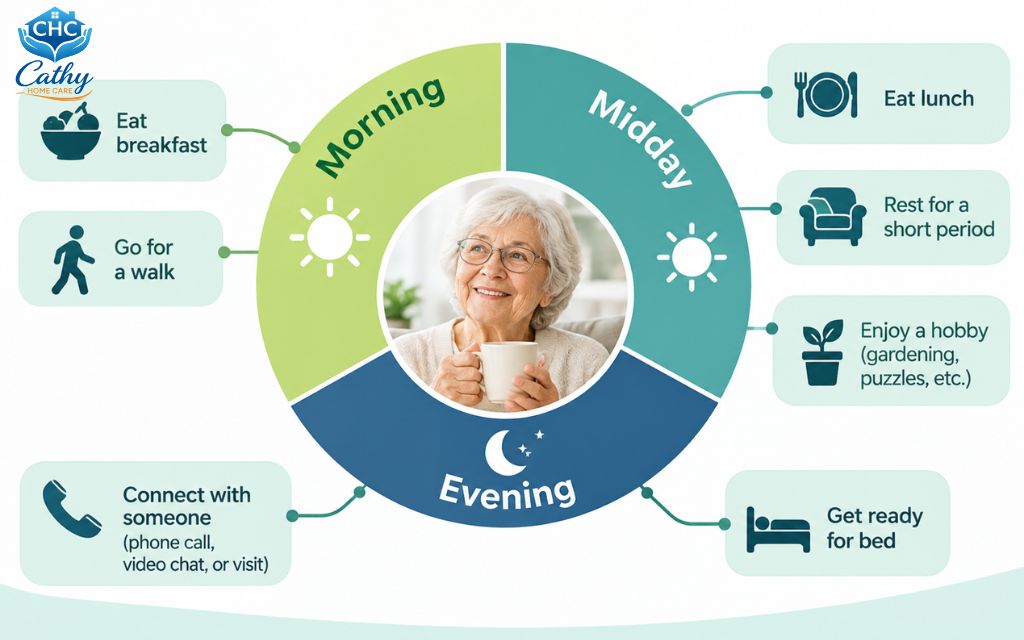
A morning routine sets the pace for the whole day:
- Wake at the same time daily and sit on the edge of the bed for a minute before standing.
- Wash, use the bathroom, and dress in daytime clothes to mark the start of the day.
- Eat breakfast with a glass of water and take morning medicines as prescribed.
- Move for 10 to 15 minutes with a short walk or the chair exercises below.
In Houston, mornings are the safer window for outdoor walks, since summer afternoons often top 90°F (32°C).
Midday and afternoon routine (11 a.m. to 5 p.m.)
The midday block balances activity with recovery:
- Eat lunch at a set time.
- Rest in a chair or bed for a short period.
- Spend time on a hobby, such as gardening, puzzles, or music.
- Connect with someone by phone call, video chat, or visit.
Evening routine (5 p.m. to bedtime)
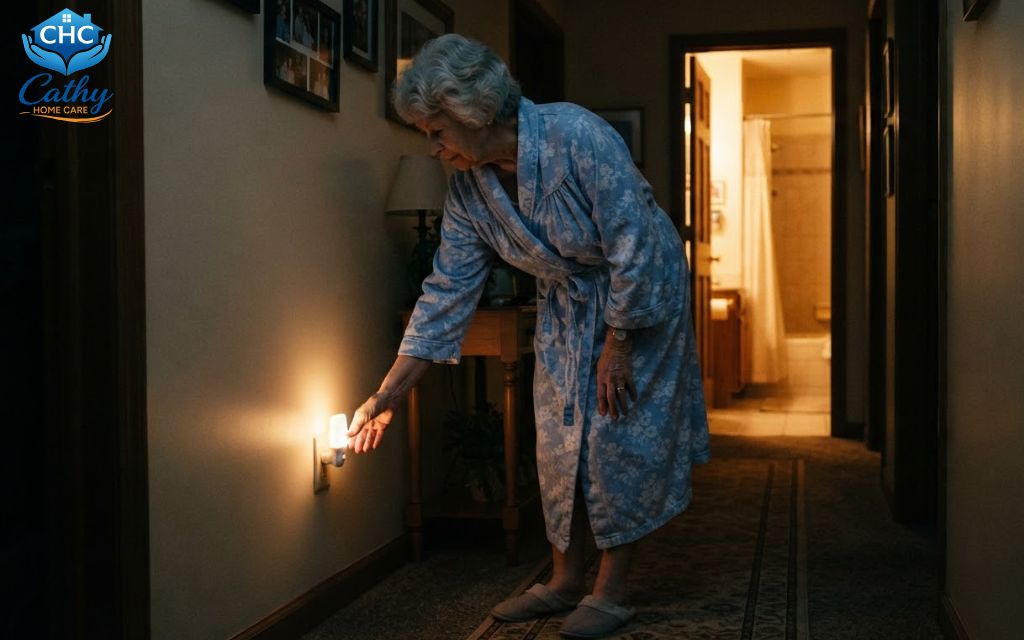
An evening routine prepares the body and the home for a safe night:
- Eat an early, lighter dinner.
- Lay out clothes and items for the next morning.
- Dim the lights and turn off screens 30 to 60 minutes before bed.
- Check that night-lights work along the path to the bathroom.
- Go to bed at the same time each night.
A gentler version for late risers and low-energy days
A late riser can shift every block 1 to 2 hours later and keep the same order. On low-energy days, keep 3 anchors: meals, medicines, and bedtime. Shorten everything else and return to the full plan the next day.
How to add safe movement to the daily routine
To add safe movement to the daily routine, spread short sessions across the morning and afternoon and use a chair, wall, or counter for support.
How much activity older adults need
The CDC recommends 3 types of activity for adults 65 and older:
- Aerobic activity: at least 150 minutes per week of moderate effort, such as brisk walking, which equals 30 minutes on 5 days.
- Muscle-strengthening activity: at least 2 days per week.
- Balance activity: regular practice, such as standing on one foot near a counter.
Adults with chronic conditions should stay as active as their abilities allow. According to the CDC, some physical activity is better than none.
More than 1 in 4 adults aged 65 and older fall each year, and fewer than half tell their doctor. One fall doubles the chance of falling again. (CDC, 2026)
5 gentle moves seniors can do at home
These 5 moves build leg strength, balance, and endurance with basic household support:
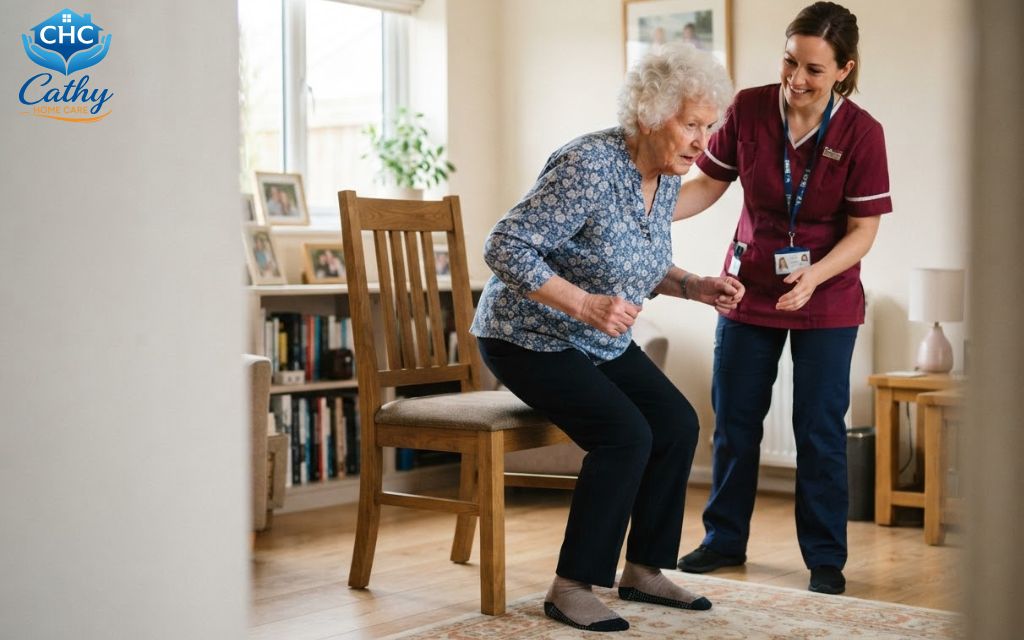
- Sit-to-stand: Sit near the front of a sturdy chair with feet flat. Stand using your legs, then sit back down slowly.
- Seated marching: Sit tall and lift one knee, then the other, for 1 to 2 minutes.
- Heel raises: Hold the back of a chair, rise onto your toes, and lower slowly.
- Wall push-ups: Stand an arm’s length (about 2 feet, or 60 cm) from a wall. Bend your elbows toward it and push back.
- Supported tandem stance: Hold a counter and place one heel in front of the other toes. Hold up to 30 seconds, then switch feet.
Cleveland Clinic physical therapy guidance suggests starting with 1 set of 10 repetitions and building to 2 or 3 sets as strength improves.
Safety rules before every session
Safe home exercise depends on the right setup and clear stop signals:
- Use a stable chair with a back and a firm seat. Skip couches, deep armchairs, and chairs on wheels.
- Clear rugs, cords, and clutter from a 6-foot (1.8-meter) space around you.
- Stop if you feel joint pain, chest pain, dizziness, or shortness of breath.
- Ask a doctor or physical therapist before starting, especially after surgery, a fall, or a new diagnosis.
How to adjust the routine for 3 common needs
To adjust a routine, match each block to the person’s current health. Three situations call for the biggest changes: memory loss, recovery after a hospital stay, and limited mobility.
Memory loss or dementia
A dementia-friendly routine places harder tasks, such as bathing or appointments, at the time of day the person functions best. The Alzheimer’s Association recommends consistent wake times and bedtimes to ease sleep problems and late-day confusion, called sundowning.
Plan frequent rest breaks. Switch activities when the person seems bored, distracted, or irritable.
After a hospital stay
After a hospital stay, the discharge instructions set the routine. Build the day around follow-up visits, new medicines, and activity limits from the care team.
Skilled services, such as wound care, injections, and physical therapy, come from licensed nurses and therapists through a home health agency.

Limited mobility or chronic conditions
For limited mobility, move exercises to a chair and allow extra time for each transfer. Keep daily items within reach, add a shower chair, and schedule bathing when a helper is present.
8 signs a senior’s routine is slipping
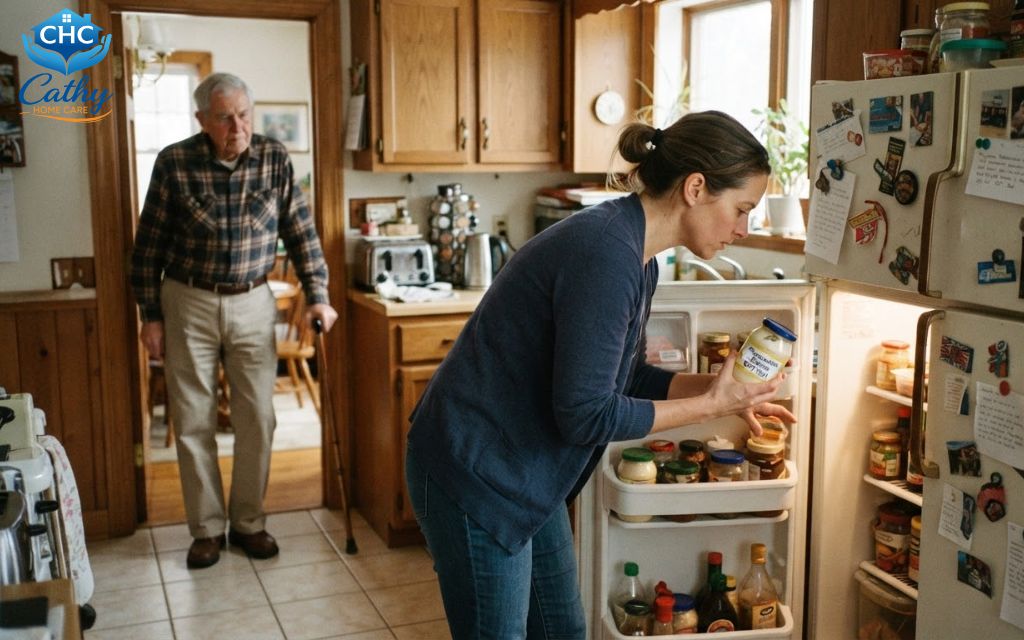
These 8 signs suggest an older adult may need more support at home:
- Skipped meals or spoiled food in the refrigerator
- Missed or doubled medicine doses
- The same clothes worn several days in a row
- Unwashed hair, body odor, or poor oral hygiene
- Unopened mail and unpaid bills
- A cluttered or unsafe home
- Days and nights turned around
- Fewer calls, visits, and outings
Talk with the person’s doctor about sudden changes, since a new illness or medicine can cause them.
How families can help without taking over
Families help most when they plan the routine with the older adult, not for them. These 5 steps protect both safety and independence:
- Ask about preferred wake times, meals, and hobbies before writing anything down.
- Post the schedule on a large-print calendar or whiteboard in the kitchen.
- Split tasks among relatives, such as weekly groceries, Sunday calls, and appointment rides.
- Offer choices, such as a morning or evening shower, to keep decisions in the senior’s hands.
- Schedule time off for the main caregiver, because burnout weakens every routine.

How in-home care supports daily routines
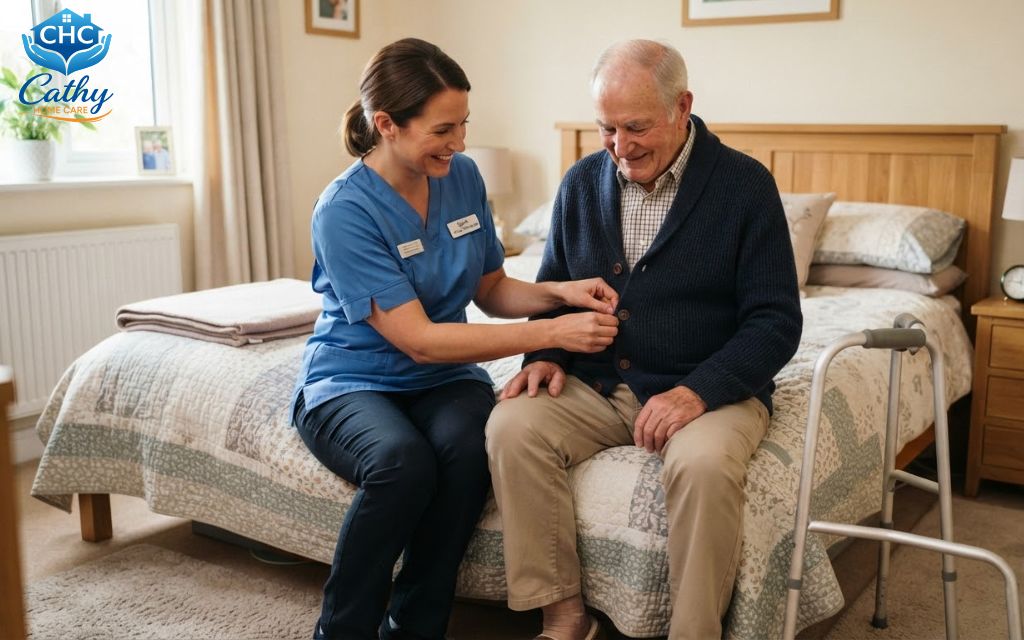
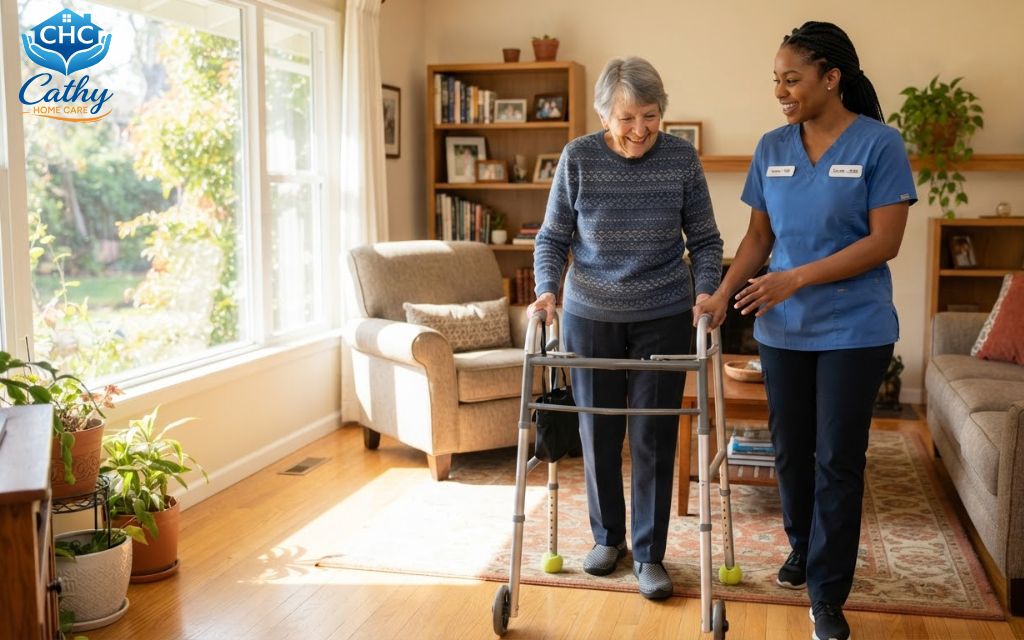
In-home care supports a daily routine by placing a trained caregiver in the time slots where hands-on help is needed. Common tasks include bathing, dressing, grooming, mobility, meal preparation, and light housekeeping.
Personal assistance and Primary Home Care in Texas
Personal Assistance Services (PAS) cover non-medical help with daily living. Texas Health and Human Services describes Primary Home Care (PHC) as a medically related personal care service for eligible people who need help with daily activities because of health problems.
A practitioner must document the medical need. Only licensed Home and Community Support Services Agencies (HCSSAs) with an HHSC contract can provide PHC, and eligibility depends on an assessment.
What non-medical home care covers
Personal care attendants and home health aides focus on daily living tasks and routine support. Skilled care, such as injections, wound care, and therapy, stays with licensed nurses and therapists.
Cathy Home Care: daily routine support in Houston since 2002
Cathy Home Care has helped seniors and adults with disabilities in Houston keep daily routines at home since 2002. We provide Personal Assistance Services, Primary Home Care, and home health aide support in Houston, Sugar Land, and nearby communities.
Our home health aides work under nurse supervision and complete the 75 hours of training Texas requires. Our team speaks English, Vietnamese, Spanish, and Chinese, so care plans respect each family’s language and culture. For skilled nursing and therapy, we coordinate with trusted partners.

A steady day built on sleep, meals, movement, and connection keeps an older adult safer and more independent. Call (713) 779-8998 or check eligibility online to see how our team can support home routines for seniors in your family.
FAQs about home routines for seniors
What should a daily routine for seniors include?
A daily routine for seniors should include a steady wake time and bedtime, personal care, 3 regular meals with fluids, medication reminders, movement, social contact, and rest
How much exercise should seniors get each day?
CDC guidance works out to about 30 minutes of moderate activity on 5 days a week, plus strength work on 2 days and regular balance practice.
Why is routine important for people with dementia?
Routine reduces daily decisions and can ease agitation, sleep problems, and sundowning.
How can I help an elderly parent stick to a routine?
Build the routine together, post it where it is easy to see, and pair new habits with old ones, such as heel raises while the coffee brews.
When should home routines for seniors include in-home help?
Home routines for seniors should include in-home help when meals, hygiene, medicines, or home safety start to slip, or after a fall or hospital stay.
Does Texas Medicaid pay for help with daily activities?
Texas Medicaid programs, such as Primary Home Care, may cover personal care for eligible adults after an assessment and a practitioner’s statement of need. Ask your health plan or a licensed agency to confirm eligibility.