
Taking care of elderly parents at home works best with a written plan, shared tasks, and early outside support. This guide helps Texas families assess needs, make the home safer, protect their own health, and find in-home care and payment options. Use it to decide what your family can handle and when to bring in help.
How to start taking care of elderly parents at home
To start taking care of elderly parents at home, learn your parent’s health needs, discuss their wishes, and write a care plan. Then make the home safer, divide the tasks, and arrange backup help before an emergency forces a rushed choice.
Family caregiving covers 5 early steps, and the order matters:
- Assess your parent’s health, daily abilities, and finances.
- Discuss what your parents want, including where they want to live.
- Fix the highest fall risks in the home.
- Assign daily, weekly, and monthly tasks to named people.
- Contact local aging services and home care providers early.
Understand your parent’s health and daily needs
A needs assessment shows where your parents need help and where they stay independent. Review 2 groups of tasks. Activities of daily living (ADLs) include bathing, dressing, toileting, eating, and moving safely. Instrumental activities of daily living (IADLs) include cooking, shopping, paying bills, managing medication, and driving.
Add memory, mood, and social contact to your notes. Bring those notes to your parent’s next doctor visit. You generally need written permission to receive your parent’s medical information, unless your parent consents in person.
Talk with your parent, not around them
Your parents should make decisions about their own life, as long as they can make those decisions. Choose a calm moment, name one specific concern, and ask what they want. “I noticed the stairs are getting harder. What would help?” lands better than “You can’t live alone.”
Some parents refuse help to protect their independence. Offer one small change first, such as a grocery delivery, a housekeeper, or a short caregiver visit. A doctor or trusted friend can also raise the topic.

Signs your parent needs more help at home
Your parent likely needs more help when daily routines, safety, or health management start to slip. One missed bill rarely signals a crisis. A pattern across several weeks deserves action. This table links 6 common signs to the next step.
| Sign | What it may point to | Next step |
| Skipped meals or spoiled food | Trouble shopping or cooking | Set up meal delivery or meal preparation help |
| Missed or doubled medication | Memory or organization problems | Ask the doctor or pharmacist for a simpler routine |
| Unpaid bills or unopened mail | Memory change or financial stress | Review bills together and mention it to the doctor |
| Poor hygiene or repeated clothing | Difficulty bathing or dressing | Consider personal care help |
| Falls or unsteady walking | Balance, vision, or medication issues | Tell the doctor right away |
| Withdrawal from friends or hobbies | Low mood, isolation, or transport gaps | Ask the doctor and plan regular social contact |
Call 911 for a fall with serious injury, sudden confusion, or sudden weakness. Those events need emergency care, not a home care plan.

Make the home safer
Fall prevention is the first safety job in most homes. Reviewing CDC data, we found that over 1 in 4 adults age 65 and older fall each year, and fewer than half tell their doctor. One fall also doubles the chance of another.
The CDC home checklist points to these 5 areas:
- Floors: Clear walking paths, remove throw rugs, and tape cords against the wall.
- Stairs: Add lights at the top and bottom, and install full-length handrails on both sides.
- Kitchen: Store daily items at waist height, and replace chairs with a step stool that has a grab bar.
- Bathroom: Add non-slip mats and install grab bars next to the toilet and in the tub.
- Bedroom: Place a lamp within reach of the bed and add nightlights along the bathroom path.
An occupational therapist can also assess the home and suggest changes for your parent’s specific limits. Ask the doctor for a referral.

Build a daily care plan that works
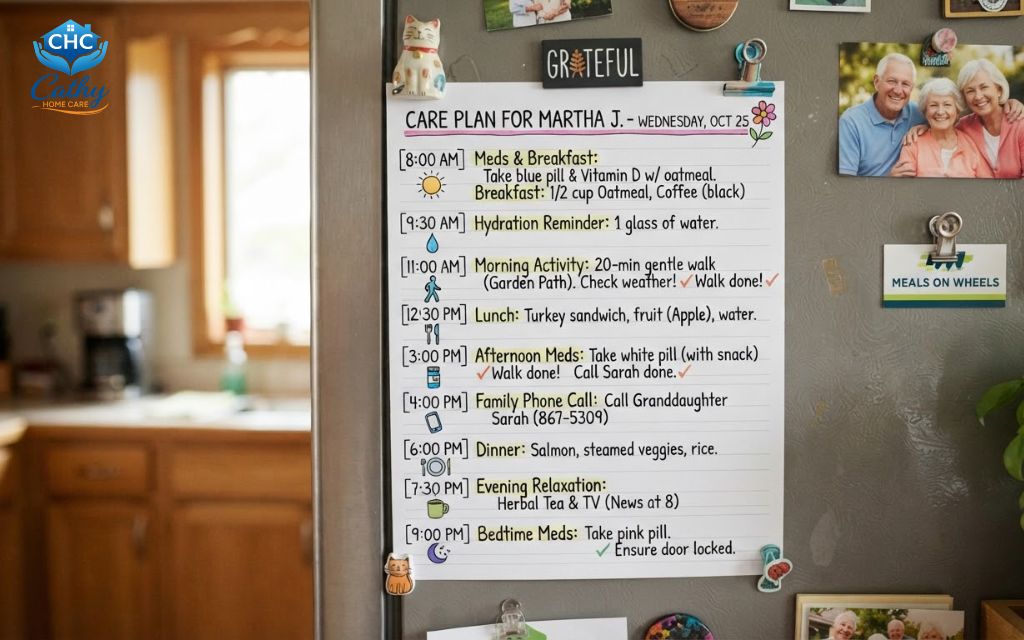
A daily care plan turns good intentions into a routine your family can follow. Keep it on one page, and update it after any hospital stay or medication change. Two areas need the closest attention.
Medications and appointments
Keep one current list of prescriptions, over-the-counter drugs, and supplements. Share it with the doctor and pharmacist, and ask whether any item causes dizziness or drowsiness. Never change a dose without medical advice.
Write your questions before each visit, and bring the list. A yearly eye exam and foot check also support safe walking.
Meals, movement, and social connection
Regular meals, gentle exercise, and company keep the day structured. Balance and leg-strength activities, such as Tai Chi, help prevent falls, so ask the doctor which program fits. Schedule social time the way you schedule appointments, including family calls, faith gatherings, and senior center visits.
Parents with Texas Medicaid may qualify for non-emergency medical transportation to medical and dental visits.
Share the care when you have a job and a family
Working adults can sustain caregiving only when tasks have clear owners. In the AARP and National Alliance for Caregiving 2025 report, we found 63 million family caregivers in the U.S. Six in 10 hold jobs, and half of those workers report disruptions such as arriving late or leaving early.
Busy professionals can use a simple split like this example. Replace the names with your family’s real strengths and schedules.
| Task | Possible owner | Frequency |
| Doctor visits and medical notes | Local adult child | As scheduled |
| Bills and insurance calls | Sibling with financial skills | Weekly |
| Pharmacy refills and online orders | Out-of-state sibling | Monthly |
| Bathing and meal help | Paid caregiver | Set days each week |
| Weekend company and relief | Family rotation | Weekly |
Your time-off options at work
The Family and Medical Leave Act (FMLA) gives eligible employees up to 12 workweeks of unpaid, job-protected leave in 12 months to care for a parent with a serious health condition. You generally need 12 months with the employer and 1,250 hours of service. Your worksite also needs 50 employees within 75 miles (121 km).
FMLA does not cover parents-in-law. KFF data for 2025 also shows that Texas has no state paid family leave program, so ask HR about company leave, flexible hours, and remote work.
Hold a family meeting that works
Hold the meeting before an emergency, and include your parents. Name a primary caregiver, list current and future needs, and assign tasks by strength. A shared notebook or online folder keeps medical, contact, and financial details in one place.
Caregiver forums repeat one complaint: one sibling carries the load while others postpone the talk. Set a date, send an agenda, and review the plan on a fixed schedule. A doctor, social worker, or faith leader can help if the talk stalls.

Protect your own health as a caregiver
Caregiver burnout builds slowly, so watch for early signs and schedule breaks before you need them. The National Institute on Aging lists warning signs such as exhaustion, irritability, poor sleep, loneliness, frequent headaches, and heavier alcohol use.
Three habits protect your capacity:
- Sleep 7 to 9 hours a night on a consistent schedule.
- Keep your own medical appointments, and tell your doctor you are a caregiver.
- Book weekly time for activities unrelated to caregiving.
Respite care gives you short-term relief, from a few hours to several weeks. Family, volunteers, in-home aides, and adult day centers can all provide it. Talk with a doctor or counselor if you feel hopeless, and call or text 988 in a crisis.

Get legal and medical paperwork in place
Texas families should prepare 4 advance planning documents while a parent can still make their own decisions. Each document handles a different job, so one form does not replace another.
| Texas document | What it does |
| Medical Power of Attorney | Names an agent for medical decisions when a doctor finds your parent cannot decide |
| Directive to Physicians | States wishes on life-sustaining treatment for terminal or irreversible conditions |
| Durable Power of Attorney | Names an agent for property and finances, not medical care |
| Out-of-Hospital DNR | Tells emergency personnel not to resuscitate |
Ask for a signed release at each clinic so that it can share information with you. An elder law attorney can confirm which documents fit your parent’s situation.

Home care vs. home health: Who does what
Home care supports daily living, while home health delivers skilled medical services ordered by a doctor or other provider. Families often use the 2 terms as synonyms, yet the difference shapes who can do each task and who may pay.
| Factor | Non-medical home care | Home health care |
| Typical help | Bathing, dressing, toileting, mobility, meals, and light housekeeping | Wound care, injections, and physical, occupational, or speech therapy |
| Provider | Attendants, personal care aides, and home health aides | Nurses and licensed therapists, with aide support |
| Order needed | Depends on the payer and program | Doctor or allowed provider order |
| Time frame | Ongoing, based on the care plan | Often part-time or intermittent |
We advise families to confirm task limits before care begins. Texas Primary Home Care rules treat tasks such as injections, medication administration, and tube feedings as work that needs professional training. Personal care services and home health aide services focus on hands-on daily support within a care plan.

How families pay for care in Texas
Most Texas families combine private funds with any benefits their parents qualify for. Payment depends on medical need, income, insurance, and military service, so verify each source before you plan around it.
| Source | What it may cover | What to check |
| Medicare | Part-time skilled care for homebound patients, plus aide care alongside skilled services | Excludes 24-hour care, meal delivery, and personal care when it is the only need |
| Texas Medicaid | Attendant help through STAR+PLUS, Primary Home Care, and related programs | Financial eligibility, functional need, and authorization |
| Long-term care insurance | In-home care, depending on the policy | Waiting period, daily limit, and approved caregivers |
| VA benefits | Support for eligible veterans and some caregivers | Service history and program rules |
| Private pay | Any agreed care plan | Rates, minimum hours, and contract terms |
For planning, CareScout’s 2025 survey lists a national median of $35 per hour for non-medical caregivers. Houston rates vary by agency and care need. Older adults on Texas Medicaid should look at Primary Home Care, because the state’s Personal Care Services benefit serves clients through age 20.
Can you get paid to care for a parent in Texas?
Yes, some Texas family caregivers can get paid, but the route depends on the parent’s benefits. Medicare does not pay family caregivers. Medicaid’s Consumer Directed Services option, VA programs, and some long-term care policies may allow it. Parents in STAR+PLUS should ask their service coordinator first.

Where to find support in Houston and across Texas
Texas families can start with the statewide Aging and Disability Resource Center line. Trained staff connect callers to local services in all 254 counties. These 5 resources cover most first questions:
| Resource | Help offered | Contact |
| Texas ADRC | Long-term services and support navigation | 855-937-2372 |
| Harris County Area Agency on Aging | Services for adults 60+ and caregivers, including respite | 832-393-4301 |
| Care Connection ADRC, Houston | Free guidance for older adults, veterans, and caregivers | 832-393-4220 |
| 2-1-1 Texas | Statewide information and referrals | Dial 2-1-1 |
| Eldercare Locator | National search for local aging services | 800-677-1116 |
Call before a crisis, because eligibility steps can take time. Keep your parent’s ZIP code, insurance details, and care needs ready.

When home care may no longer be enough
Home care may fall short when your parents need constant supervision or medical care the home cannot support. Repeated injuries, unsafe wandering, and a caregiver’s failing health all justify a new review. Ask your parent’s doctor or a social worker to assess the situation.
Families usually move through these 4 options, from lightest to heaviest support:
- More home care hours extend help into evenings, weekends, or overnight.
- Adult day centers provide daytime supervision and activities.
- Assisted living or memory care provides housing, meals, and daily help.
- Nursing facilities provide 24-hour care with licensed nursing staff.
Moving to another setting is a care decision, not a family failure. Tour options early, while your parents can take part in the choice.

How to choose in-home care for a parent
Choose an in-home care provider by checking its license, training, supervision, and backup plan. Interview at least 3 agencies, and include your parents. Ask each agency these 6 questions:
- Does the agency hold a current Texas license, and can I see it?
- What training and background checks do caregivers complete?
- Who supervises caregivers and updates the care plan?
- What happens when the regular caregiver is sick?
- Which tasks can caregivers not perform?
- Which payers does the agency accept for this service in my county?
Confirm the answers in writing. Then match the caregiver’s language, schedule, and personality to your parent’s preferences.

Cathy Home Care: In-home support for Houston families
Cathy Home Care has supported families taking care of elderly parents at home since 2002 in Houston, Sugar Land, Fort Bend, and neighboring communities. Experienced licensed nurses lead our agency. We provide home health aide services, personal care services, and primary home care for seniors and people with disabilities.
Our caregivers help with bathing, dressing, mobility, meals, and light housekeeping based on each care plan. Affiliated partners deliver skilled nursing, therapy, and medical social work. We work with select Texas Medicaid health plans and some long-term care insurers, and benefits depend on each client’s eligibility and plan.
Our team speaks English, Vietnamese, Spanish, and Chinese. Call (713) 779-8998 or request a free consultation to talk through your parent’s needs.

Frequently asked questions about caring for elderly parents at home
Does Medicare pay for a caregiver at home?
Medicare does not pay for a caregiver when personal care is the only need. It covers part-time home health aide care only alongside skilled services for homebound patients.
How do I help an elderly parent who refuses care?
Start with one small change and let your parents choose the details. Explain the concern, offer a short trial, and ask a doctor or trusted friend to support the conversation.
Can I start with just a few hours of home care?
Yes, many families start with a few hours a week, depending on the agency’s minimums. Ask about shift length before you sign, because Medicaid-funded hours depend on an authorized assessment.
What if my parents need 24-hour care?
Your parents may need shift-based home care or a residential setting. Medicare excludes 24-hour home care, so compare private pay, insurance, Medicaid, and assisted living or nursing facility costs with the doctor’s input.
Can I take time off work to care for a parent?
Yes, eligible employees can take up to 12 workweeks of unpaid FMLA leave in 12 months. Ask HR about eligibility and any paid company leave.
What is the first step in taking care of an elderly parent?
The first step is a needs assessment with your parents. Record daily abilities, health concerns, and wishes, then share the notes with their doctor.
Who can help with taking care of elderly parents at home in Texas?
Texas ADRC staff can help at 855-937-2372. Harris County families can also call the Area Agency on Aging at 832-393-4301.