Learning how to make stairs safer for elderly parents starts with 4 basics: handrails on both sides, bright lighting, non-slip treads, and a clear path. We wrote this guide for family caregivers. It covers 12 practical fixes, a 10-minute stair checklist, warning signs, and Texas payment options, so your loved one can keep using every floor of the home with confidence.
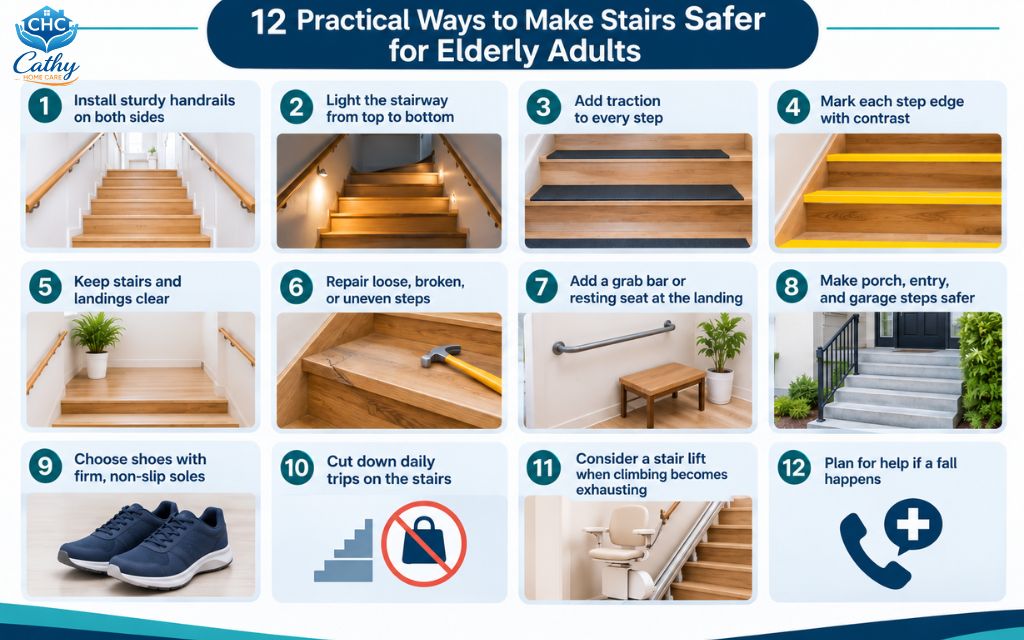
How to make stairs safer for elderly adults: 12 practical fixes
To make stairs safer for elderly adults, fix 3 hazard groups first: grip, sight, and footing. Handrails, lighting, and traction address the most common causes of stair slips and missteps.
Stairs deserve this attention. The CDC reports that over 14 million adults aged 65 and older, about 1 in 4, report a fall each year. A study in the American Journal of Emergency Medicine estimated that U.S. emergency departments treat about 1 million stair injuries every year. We order the 12 fixes below from fastest to most involved.
1. Install sturdy handrails on both sides
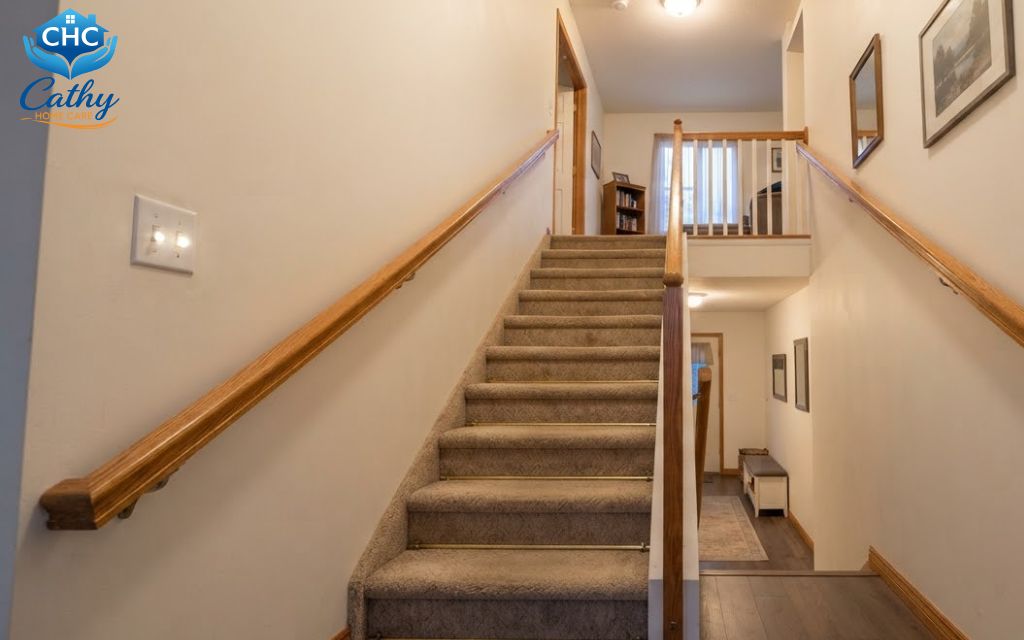
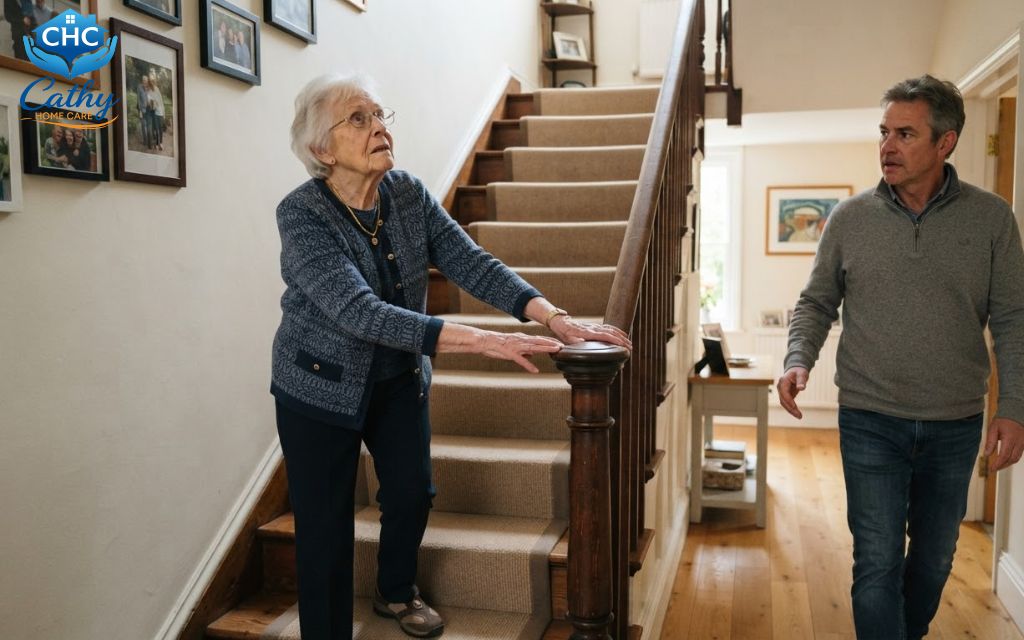
Handrails on both sides of the staircase let a senior hold on with either hand, going up or down. The CDC STEADI home checklist recommends rails on both sides that run the full length of the stairs.
Mount each rail 34 to 38 inches (86 to 97 cm) above the step edges. This range comes from the International Residential Code, which Houston adopted with local amendments in 2024. Anchor brackets into wall studs, not drywall, and pick a round rail your loved one can wrap their fingers around.
2. Light the stairway from top to bottom
Bright, even light helps aging eyes judge where each step begins and ends. Install an overhead fixture with switches at both the top and bottom of the stairs, as the CDC advises. Add plug-in motion-sensor night lights along the bedroom-to-bathroom route, and replace a burned-out bulb the same day.
3. Add traction to every step
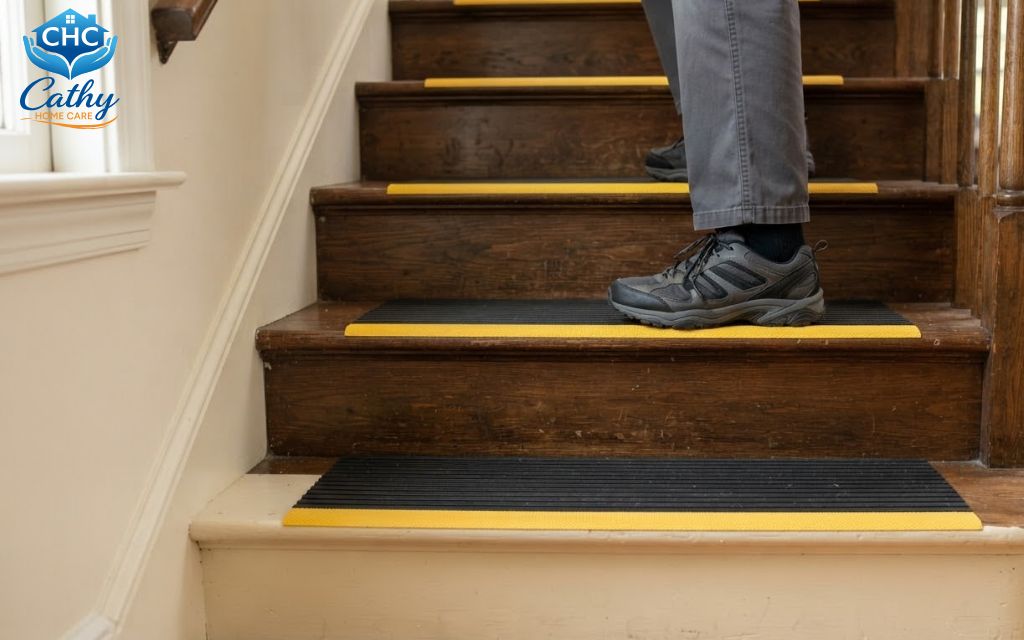
Non-slip treads stop feet from sliding on polished wood, tile, or painted concrete. The CDC suggests attaching carpet firmly to every step, or removing it and applying rubber treads. Low-pile carpet with a firm pad grips better than plush carpet.
Each traction product suits a different surface. Rubber treads add grip and cushion, anti-slip tape wears faster, and grit paint suits outdoor concrete. Skip wax and polish on stairs.
4. Mark each step edge with contrast
Contrast strips show the exact edge of each tread. Apply tape or paint in a color that differs from the step, such as white on dark wood or yellow on gray concrete. Mark the bottom step in a distinct color, because the last step often blends into the floor and causes missteps. This change helps seniors with cataracts, glaucoma, or macular degeneration.
5. Keep stairs and landings clear
Clutter on stairs creates trip hazards in seconds. Remove shoes, books, laundry baskets, and papers from every step, and keep the top and bottom landings open. Remove throw rugs near the stairs, tape down cords, and watch for resting pets.
6. Repair loose, broken, or uneven steps
Uneven steps break the walking rhythm the brain expects. Residential code limits riser height to 7¾ inches (19.7 cm), sets tread depth at 10 inches (25.4 cm) or more, and allows no more than ⅜ inch (9.5 mm) of difference between steps in one flight.
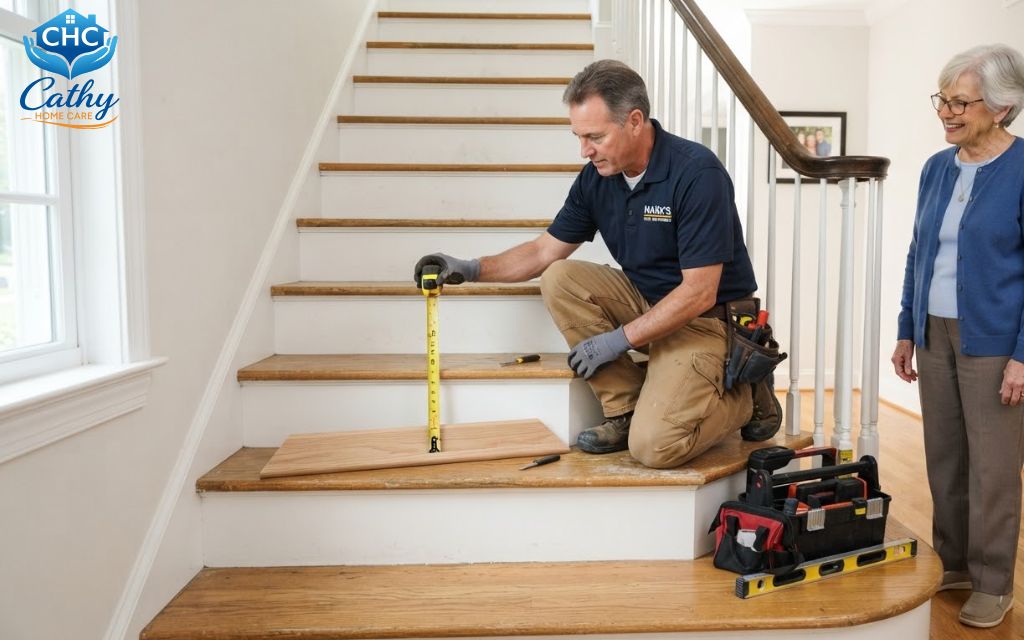
Fix loose treads, torn carpet, and wobbly rails right away. Hire a licensed contractor for structural repairs, and check City of Houston permit rules before rebuilding a staircase.
7. Add a grab bar or resting seat at the landing
A grab bar at the top or bottom of the stairs gives a second handhold during the turn onto the landing. Long flights benefit from a bench with armrests, so a senior with heart or lung conditions can rest midway. Secure every bar into framing, not drywall.
8. Make porch, entry, and garage steps safer
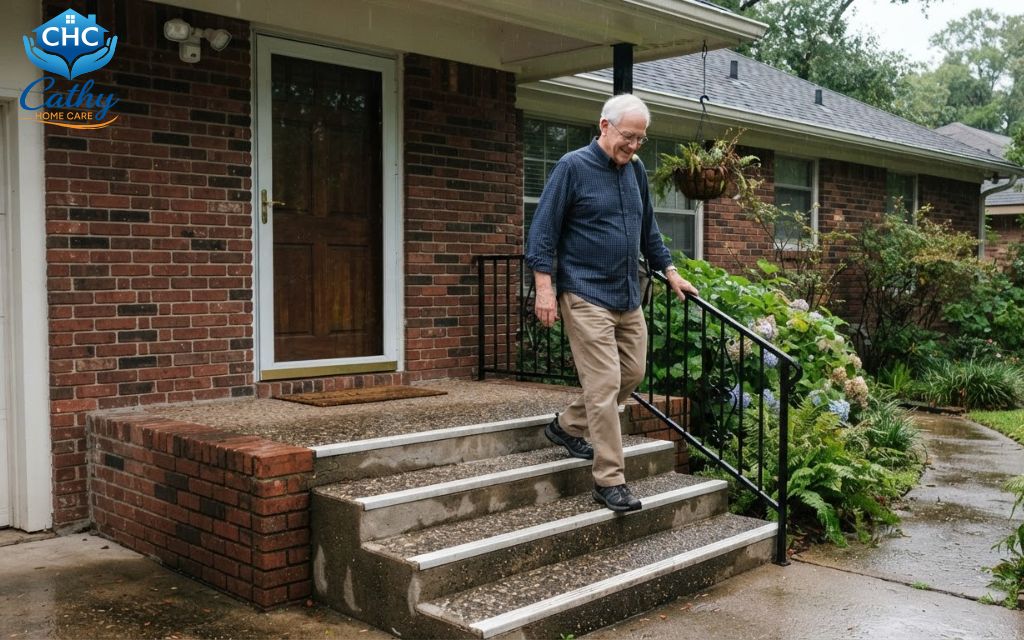
Outdoor and garage steps cause falls too, even with only 2 or 3 risers. In Houston, frequent rain and humidity leave porch steps slick, and mildew grows on shaded wood and concrete. Add a rail to short flights, apply weather-rated grit treads, aim a motion light at the entry, and scrub mildew each season.
Caregivers in online forums often name steep garage steps as the hardest spot for a parent with a walker. Half steps or a short ramp can replace that drop.
9. Choose shoes with firm, non-slip soles
Footwear sets the grip between foot and tread. Closed-back shoes with thin, firm rubber soles give better contact than socks, backless slippers, or thick cushioned soles.
10. Cut down daily trips on the stairs
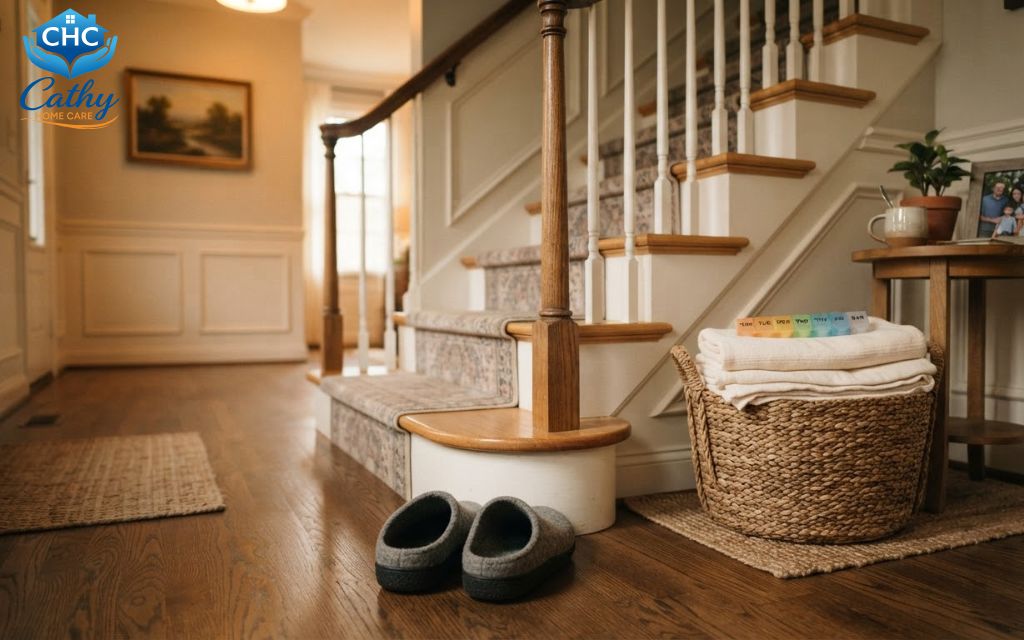
Fewer trips mean fewer chances to fall. Store daily items, such as medications, toiletries, and a change of clothes, on the main floor. Place a basket near the top step for items that can travel later, so both hands stay free for the rails.
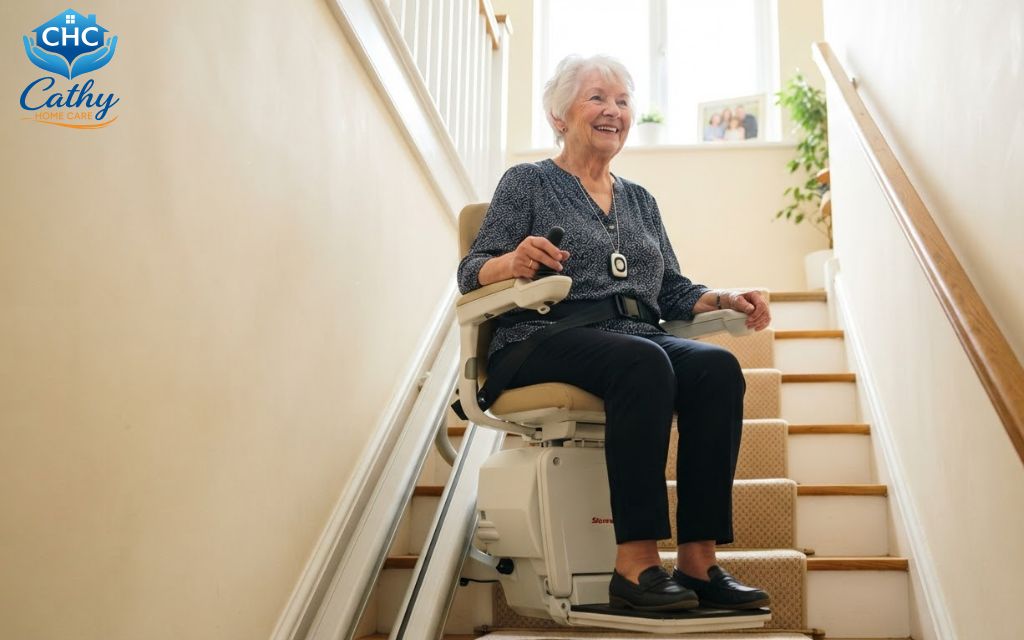
11. Consider a stair lift when climbing becomes exhausting
A stair lift carries a seated rider along a rail fixed to the stairs. Straight models suit single flights, while curved or landing staircases need a custom rail. Ask for an in-home measurement and written quotes from at least 2 dealers. Talk with the doctor first if your loved one has dementia, since confusion can make lift use unsafe.
12. Plan for help if a fall happens
A fall plan shortens the time a senior waits on the floor. Keep a charged phone within reach, post emergency numbers in large print, and consider a wearable alert device that calls for help, an option the CDC home checklist mentions.
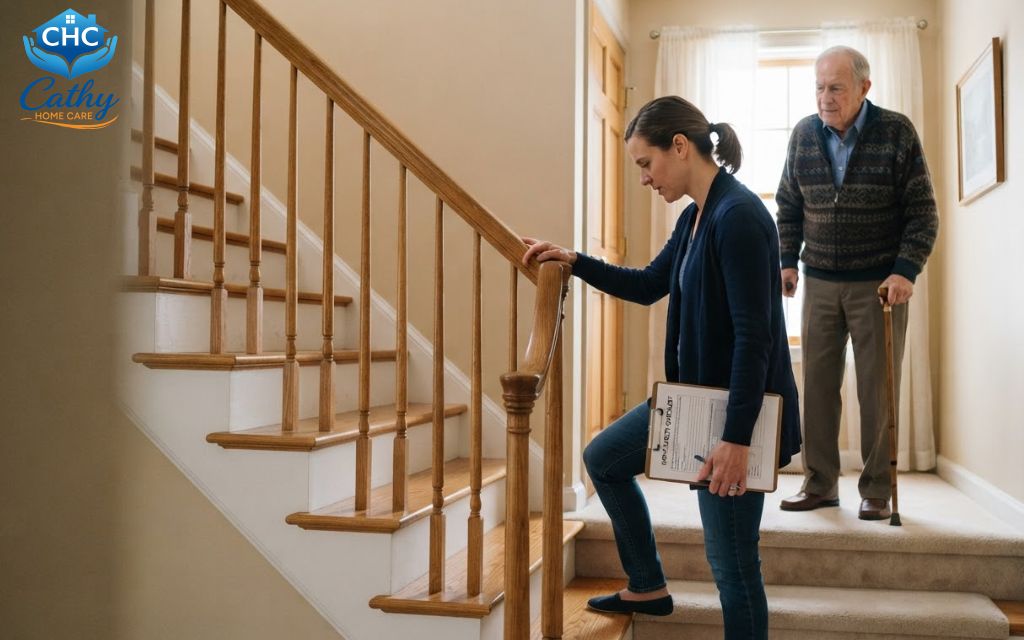
Stair safety checklist for a 10-minute home walk-through
A 10-minute walk-through finds most stair hazards before they cause a fall. We suggest walking the stairs with your loved one in daylight, then repeating the check once a month. Review each zone below and fix any “no” answer first.
| Zone | What to check |
| Top of stairs | Light switch present? Rail starts at the first step? No rug at the edge? |
| Each step | Treads firm and level? Carpet tight? Edge easy to see? |
| Handrails | Rails on both sides? Full length? No wobble under body weight? |
| Bottom of stairs | Last step clearly marked? Landing clear? Light switch present? |
| Outdoor and garage steps | Rail on short flights? Grit treads? Mildew or loose bricks? |
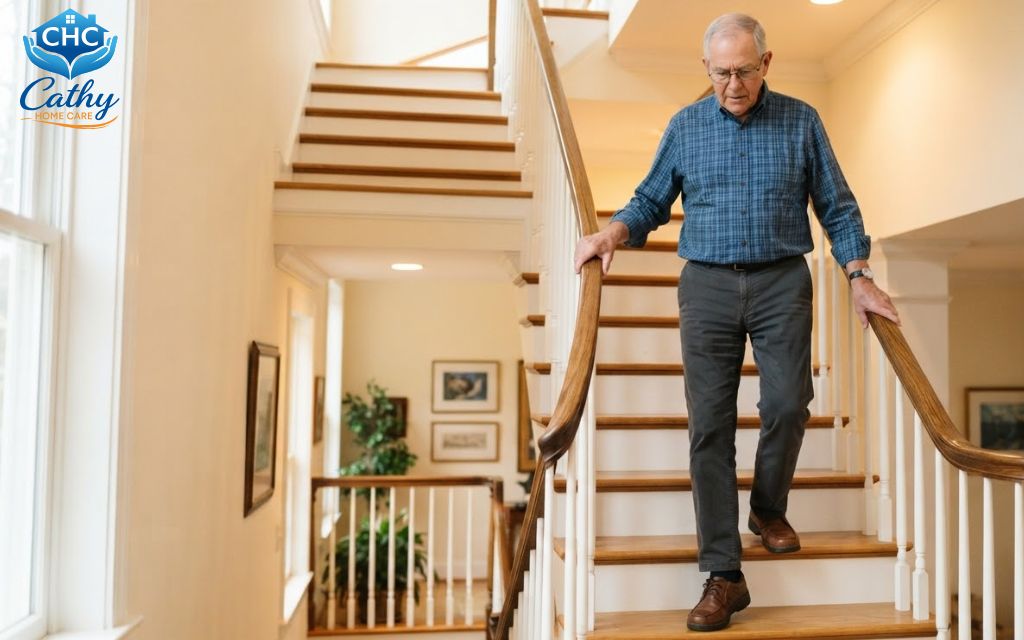
Why stairs become riskier for seniors with age
Stairs demand balance, leg strength, and accurate depth perception at the same time, and aging affects all 3. The CDC names falls the leading cause of injury for adults 65 and older, and its data show the fall death rate rose 21% between 2018 and 2024.
5 common factors raise stair risk for older adults:
- Weaker leg muscles reduce the power needed to lift the body onto each step.
- Vision changes blur step edges, especially in dim light.
- Medications, such as sedatives, blood pressure drugs, and antidepressants, can cause dizziness.
- Orthostatic hypotension, a blood pressure drop on standing, can cause light-headedness after getting out of bed.
- Cognitive changes from dementia affect judgment of step height and rail use.
Ask the doctor to review medications and fall risk, as the CDC STEADI program recommends.

Safe stair habits for seniors and caregivers
Safe habits protect seniors as much as home repairs do. These 6 stair safety tips lower the chance of a misstep:
- Keep one hand on the rail for every step, going up and down.
- Carry small loads only, and never carry an item that blocks the view of your feet.
- Turn on the stair light before taking the first step.
- Take one step at a time, without rushing to answer a phone or door.
- Lead with the stronger leg going up and the weaker leg going down.
- Leave walkers and rollators at the top and bottom, since they are not built for stairs.
Physical therapists teach a short rule for stairs: “up with the good, down with the bad.” The stronger leg lifts the body up, and the weaker leg leads on the way down.
Night bathroom trips deserve extra planning. Grogginess, low light, and missing glasses combine at 2 a.m., so a bedside commode can remove the night stair trip.
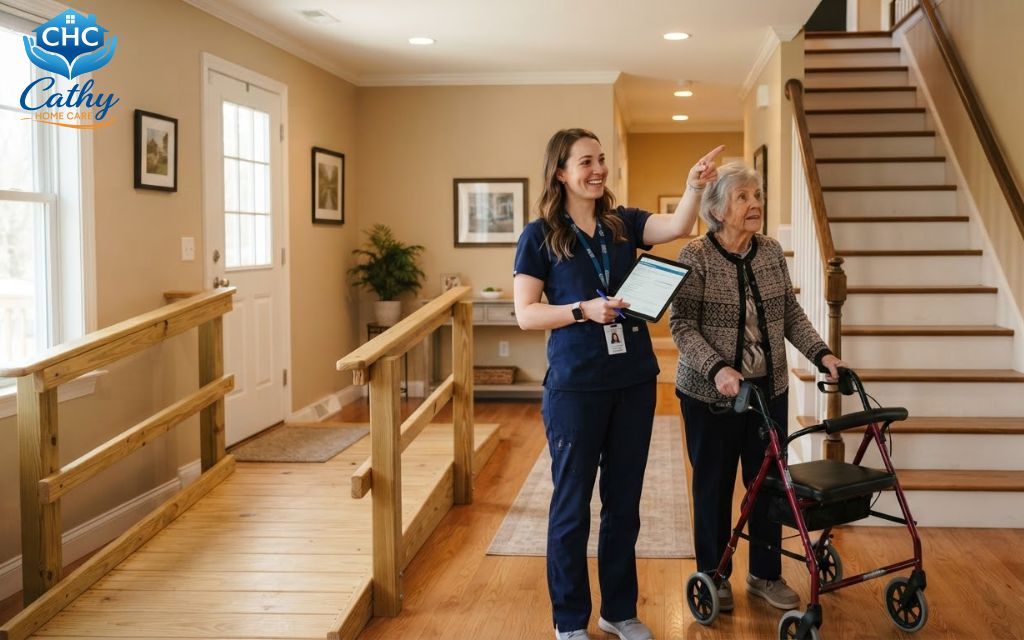
How to modify stairs for elderly adults with limited mobility
Major stair modifications make sense when basic fixes no longer keep a senior steady. Match each option to the person’s mobility, the staircase shape, and the long-term care plan:
| Option | Best for | Key consideration |
| Second handrail and grab bars | Seniors who climb slowly but steadily | Lowest cost; install into framing |
| Half steps or added risers | Steep entry or garage steps | Changes step height; needs a contractor |
| Ramp with rails | Walker or wheelchair users at entrances | Needs length and landings; check code |
| Stair lift | Seniors who tire or lose balance on stairs | Needs measurement; may not suit dementia |
| Home elevator or platform lift | Multi-story homes and wheelchair users | Highest cost; structural work |
| First-floor bedroom and bathroom | Seniors after a fall, surgery, or new diagnosis | Removes most stair use; may need a bathroom addition |
An occupational therapist or a Certified Aging-in-Place Specialist (CAPS) can assess the home and recommend the right fit. The National Council on Aging advises professional installation for grab bars.
Signs the stairs are no longer safe
Behavior changes often show that stairs have become a strain before a fall happens. These 6 warning signs suggest a senior needs more support:
- Gripping the rail with both hands or leaning on walls
- Pausing or hesitating before the first step
- Avoiding the upstairs or keeping clothes downstairs
- Breathing hard or reporting pain after climbing
- Reporting a recent fall, slip, or near-miss
- Returning home after surgery or a hospital stay
Talk with the doctor when you notice 2 or more of these signs. A physical therapist can then test strength and balance and teach safer stair techniques.
Who pays for stair modifications in Texas?
Most families pay for stair modifications out of pocket, but 3 funding sources can help eligible seniors.
- Original Medicare generally does not cover stair lifts, because it treats them as home modifications rather than durable medical equipment (DME). Some Medicare Advantage plans offer supplemental benefits for home safety items, so call your plan before you buy.
- Texas STAR+PLUS Home and Community Based Services (HCBS) includes minor home modifications, such as ramps, grab bars, and handrails, when a member’s service plan shows the need. Applicants must be 65 or older, or 21 or older with a disability, meet Medicaid financial rules, and need a nursing facility level of care. Access starts with the HHSC interest list or your Medicaid health plan.
- Long-term care insurance and veterans’ benefits may also contribute. Read your policy terms or contact the VA for details.
Coverage depends on each person’s eligibility, health plan, and service plan. This section offers general information, not a promise of approval or payment.

How Cathy Home Care supports stair safety for Houston families
Cathy Home Care is a Houston home care agency that has served seniors, adults with disabilities, and their families since 2002. Our team, led by licensed nurses, provides Personal Care Services (PCS), Home Health Aide (HHA) support, and Primary Home Care (PHC) for eligible Texas Medicaid members.
Families often tell us the stairs are their first worry when a parent starts to slow down. Based on each care plan, our trained caregivers can:
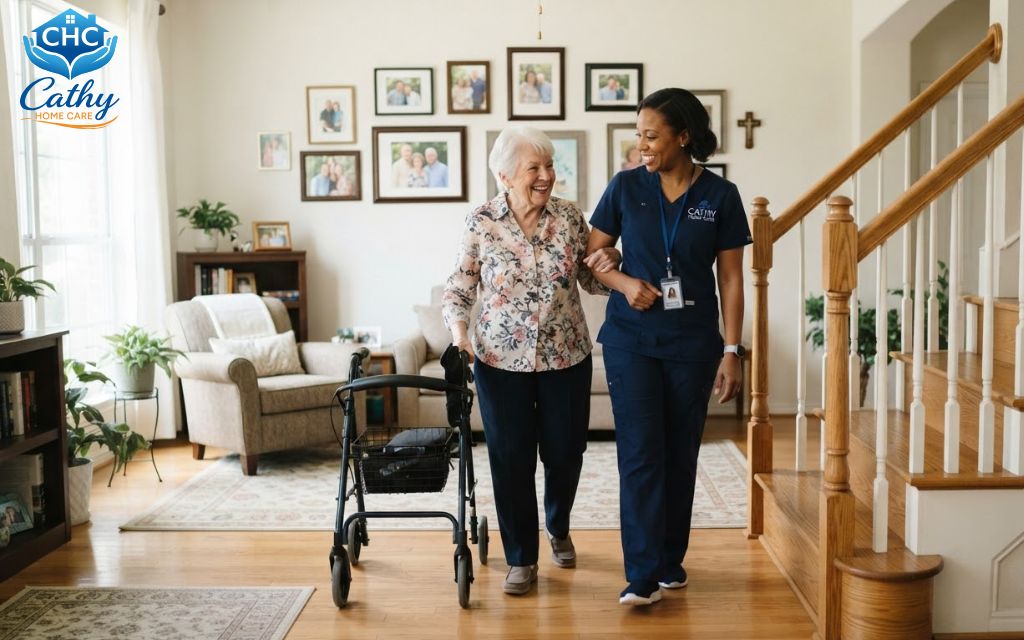
- Assist with mobility during daily routines at home
- Keep stairs, landings, and walkways clear of clutter
- Remind clients to use rails, lights, and proper shoes
- Help with bathing, dressing, and meal preparation on the main floor
Our caregivers do not replace a physical therapist or contractor, so we coordinate with families to make home changes and daily support work together. We work with several Texas Medicaid health plans, and our team speaks English, Vietnamese, Spanish, and Chinese.
Safe stairs come from home fixes, daily habits, and the right support working as one plan. Request a call back from Cathy Home Care at (713) 779-8998 to learn how to make stairs safer for elderly loved ones with in-home support.
FAQs about stair safety for elderly adults
What is the safest handrail height for seniors?
A handrail height of 34 to 38 inches (86 to 97 cm), measured from the step edge, meets residential code and suits most adults.
Does Medicare pay for a stair lift?
Original Medicare generally does not pay for stair lifts. Medicare treats them as home modifications, not durable medical equipment. Some Medicare Advantage plans and Texas STAR+PLUS HCBS may help eligible members.
Should a senior stop using stairs after a fall?
A senior should see a doctor before using stairs again after a fall. The doctor or a physical therapist can decide when stair use is safe, and a first-floor setup can bridge the recovery period.
Can dementia increase the risk of falling on stairs?
Yes, dementia can raise stair fall risk because it affects depth perception, attention, and memory of safety habits. Bright lighting, contrast strips, and supervision lower that risk.
How to make stairs safer for elderly parents on a small budget?
To make stairs safer for elderly parents on a small budget, start with 4 low-cost fixes: rubber non-slip treads, contrast tape on step edges, brighter bulbs, and a clear path. For carpeted stairs, low-pile carpet attached to every step grips better than loose runners or polished finishes.
Is climbing stairs good exercise for older adults?
Stair climbing can build leg strength for some seniors, but the doctor should approve it first. Heart conditions, joint pain, and balance problems change what is safe for each person.