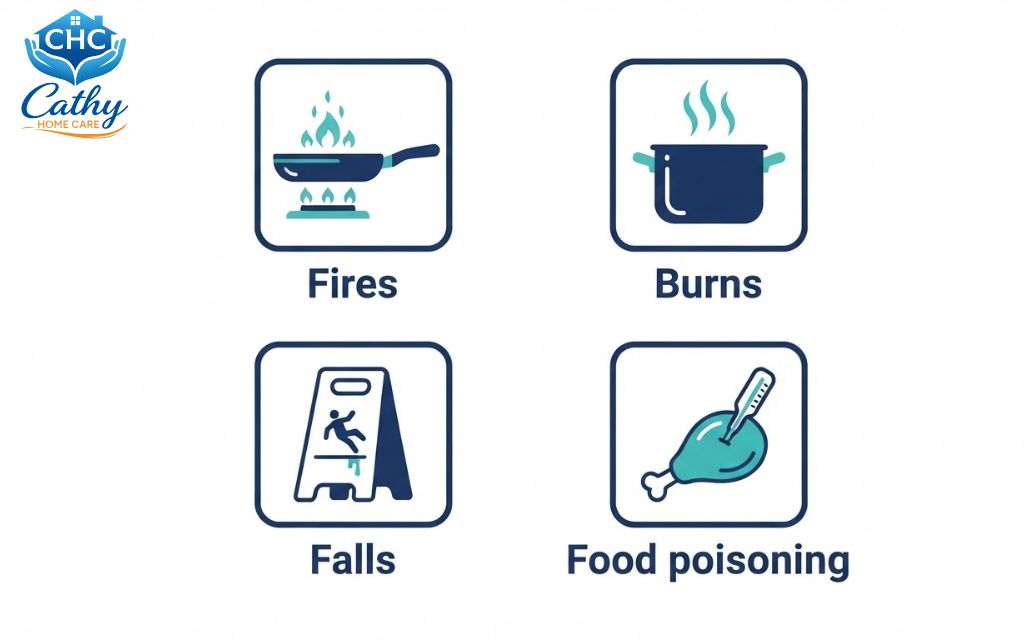
Kitchen safety for elderly adults comes down to four risks: cooking fires, burns, falls, and food poisoning. We wrote this guide for older adults who still cook and for the families who help them. It gives clear steps, a printable checklist, and Houston resources that keep home cooking safe and independent.
Why kitchen safety for elderly adults matters more with age
Kitchen safety for elderly adults matters because aging slows reaction time, thins the skin, and weakens balance. These changes turn a grease flare, a wet floor, or undercooked chicken into a serious injury.
Fire risk climbs with each decade of life. U.S. Fire Administration (USFA) data for 2023 show that adults 65 and older faced 2.5 times the fire death risk of the general population, and adults 85 and older faced 3.4 times the risk. Cooking remains the leading cause of home fires in the United States.
The table below links each kitchen hazard to the age-related change behind it:
| Kitchen risk | Why it rises with age | What the data shows |
| Cooking fires | Slower reaction, weaker sense of smell, and hearing loss delay a response | Adults 65+ had 2.5× the fire death risk in 2023 (USFA) |
| Burns and scalds | Thinner skin burns faster and deeper | Older adults face higher burn injury severity (American Burn Association) |
| Falls | Weaker balance, vision changes, and medication side effects | About 1 in 4 adults 65+ report a fall each year (CDC) |
| Food poisoning | A weaker immune response clears germs less effectively | Adults 65+ are more likely to be hospitalized from foodborne illness (FoodSafety.gov) |
In our work with Houston families since 2002, we notice a steady pattern: small kitchen changes made early prevent the injuries that end independence.
How to prevent stove and cooking fires
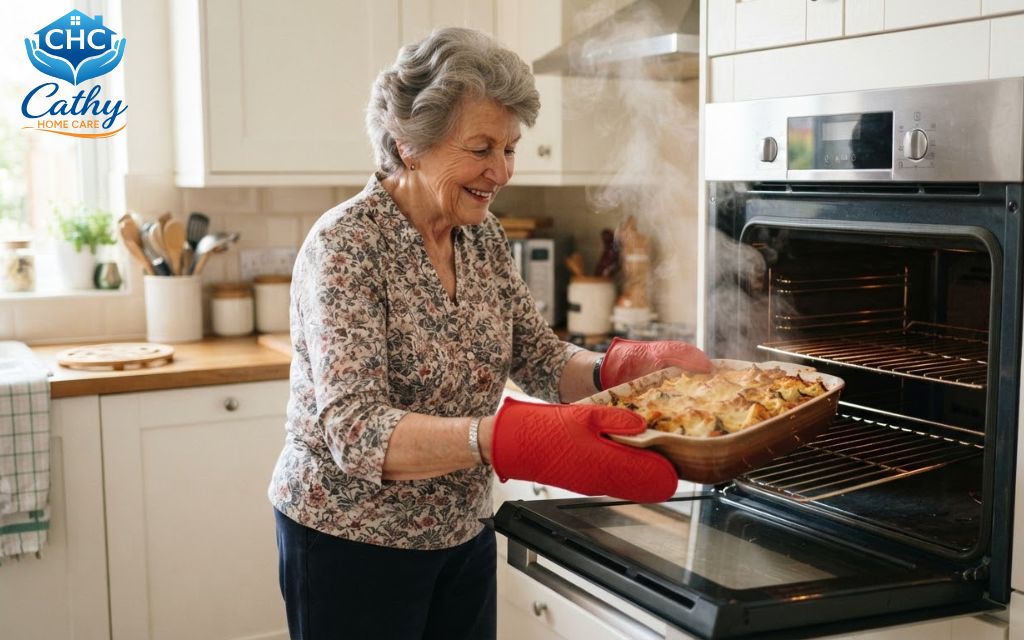
To prevent cooking fires, stay with the stove, wear close-fitting clothes, and keep flammable items away from the burners. Unattended cooking starts more kitchen fires than any other habit, so supervision comes first.
Stay in the kitchen while frying, grilling, or broiling
Stay in the kitchen while food fries, grills, boils, or broils. Turn the burner off if you leave, even for a minute to answer the door. For simmering, baking, or roasting, set a loud timer and check the food often.
Dress for the stove
Wear short or snug sleeves when you cook. Loose robe sleeves and open cardigans catch fire when you reach across a lit burner.
Keep a 3-foot clear zone
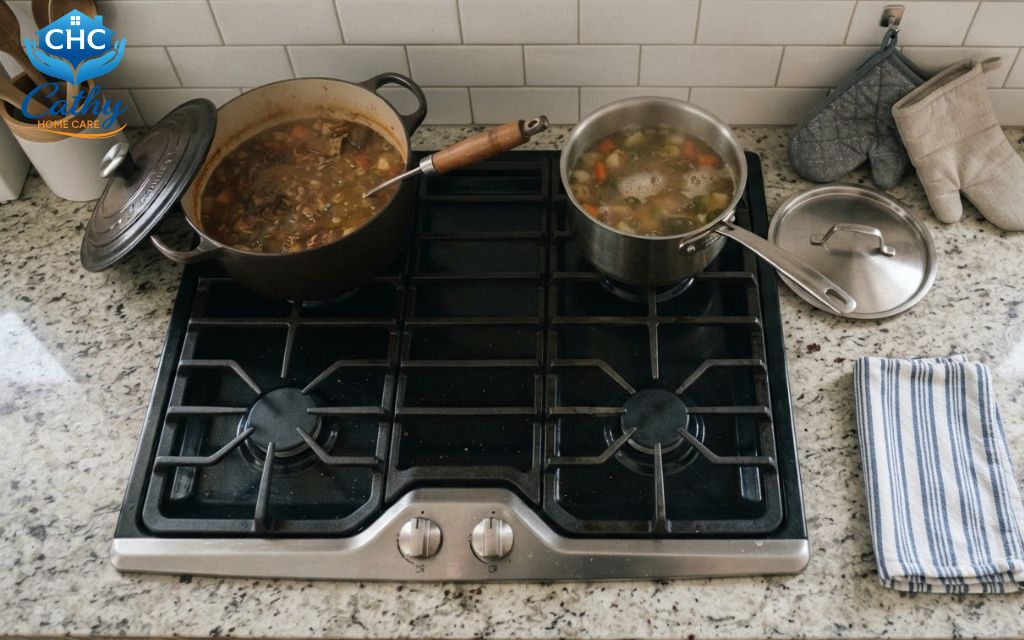
Keep towels, paper packaging, curtains, and potholders at least 3 feet (0.9 m) from the cooktop. Use the back burners when possible, and turn pot handles toward the back of the stove. Wipe grease from the stovetop, oven, and range hood after each use.
Cook only when alert
Skip stove cooking when you feel drowsy, have had alcohol, or have taken medication that causes sleepiness. Choose a microwave meal or a cold plate on those days, and ask a pharmacist which of your medicines cause drowsiness.
Our caregivers follow one rule with every client: if a burner is on, someone stays in the kitchen.
What to do if a kitchen fire starts
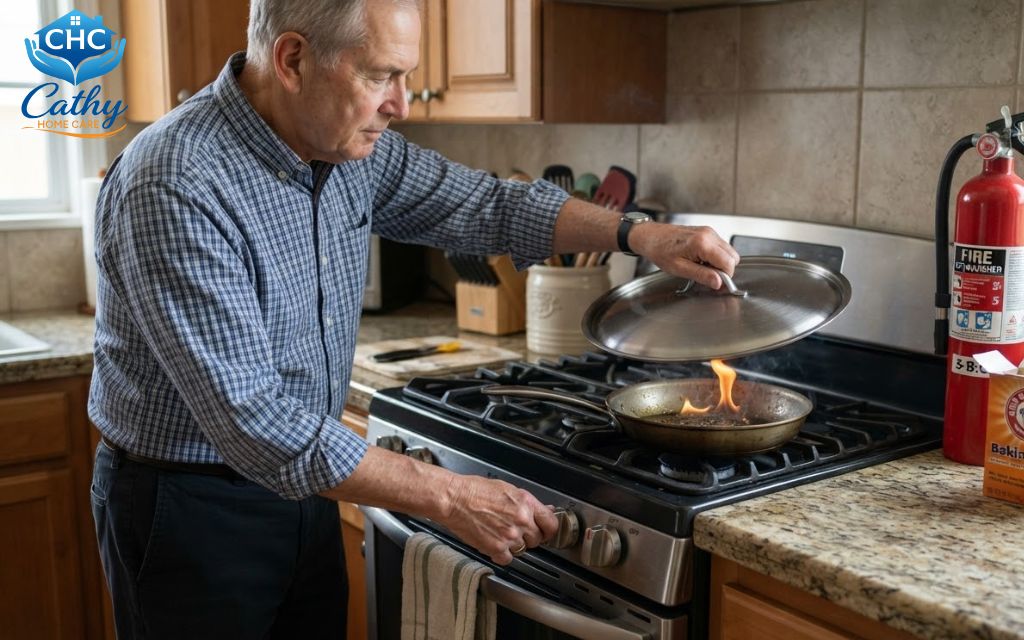
If a pan catches fire, slide a lid over it, turn off the heat, and leave the pan in place until it cools. Never pour water on a grease fire, because water spreads burning oil across the stove.
Follow these 4 steps for a contained kitchen fire:
1. Cover a pan fire with a lid or cookie sheet, then turn off the burner.
2. Close the oven or microwave door, then switch the appliance off.
3. Leave the covered pan on the stove until it cools completely.
4. Get out, stay out, and call 911 if flames spread beyond the pan.
Plan the escape around mobility. Know 2 ways out of the home, keep exit paths wide enough for a walker or wheelchair, and keep glasses, a phone, and keys near the bed. The USFA advises older adults who may need help escaping to tell their fire department, family, or neighbors.
How to prevent burns and scalds
To prevent burns, handle heat with dry oven mitts, lift lids away from your face, and let microwaved food rest before you uncover it. Older skin burns faster and deeper, so a brief contact with steam or a hot handle causes more damage.
These 4 habits cut the most common kitchen burns:
- Use dry oven mitts instead of dish towels, because damp fabric passes heat and steam to the skin.
- Lift pot lids away from your body so steam escapes outward.
- Choose vented, microwave-safe containers, and let food stand before you remove the cover.
- Stir with long-handled utensils, and stir away from your body.
Hot tap water causes burns as well. Set the water heater to 120°F (49°C) or lower, the setting the Consumer Product Safety Commission recommends to reduce scalds.
How to prevent falls in the kitchen
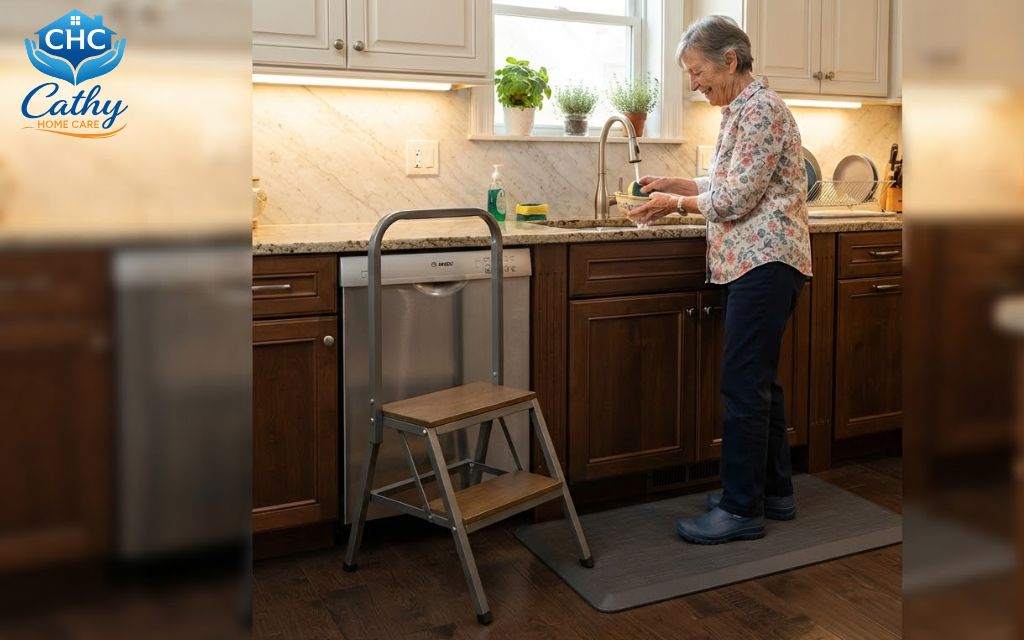
About 1 in 4 adults aged 65 and older report a fall each year, according to the CDC. The kitchen holds many fall triggers, such as wet floors, high shelves, and loose rugs.
These 5 changes lower kitchen fall risk:
- Wipe spills at once, and place a non-slip mat with beveled edges in front of the sink.
- Remove throw rugs, or secure them with double-sided rug tape.
- Wear closed shoes with rubber soles instead of socks or backless slippers.
- Add under-cabinet lights and a motion-sensor night-light on the path to the kitchen.
- Use a step stool with a handrail, or ask for help, instead of climbing on a chair.
How to organize the kitchen for safe reach
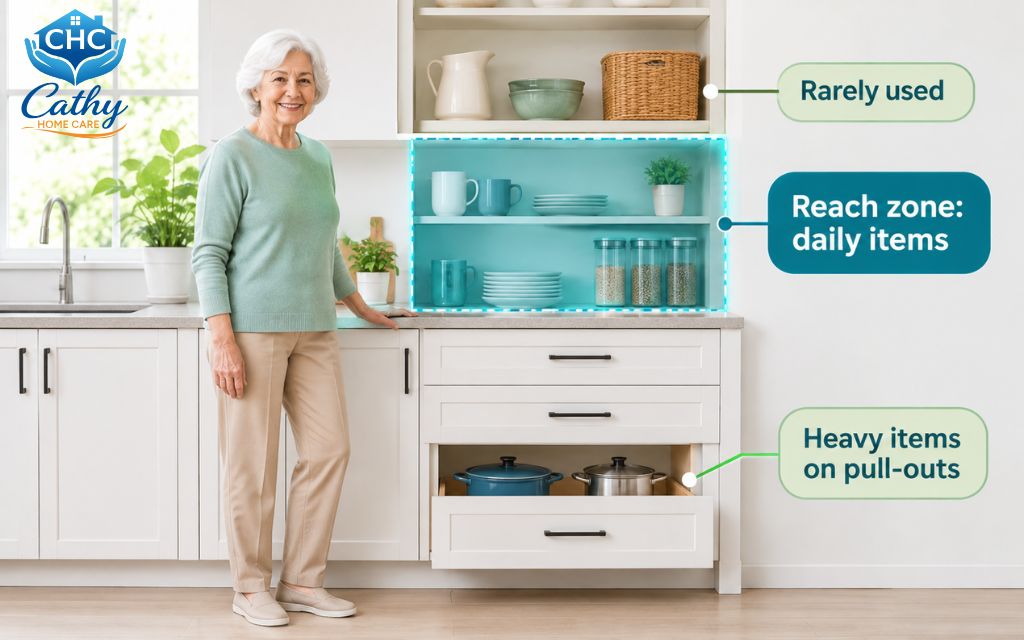
Organize the kitchen around a reach zone between waist and shoulder height. Daily items in this zone remove the need to bend low, stretch high, or climb.
Move plates, mugs, pans, and staple foods into the reach zone. Store heavy items, such as cast-iron skillets, canned goods, and flour bags, at counter height. Pull-out shelves, a lazy Susan, or a rolling cart bring items forward without strain.
Set up a seated prep station at the kitchen table. Peeling, chopping, and mixing while seated saves energy and reduces fatigue. Plan larger cooking tasks for the time of day when energy runs highest.
Helpful tools and safety technology for senior cooks
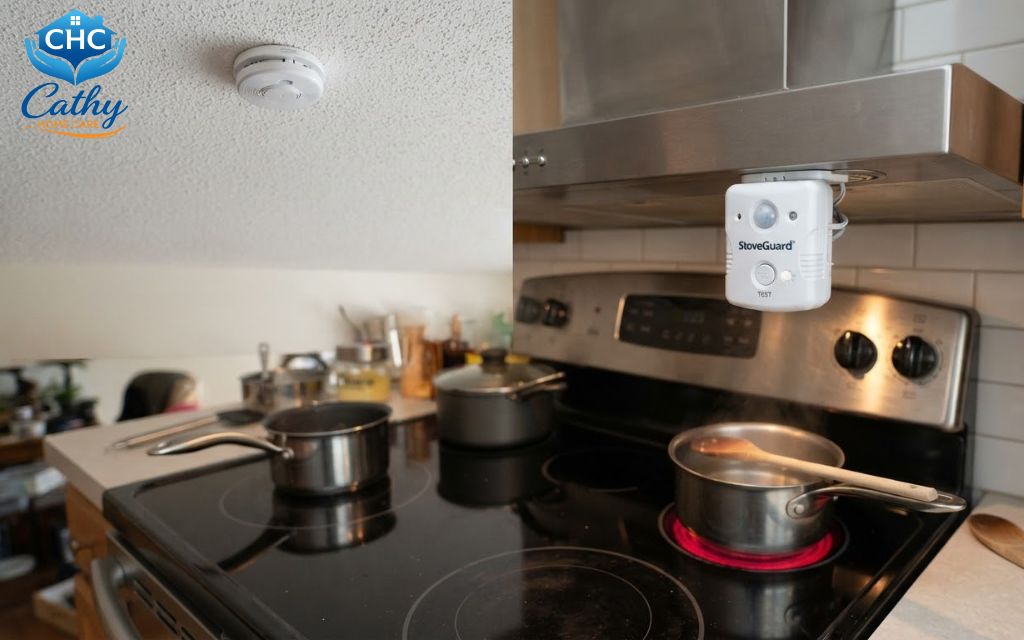
Safety tools fill the gaps that habits miss, especially for an older adult who lives alone. These 6 tools address the most common kitchen hazards:
| Tool | What it does | Best fit |
| Automatic stove shut-off device | Cuts power or gas after a set time or when no motion is detected | Forgetfulness or living alone |
| Induction cooktop | Heats the pan through a magnetic field, with no open flame | Fire and burn prevention |
| Loud timer or voice assistant | Gives spoken or loud reminders for food on the stove or in the oven | Simmering, baking, and roasting |
| Interconnected or strobe smoke alarms | Sounds in every room, or flashes light for hearing loss | Large homes and hearing loss |
| Electric jar and can openers | Remove the twisting force that strains weak hands | Arthritis and weak grip |
| Safety knives and pre-cut produce | Reduce cutting effort and slip injuries | Tremors or low vision |
Mount smoke alarms at least 10 feet (3 m) from the stove to cut nuisance alarms, and test them every month.
Food safety rules for older adults
Food safety matters more after 65 because the immune system and digestive organs clear germs less effectively. FoodSafety.gov notes that adults 65 and older are more likely to be hospitalized or die from foodborne illness.
Follow the 4 steps: clean, separate, cook, and chill
The federal food safety plan rests on 4 steps:
- Clean: Wash hands with soap for 20 seconds before and after handling food.
- Separate: Keep one cutting board for raw meat and another for produce and bread.
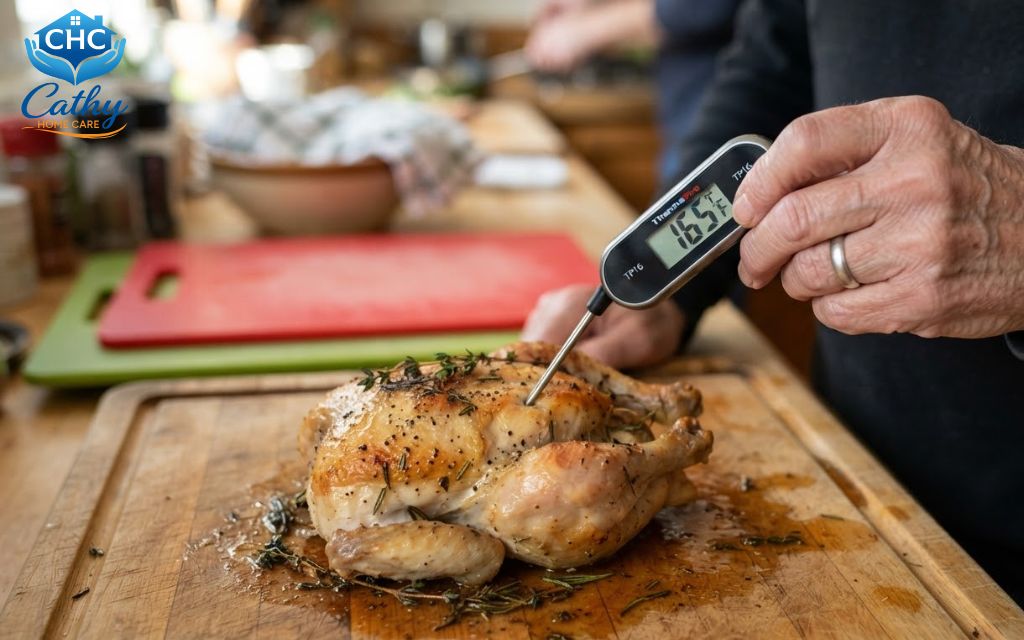
- Cook: Check meat with a food thermometer instead of judging by color.
- Chill: Refrigerate leftovers within 2 hours, or within 1 hour above 90°F (32°C).
Know the key temperatures
Label leftovers with large-print dates, and discard them after 3 to 4 days.
| Food or appliance | Safe temperature |
| Refrigerator | 40°F (4°C) or below |
| Freezer | 0°F (−18°C) or below |
| Poultry, leftovers, and casseroles | 165°F (74°C) |
| Ground beef and ground pork | 160°F (71°C) |
| Steaks, roasts, and pork chops | 145°F (63°C), then rest 3 minutes |
Cooking safely with memory loss or dementia
Cooking safety with memory loss depends on how well a person handles sequence, time, and judgment. American Family Physician lists burned food and utensils, minor burns, and a stove left on as warning signs of unsafe cooking.
Safety signs families notice
Watch for these 5 signs during visits or calls:
- Scorched pots or pans in the sink or trash.
- Burners or the oven left on after a meal.
- Spoiled or expired food kept in the refrigerator.
- New burns or cuts on the hands and arms.
- Smoke alarm alerts that happen more often than before.
Share these observations with the person’s doctor, who can assess memory and home safety.
A 4-step support ladder
Support grows in stages, so the person keeps every safe task for as long as possible:
- Simplify: Switch to microwave meals, pre-cut produce, and fewer appliances.
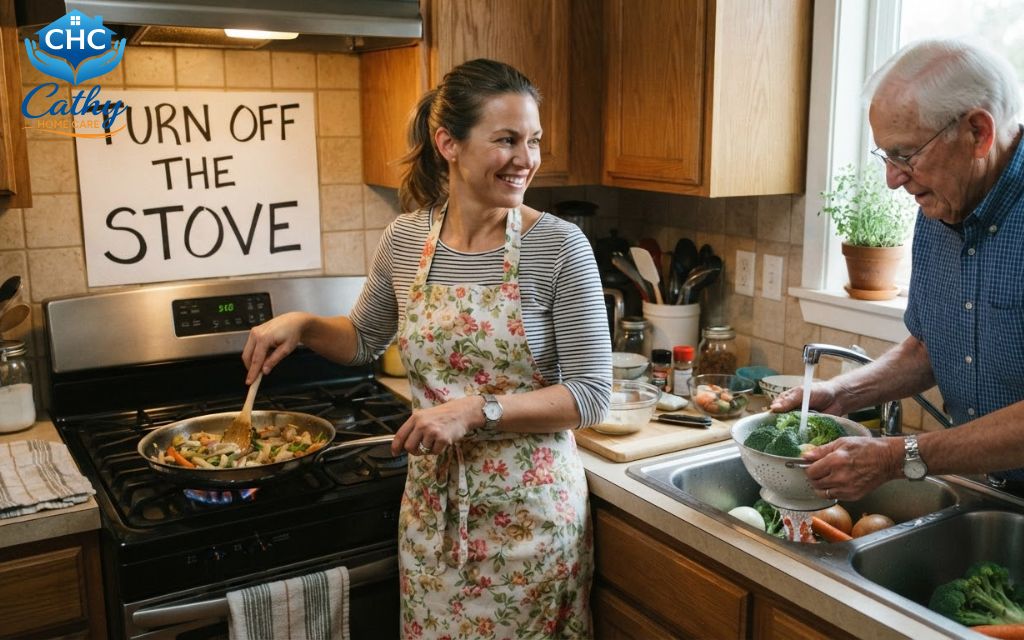
- Protect: Add a stove shut-off device, knob covers, and reminder signs.
- Share: Cook together, with the person handling tasks such as washing vegetables or setting the table.
- Support: Arrange for a caregiver to prepare meals or stay present during cooking.
Talking with your loved one about changes
Start with questions, not rules. Asking how cooking feels lately opens a conversation, while a flat ban often ends one. Offer choices, keep your loved one in charge of meal planning, and frame each change as a way to keep cooking at home.
Printable kitchen safety checklist for seniors
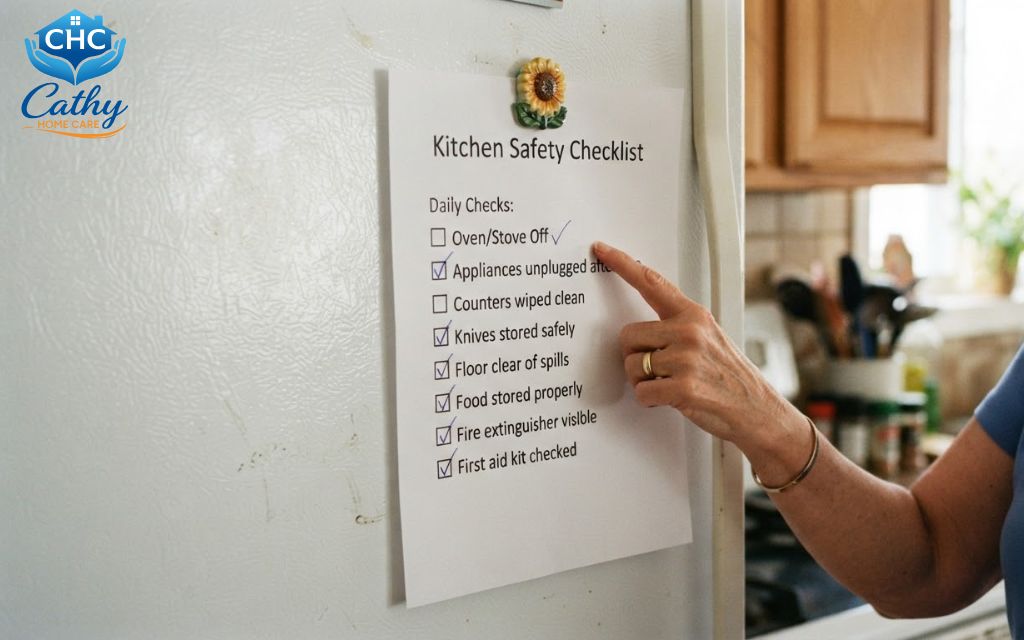
Use this 12-point checklist once a month, and again after a hospital stay or a new medication. Print it and keep it on the refrigerator.
| Kitchen zone | Check | ✓ |
| Stove and oven | Pot handles face the back; nothing flammable within 3 feet (0.9 m) | ☐ |
| Stove and oven | A pan lid and dry oven mitts sit within reach | ☐ |
| Sink and water | Non-slip mat in place; water heater at 120°F (49°C) or lower | ☐ |
| Sink and water | Faucet uses a lever handle that is easy to turn | ☐ |
| Refrigerator and food | Fridge at 40°F (4°C) or below; freezer at 0°F (−18°C) | ☐ |
| Refrigerator and food | Leftovers carry dates; nothing older than 4 days | ☐ |
| Floors and lighting | No throw rugs, cords, or pet bowls in walkways | ☐ |
| Floors and lighting | Counters and the path to the kitchen are well lit | ☐ |
| Storage and reach | Daily items sit between waist and shoulder height | ☐ |
| Storage and reach | A handrail step stool replaces chairs for climbing | ☐ |
| Alarms and exits | Smoke alarm tested this month; 10 feet (3 m) from the stove | ☐ |
| Alarms and exits | Two clear exits; phone within reach | ☐ |
Kitchen safety resources for Houston families
Houston residents can get kitchen safety help from local programs at low or no cost. These 4 resources cover alarms, storms, and daily support:
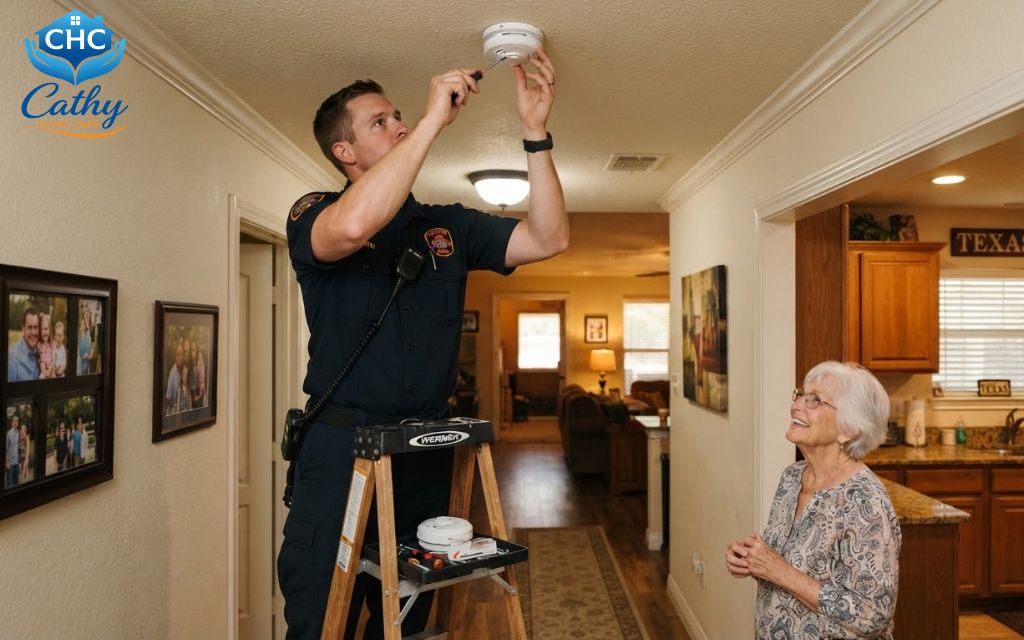
- Get Alarmed Houston! The Houston Fire Department provides free 10-year smoke alarms to eligible City of Houston homeowners, with a focus on low-income, disabled, and older residents. Call HFD Public Affairs at 832-394-6633; renters should ask their landlord, who must provide a working alarm.
- Visual fire alarms: HFD and the Mayor’s Office for People with Disabilities offer free strobe alarms for residents who are deaf or hard of hearing.
- Hurricane-season food safety: A closed refrigerator keeps food safe for about 4 hours during a power outage, and a full freezer holds about 48 hours. Discard perishable food that sat above 40°F (4°C) for more than 2 hours.
- Texas 2-1-1: Dial 2-1-1 to find meal programs, home repair help, and senior services in Harris County and nearby areas.
How Cathy Home Care supports safe meals at home
Cathy Home Care is a Houston home care agency that has served families in Houston, Sugar Land, and Fort Bend since 2002. Our caregivers help older adults and people with disabilities with meal preparation, light housekeeping, and other daily activities.
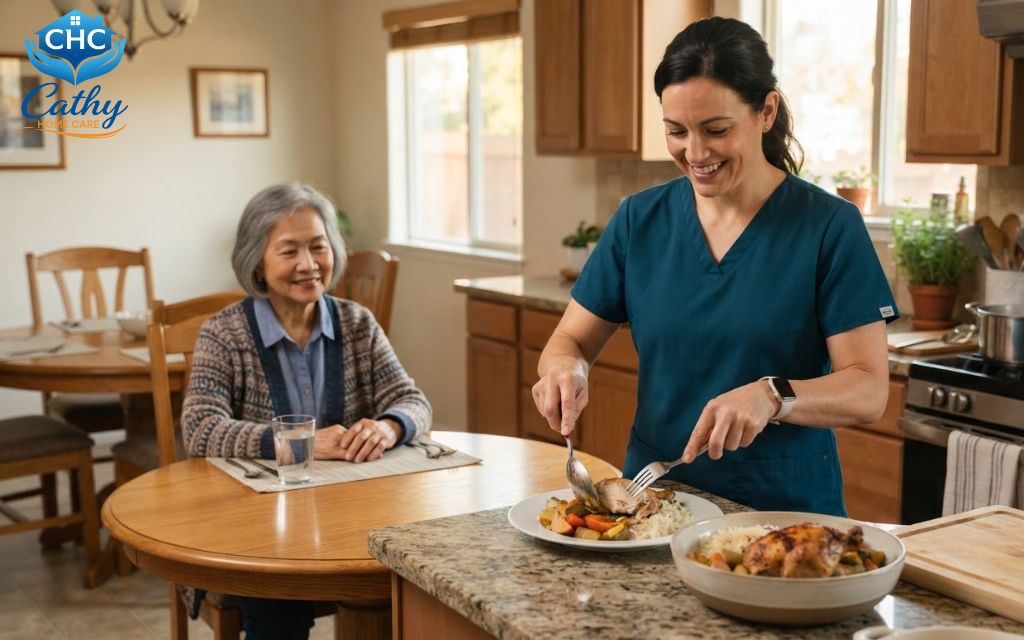
Through Personal Care Services (PCS) and Primary Home Care (PHC), a caregiver can cook meals, keep the kitchen tidy, and stay present while a client cooks. Some Texas Medicaid programs may cover these services for people who qualify, and eligibility depends on the program and a needs assessment.
Our team speaks English, Vietnamese, Spanish, and Chinese, so families can discuss kitchen routines and care needs in the language they prefer.
Kitchen safety for elderly loved ones starts with small changes. Call Cathy Home Care at (713) 779-8998 or request a call back to plan safe meals at home.
FAQs about kitchen safety for elderly adults
What is the biggest kitchen danger for elderly people?
Cooking fires are the biggest kitchen danger for older adults. Cooking leads all causes of home fires, and adults 65 and older faced 2.5 times the fire death risk in 2023, according to the USFA.
How can I stop an elderly parent from leaving the stove on?
Install an automatic stove shut-off device and add a loud timer. Knob covers, reminder signs, and microwave meals reduce stove use, and a caregiver can stay present during cooking.
When should an elderly person stop cooking alone?
An older adult should stop cooking alone when safety signs repeat, such as scorched pans, burners left on, or new burns. Discuss these signs with the person’s doctor and move up the support ladder one step at a time.
Is an induction cooktop safer for seniors?
Yes, an induction cooktop lowers fire risk because it has no open flame and heats only the pan. It requires magnetic cookware, such as cast iron or most stainless steel pans.
Where should a smoke alarm go in the kitchen?
Place the smoke alarm at least 10 feet (3 m) from the stove. This distance cuts false alarms from cooking smoke, and the USFA recommends interconnected alarms on every level of the home.
Can a caregiver help with cooking at home?
Yes, a home care caregiver can plan meals, cook, clean up, and supervise while an older adult cooks. In-home meal support is one of the most practical steps in kitchen safety for elderly adults.