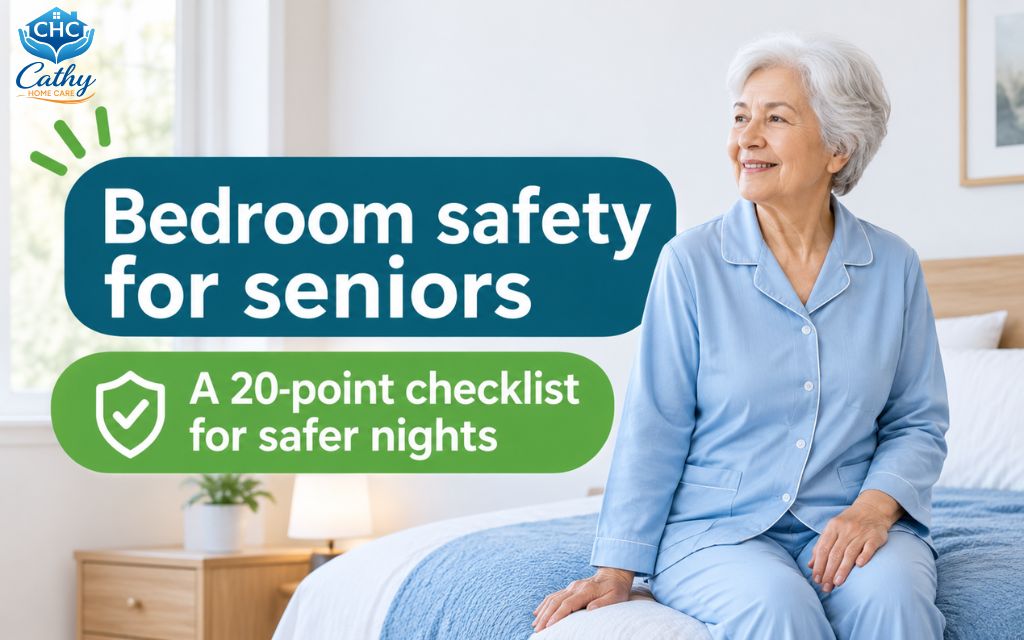
Bedroom safety for seniors starts with four basics: a lit path, clear floors, a bed at the right height, and a fast way to call for help. We wrote this guide for families and older adults who want a safer room without giving up comfort or independence. You will get a 20-point checklist, bed rail cautions from the FDA, and the signs that hands-on help may be the next step.
Why bedroom safety for seniors needs special attention
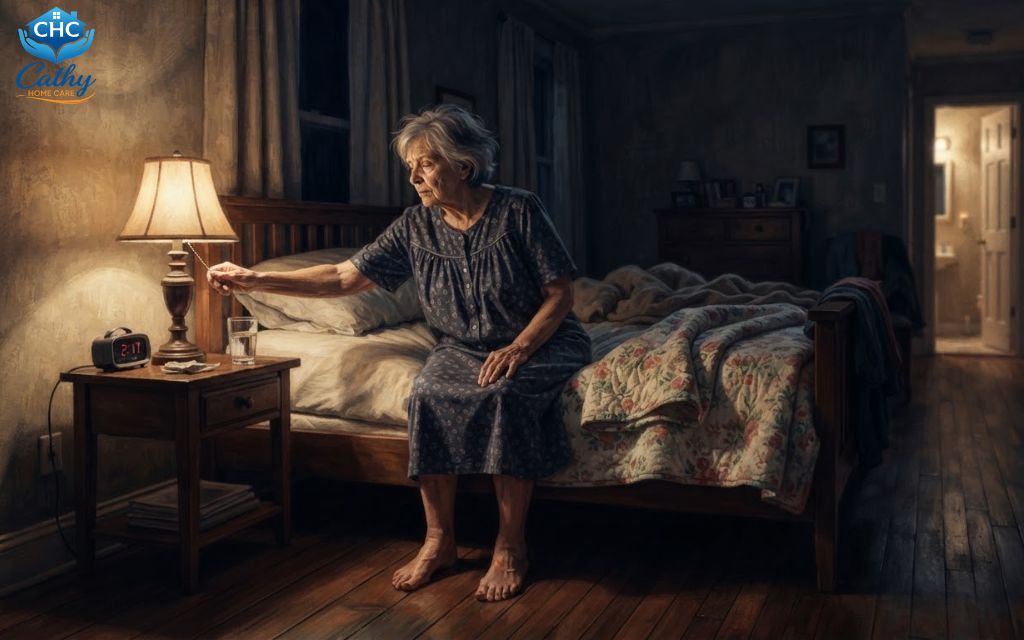
Bedroom safety for seniors matters because older adults often move through the bedroom while drowsy, in low light, and in a hurry to reach the bathroom. These three conditions turn a short walk into a fall risk.
Falls are the leading cause of injury for adults age 65 and older. According to the CDC, more than 14 million older adults, or 1 in 4, report falling every year.
Blood pressure can also dip when a person stands too fast after lying down, which may cause brief dizziness. In our home care visits, the bed-to-bathroom route is the first path we check.
Bedroom safety checklist for seniors: 20 points to review
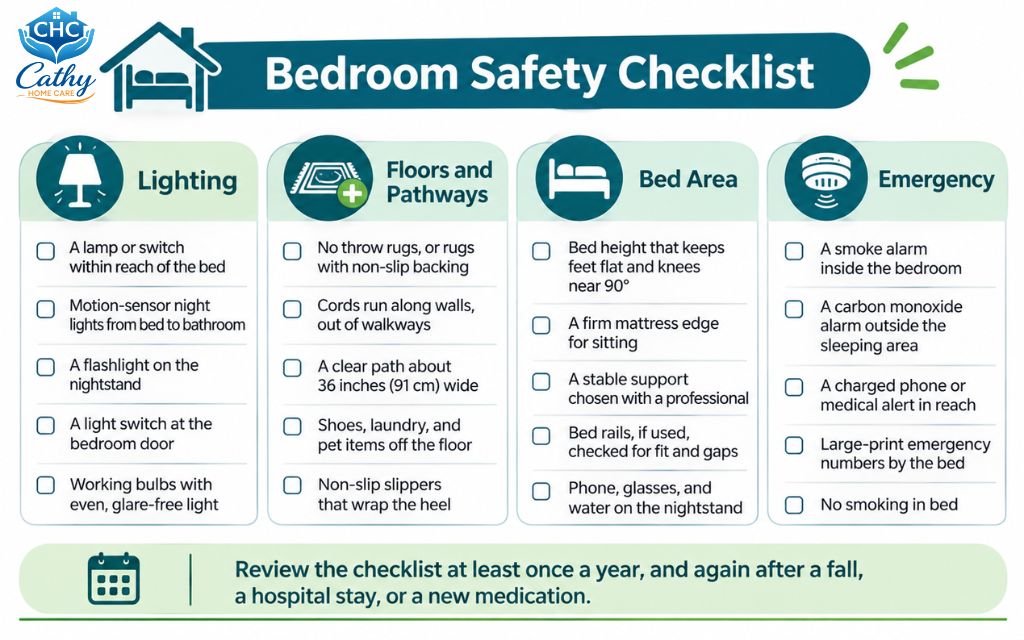
Walk through the room with your loved one using these 20 points across 4 areas: lighting, floors, the bed area, and emergencies.
| Area | What to check |
| Lighting | 1. A lamp or switch within reach of the bed2. Motion-sensor night lights from bed to bathroom3. A flashlight on the nightstand4. A light switch at the bedroom door5. Working bulbs with even, glare-free light |
| Floors and pathways | 6. No throw rugs, or rugs with non-slip backing7. Cords run along walls, out of walkways8. A clear path about 36 inches (91 cm) wide9. Shoes, laundry, and pet items off the floor10. Non-slip slippers that wrap the heel |
| Bed area | 11. Bed height that keeps feet flat and knees near 90°12. A firm mattress edge for sitting13. A stable support chosen with a professional14. Bed rails, if used, checked for fit and gaps15. Phone, glasses, and water on the nightstand |
| Emergency | 16. A smoke alarm inside the bedroom17. A carbon monoxide alarm outside the sleeping area18. A charged phone or medical alert in reach19. Large-print emergency numbers by the bed20. No smoking in bed |
Review the checklist at least once a year, and again after a fall, a hospital stay, or a new medication.
Light the path from bed to bathroom
To light the path, place a light source within arm’s reach of the bed and add low lights along the route to the bathroom. The National Institute on Aging recommends night lights and light switches close to the bed.
Bedside lamp and switch
A bedside lamp with a large switch or touch base lets a person turn on light before standing. A second switch at the doorway prevents walking into a dark room.
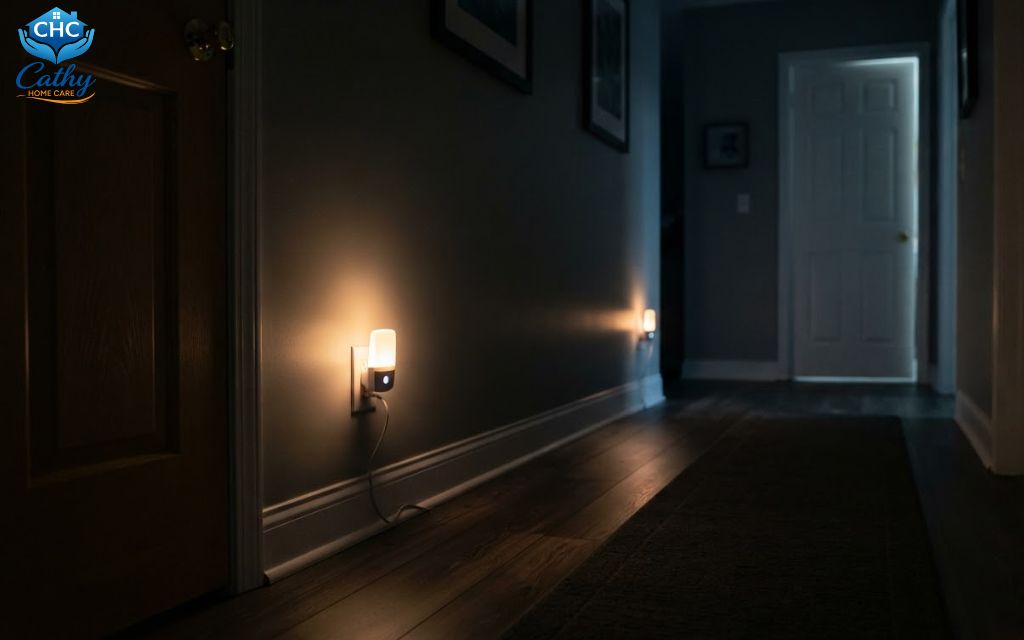
Motion-sensor night lights
Motion-sensor night lights turn on as feet touch the floor, so no one fumbles for a switch. Place them along the bed-to-bathroom route. Warm, low light guides the way without fully waking the sleeper.
A flashlight for power outages
NIA advises keeping a flashlight by the bed in case the power goes out. In the Houston area, storm season makes this item a practical priority. Check the batteries each month when you test the smoke alarm.
Clear the floor of rugs, cords, and clutter
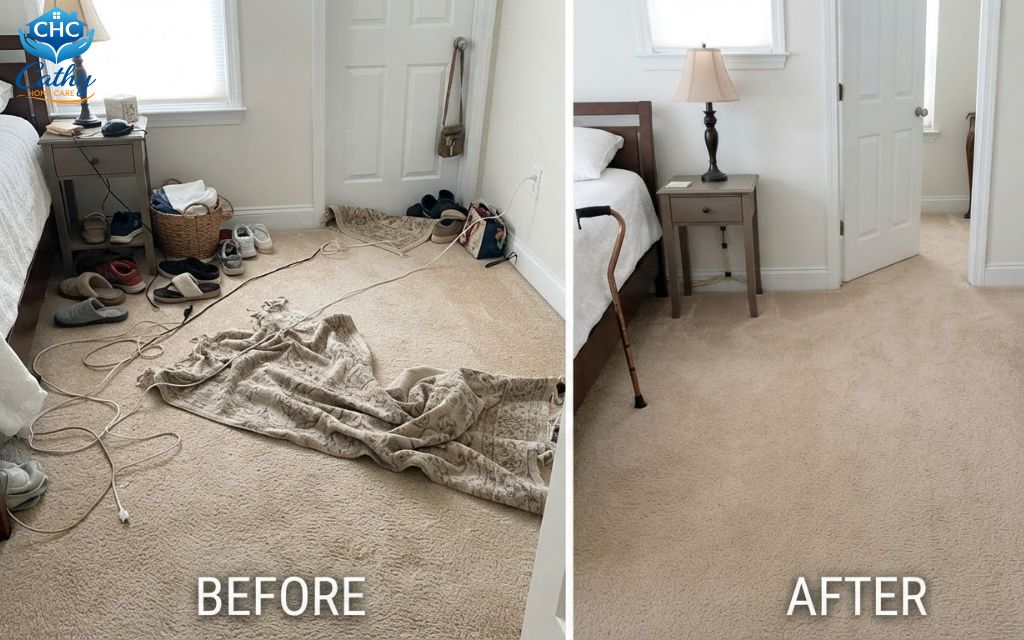
Clear floors remove three frequent trip hazards in a senior’s bedroom: throw rugs, electrical cords, and clutter. Start with these 4 changes:
- Remove throw rugs, or secure each one with non-slip backing so edges stay flat.
- Route cords along baseboards and behind furniture, away from walking paths.
- Keep a clear path about 36 inches (91 cm) wide around the bed, enough room for most walkers.
- Store shoes, laundry, and pet beds off the main route every night.
Footwear matters too. Slippers that wrap the heel and have a rubber sole grip better than socks on hardwood or tile.
Set the right bed height and make getting up easier
The right bed height lets a person sit on the edge with both feet flat on the floor and knees bent at about 90 degrees. A bed that is too high or too low makes standing harder.
The 90-degree bed height test
Ask your loved one to sit on the mattress edge and check their feet and knees. The National Council on Aging cites a top-of-mattress height of about 20 to 23 inches (51 to 58 cm) from the floor. Adjust with a thinner mattress, a lower frame, or bed risers, and test any riser for wobble before use.
Sit first, then stand
Sitting on the edge of the bed for a minute or two before standing gives the body time to adjust. Talk with a doctor or pharmacist if dizziness on waking happens often, since some medications can add to it.
Supports that help with transfers
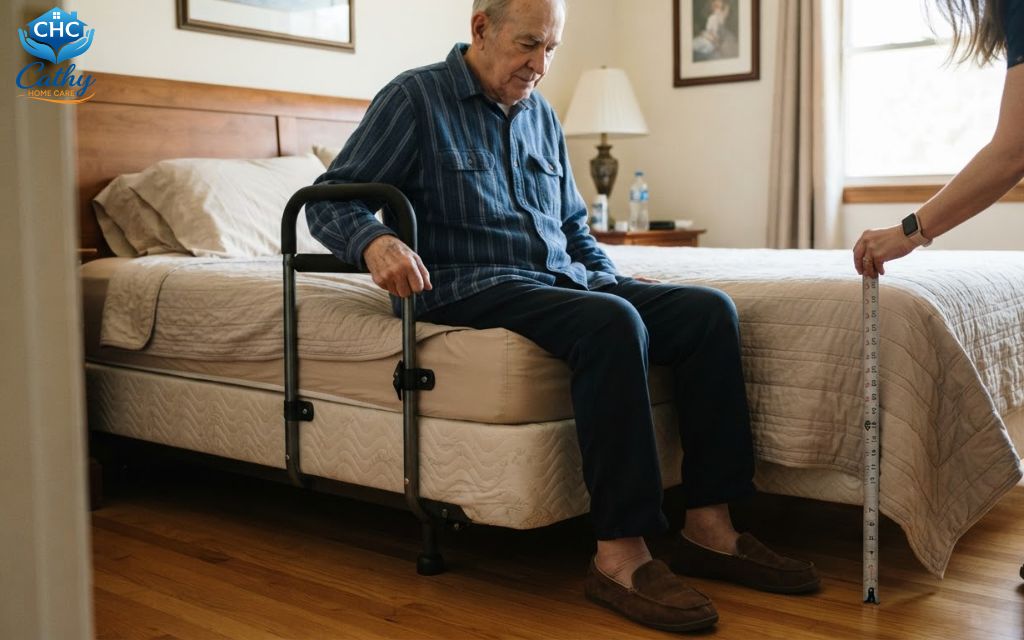
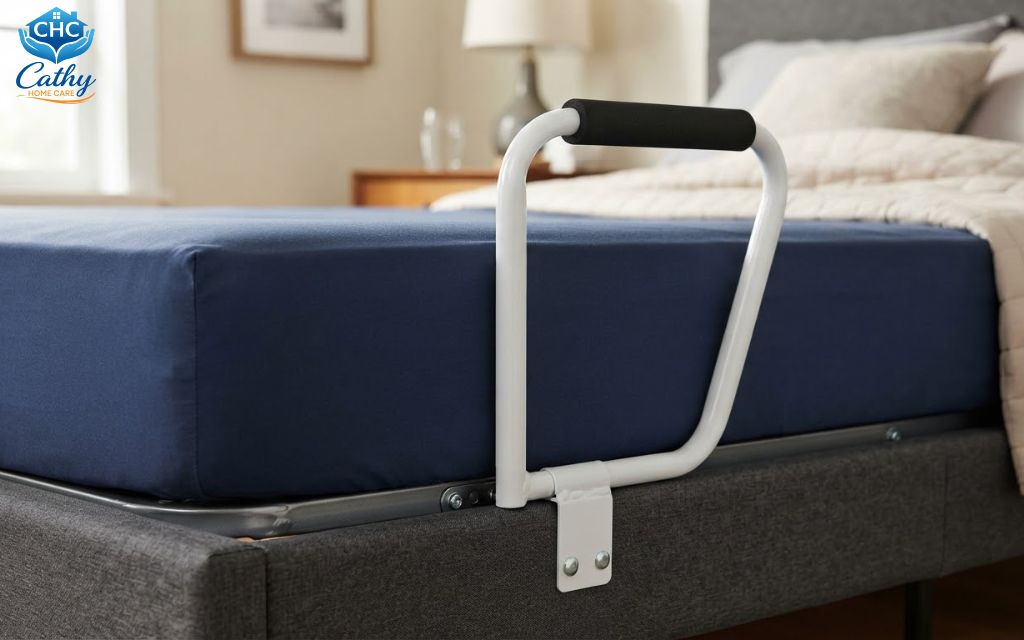
Several supports add stability during transfers, such as bed assist handles, floor-to-ceiling transfer poles, and grab bars near the bed. Choose them with an occupational therapist (OT) or doctor, because the right device depends on strength, balance, and memory.
Bed rails: What families should check before installing one
Adult portable bed rails can help a person reposition or get out of bed, but they also carry a risk of entrapment, where a person becomes stuck between the rail, mattress, or bed frame. The FDA states that bed rails should not be used as a restraint and should not replace proper monitoring.
Before you install a rail, follow these FDA checks:
- Confirm the rail meets ASTM F3186-17, the safety standard for adult portable bed rails.
- Match the rail, mattress, and frame, since most rails and mattresses are bought separately.
- Inspect gaps between the rail and mattress, where a head or body could get trapped.
- Avoid soft mattresses with rails, which can widen gaps under pressure.
- Recheck the fit often, because rails can shift or loosen over time.
A bed rail is a mobility aid, not a restraint. If your loved one lives with memory loss or tries to climb over the rail, ask a doctor or OT about safer options.
Check any rail you own against the CPSC recall list as well.
Keep everyday essentials within arm’s reach
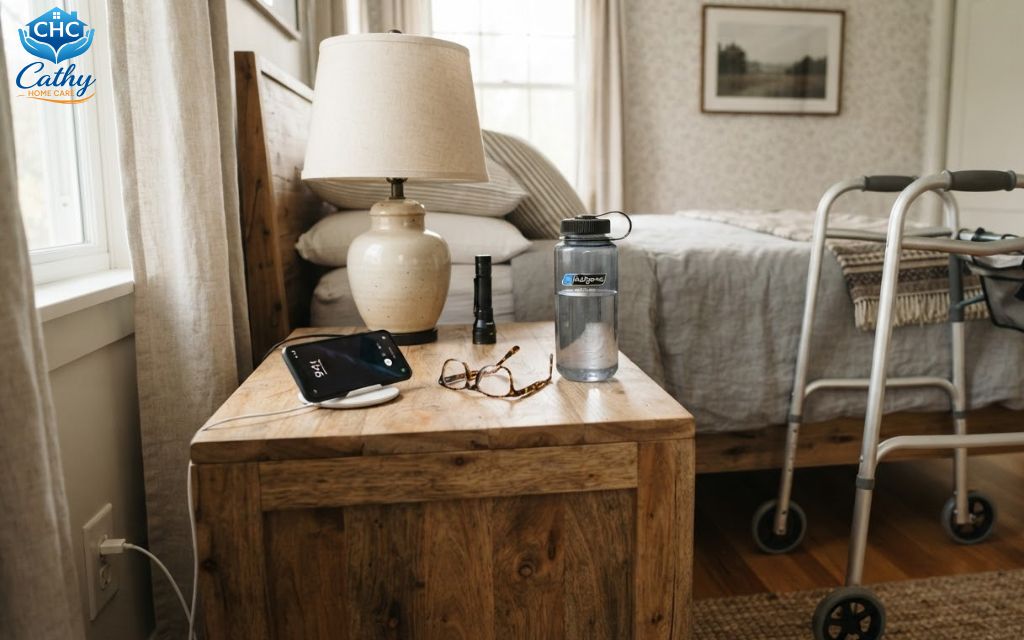
Essentials within arm’s reach prevent risky stretching and late-night searches. A stable nightstand with rounded corners should hold 5 items: a charged phone, eyeglasses, a bottle of water, a flashlight, and a lamp.
Keep a cane or walker beside the bed on the side used for getting up.
Closets need the same thinking. Lower rods and shelves to between waist and shoulder height. If nighttime toilet trips are frequent, ask a doctor whether a bedside commode makes sense.
Prepare the bedroom for emergencies and fires
Emergency preparation gives a senior two protections: early warning of fire or carbon monoxide, and a fast way to call for help after a fall.
Smoke and carbon monoxide alarms
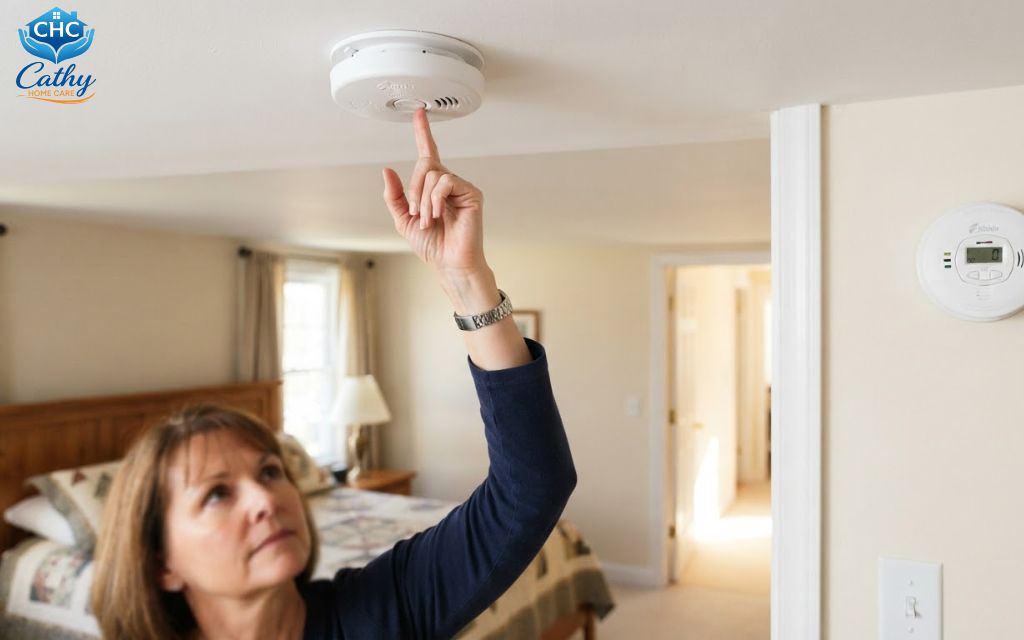
The CPSC recommends a smoke alarm inside every bedroom, outside every sleeping area, and on every level of the home, plus a carbon monoxide alarm outside each sleeping area. Test alarms monthly and replace batteries once a year. Older adults have a higher fire death rate than the general population, so never smoke in bed. For hearing loss, choose alarms with strobe lights or bed shakers.
A way to call for help
A charged phone beside the bed is the minimum. NIA lists other options, such as a medical alert pendant, a smart speaker that calls contacts by voice, and smartwatches that can detect falls. NIA notes that alert systems carry a fee and insurance usually does not cover them. Post emergency numbers in large print near the bed.
Extra steps for nighttime confusion or dementia
Nighttime confusion calls for more structure and closer supervision. A consistent bedtime routine, the same lighting each night, and a room with fewer objects help a person with dementia find the way.
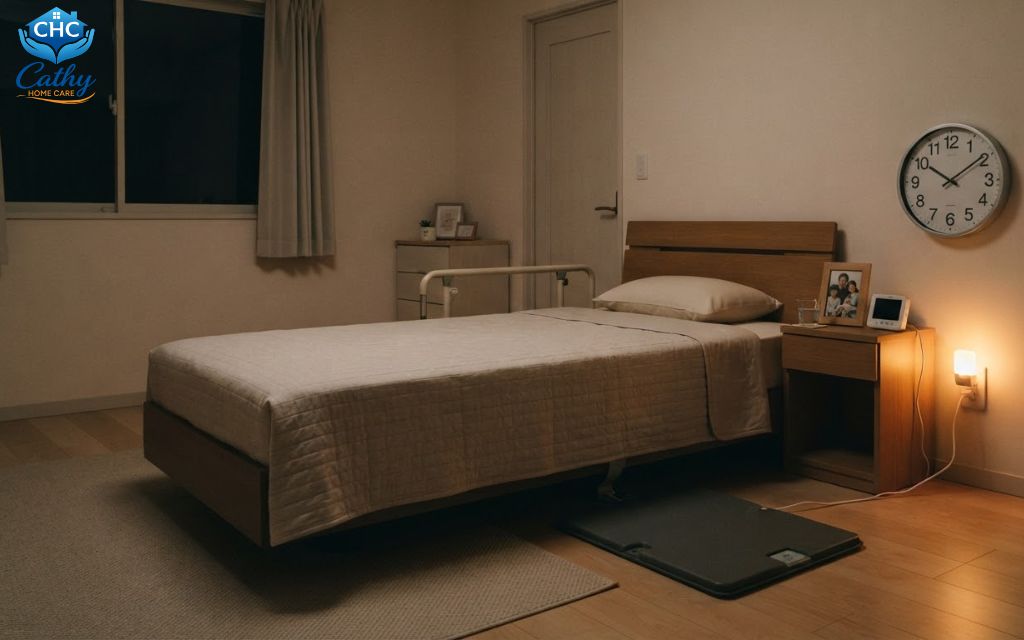
Door chimes or bed-exit sensors can alert a family member when a loved one gets up. Bed rails carry a higher entrapment risk for this group, so discuss them with a doctor first.
When home changes are not enough: Signs your loved one needs hands-on help
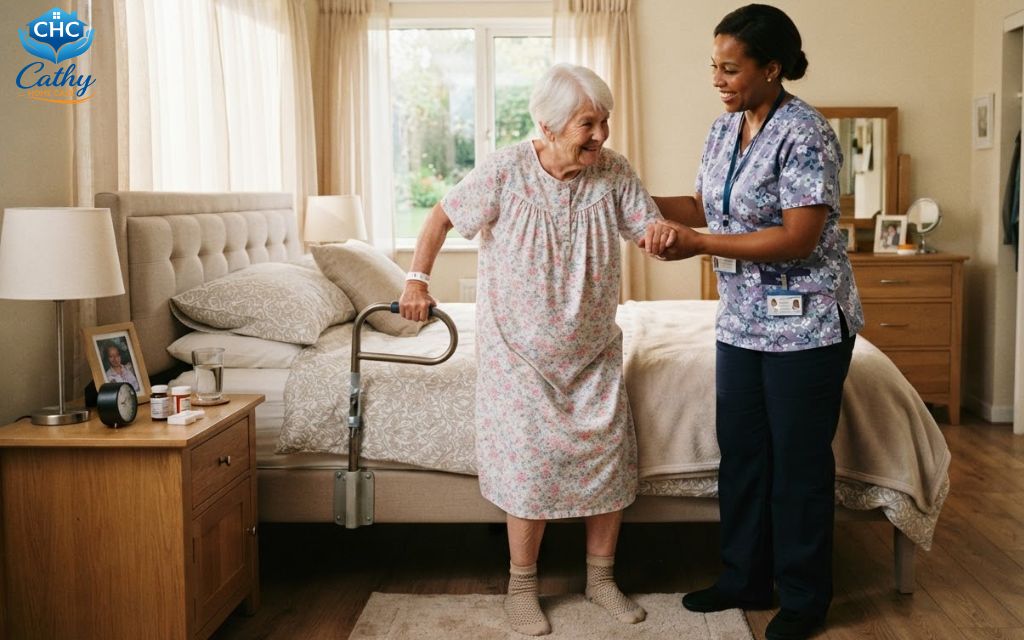
Equipment cannot lift, steady, or guide a person. Consider in-home support when you notice these 5 signs:
- Needing help to stand up from the bed or a chair.
- Falling or nearly falling in the past few months.
- Struggling to reach the bathroom in time at night.
- Taking much longer to dress or get ready for bed.
- Living alone while family members worry about nights.
Non-medical personal care fills this gap. A trained caregiver helps with activities of daily living (ADLs), such as transfers, toileting, dressing, and bathing. Our caregivers also end visits with a quick room check: lights working, path clear, and phone charged. Learn more about our personal assistance services.
Personal care differs from skilled home health, which covers nursing or therapy ordered by a doctor. A home health aide supports daily routines without medical tasks.
Paying for bedroom safety changes in Texas
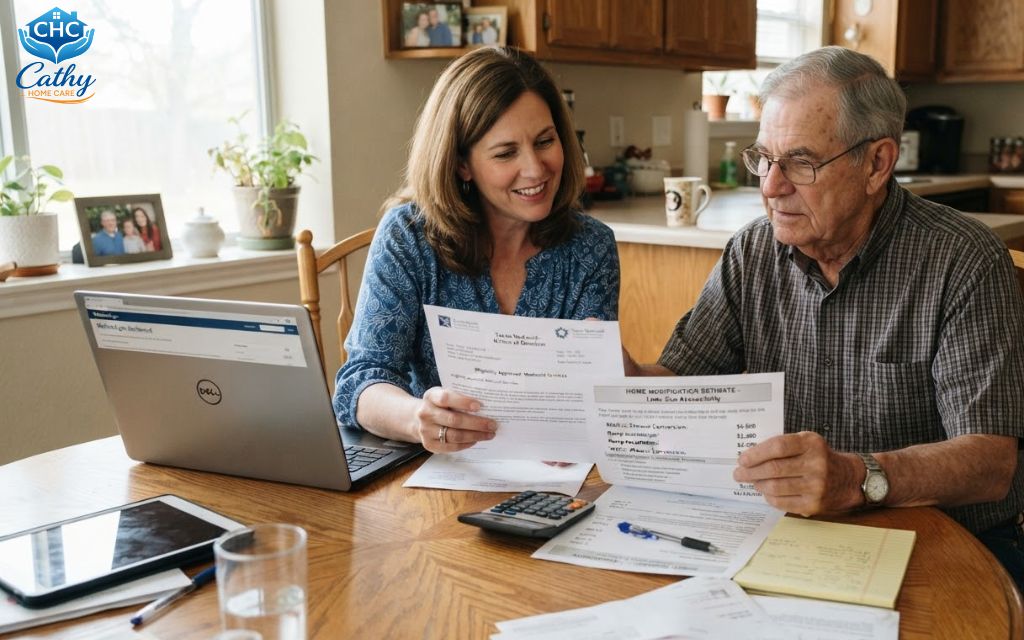
Most bedroom safety fixes cost little: night lights, cord clips, and rug removal. Larger changes may qualify for help through Texas Medicaid.
The STAR+PLUS Home and Community Based Services (HCBS) program offers minor home modifications, such as grab bars and handrails, through the member’s managed care organization (MCO). STAR+PLUS HCBS also covers emergency response services. Eligibility depends on age or disability, functional need, and Medicaid financial rules.
When to ask for a professional home safety assessment
A professional home safety assessment makes sense when risk rises beyond simple fixes. Ask a doctor for an occupational therapy referral after any of these 5 events:
- A fall, even one without injury.
- Trouble getting in or out of bed.
- Dizziness on waking or standing.
- A new medication or a recent hospital discharge.
- Changes in memory or walking pattern.
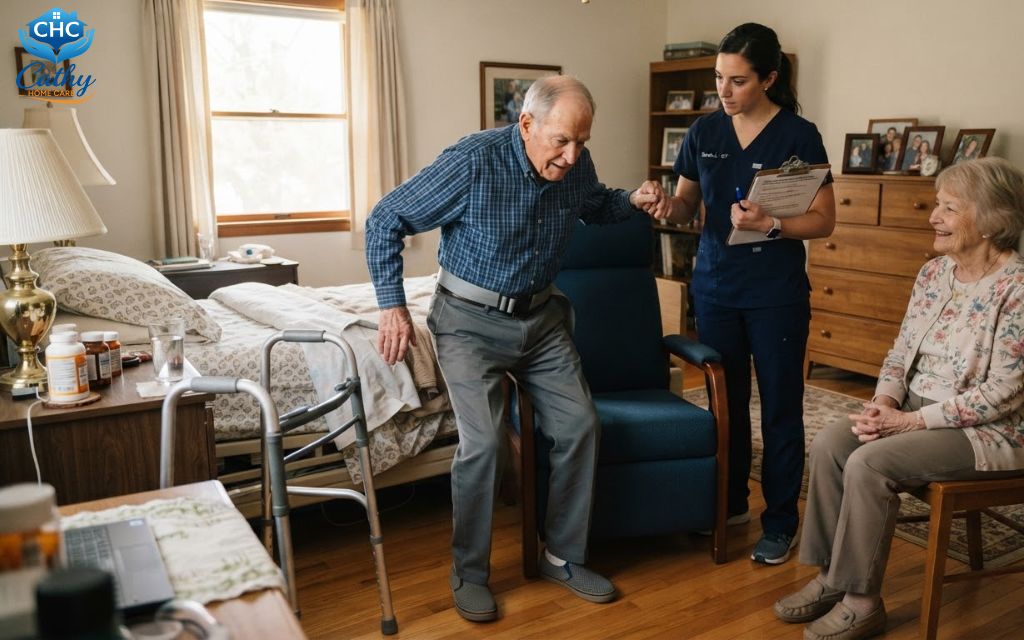
An OT can measure the room, test transfers, and recommend equipment that fits the person.
Cathy Home Care: In-home support for safer nights in Houston
Cathy Home Care has served Houston and nearby communities since 2002. Our team provides personal assistance, home health aide, and Primary Home Care services that help older adults and people with disabilities manage daily routines at home.
We work with several Texas Medicaid health plans and can help you check eligibility. Our team speaks English, Vietnamese, Spanish, and Chinese.
A safe room and the right support work together. If getting out of bed or reaching the bathroom at night has become hard, call (713) 779-8998 or request a call back. We are ready to help you put bedroom safety for seniors into daily practice.

FAQs about bedroom safety for seniors
What is the safest bed height for a senior?
The safest bed height lets a senior sit with feet flat on the floor and knees bent at about 90 degrees. For many adults, that falls near 20 to 23 inches (51 to 58 cm) from floor to mattress top.
Are bed rails safe for elderly adults?
Bed rails are safe only when they fit the bed, meet ASTM F3186-17, and suit the person. The FDA warns of entrapment risk, especially for people with memory loss, so ask a doctor or OT first.
How can I keep an elderly parent from falling out of bed?
Set a safe bed height, use a firm mattress, and add a fitted assist handle instead of a full rail. Ask an OT whether a bedside fall mat suits the room.
What lighting is best for a senior’s bedroom at night?
Warm, low motion-sensor lights along the floor work best at night. Add a bedside lamp with an easy switch and keep a flashlight on the nightstand.
Should there be a smoke alarm inside the bedroom?
Yes. The CPSC recommends a smoke alarm inside every bedroom and outside every sleeping area. Test it monthly and change the batteries once a year.
How often should we review bedroom safety?
Review the room at least once a year. Recheck it after a fall, a hospital stay, a new medication, or a change in memory.
Does Texas Medicaid help pay for home safety changes?
Texas Medicaid may help through STAR+PLUS HCBS, which covers minor home modifications for eligible members. Contact your MCO or our team to review options for bedroom safety for seniors.