Bathroom safety for seniors starts where most bathroom injuries happen: the tub, the shower, and the toilet. This guide is for families and older adults who want to fix those risks zone by zone. You will learn which changes matter most, who may pay for them, and when hands-on bathing help makes sense.
Why bathroom safety for seniors matters
Bathroom safety for seniors matters because wet tile, hard fixtures, and constant sit-to-stand moves make the bathroom a common place for injury. About 1 in 4 adults aged 65 and older falls each year.
The CDC reports more than 3 million emergency visits each year for falls among older adults. One in five falls causes a serious injury, such as a broken bone or a head injury.
Where bathroom injuries happen: tub, shower, and toilet
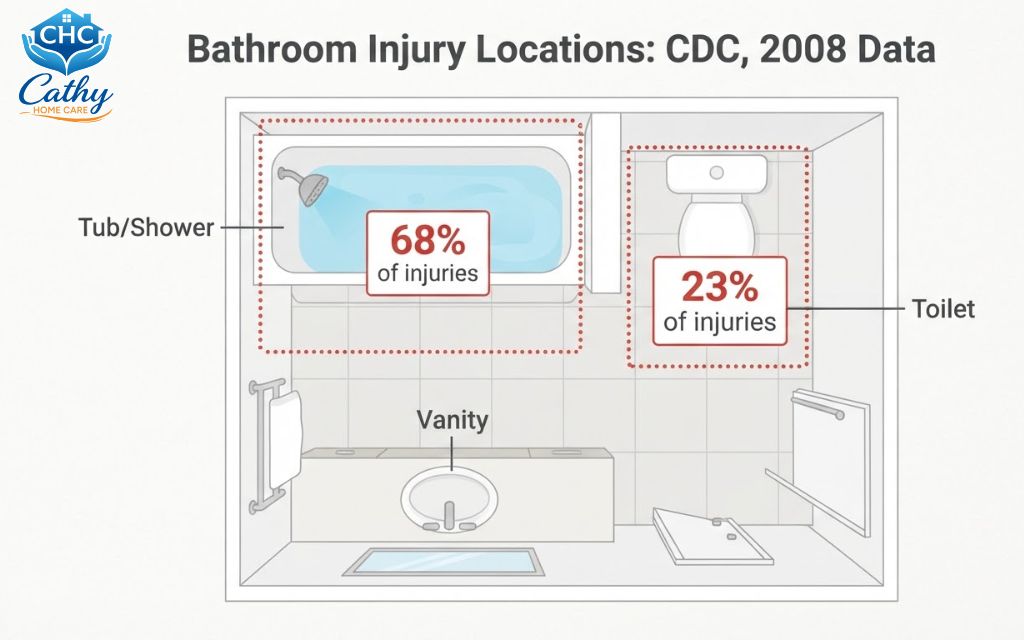
A CDC study of 2008 emergency data counted about 234,000 nonfatal bathroom injuries in people aged 15 and older. Falls caused 81% of them. Most injuries (68%) happened in or near the tub or shower. Another 23% happened at the toilet.
Age shifts the danger zone. In adults aged 85 and older, the injury rate at the toilet was higher than in the tub or shower.
Why the risk rises with age
Balance, eyesight, and leg strength often decline with age. Some medicines and sudden drops in blood pressure cause dizziness on standing. Older adults also face a higher risk of scald burns from hot tap water.
Start with a 10-minute bathroom safety check
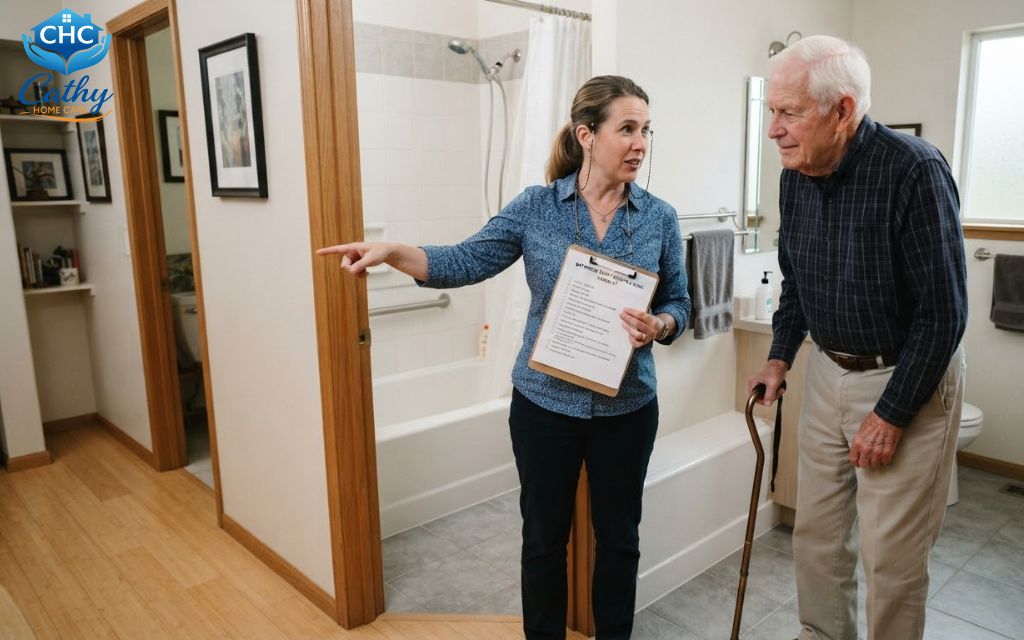
A quick walk-through shows which fall hazards to fix first. Watch your loved one move through a normal routine, then check each zone below.
| Zone | What to check |
| Path and doorway | Clutter, cords, loose rugs, dark hallway at night |
| Floor | Slick tile, water near the tub, mats without rubber backing |
| Tub or shower | High tub wall, no seat, no grab bar, out-of-reach soap |
| Toilet | Low seat, nothing sturdy to push up from |
| Sink | Hard-to-turn knobs, items stored too high or too low |
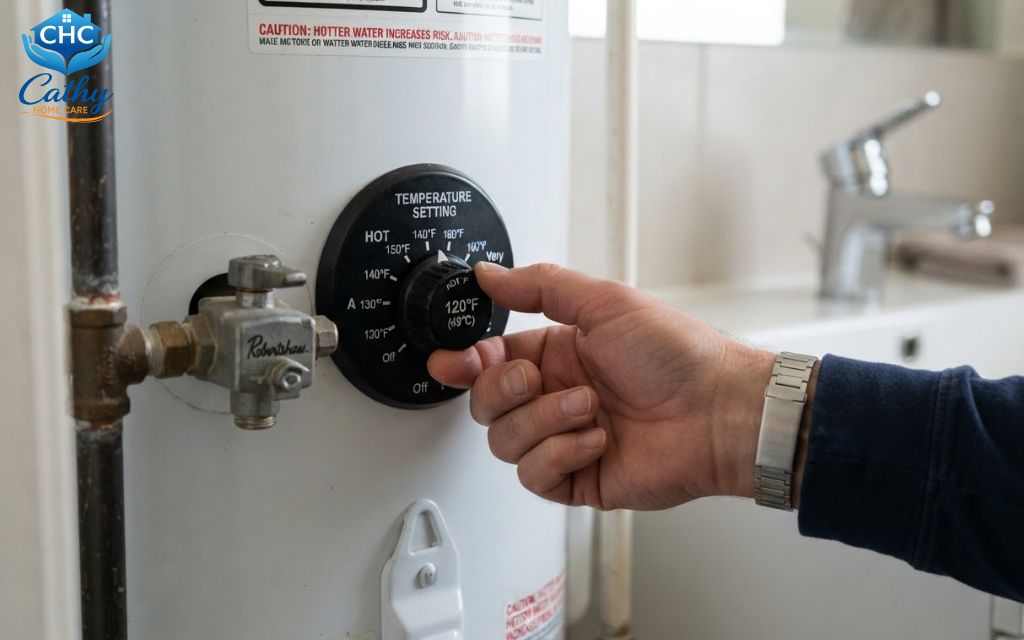
| Water | Water heater set above 120°F (49°C) |
Notice how the person moves, not only what the room holds. Gripping the towel bar or the sink edge is a clear sign that support is missing.
If you are unsure what to change, ask a doctor for a referral to an occupational or physical therapist. These therapists can assess the bathroom and match equipment to the person’s strength and balance.
Shower safety for seniors
Shower safety for seniors depends on three things: grip underfoot, a place to sit, and supplies within reach. Each fix below costs little and takes an afternoon or less.
Add non-slip surfaces inside and outside the shower
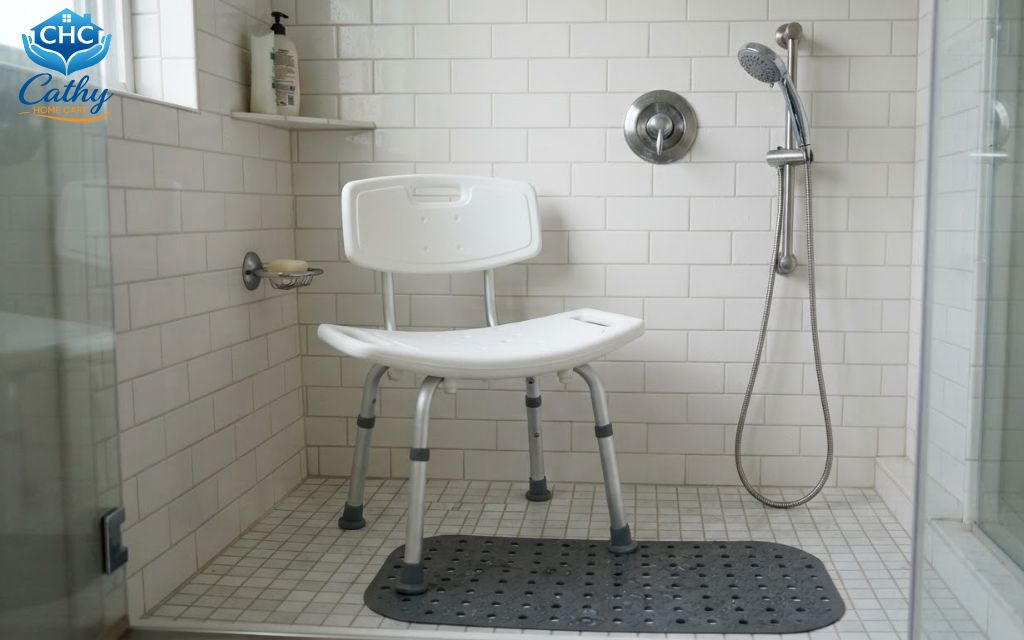
Place suction-cup mats or textured strips on the shower floor. Outside the shower, use a mat with a rubber backing, never a loose bath rug.
Wipe up water as soon as the shower ends. A dry floor is the cheapest safety tool you have. Replace strips once their edges lift or the texture wears smooth.
Use a shower chair and a handheld showerhead
A shower chair or bench lets a person wash while seated, which cuts fatigue and balance loss. Choose one with rubber feet and drain holes.
Pair the seat with a handheld showerhead on a long hose. The person can rinse without twisting, standing, or reaching overhead.
Keep soap and towels within reach
Mount soap and shampoo dispensers at chest height. Hang the towel where the person can grab it without standing up.
Skip bath oils in the tub or shower. They coat the floor and make it slick.
Consider a curbless or low-threshold shower
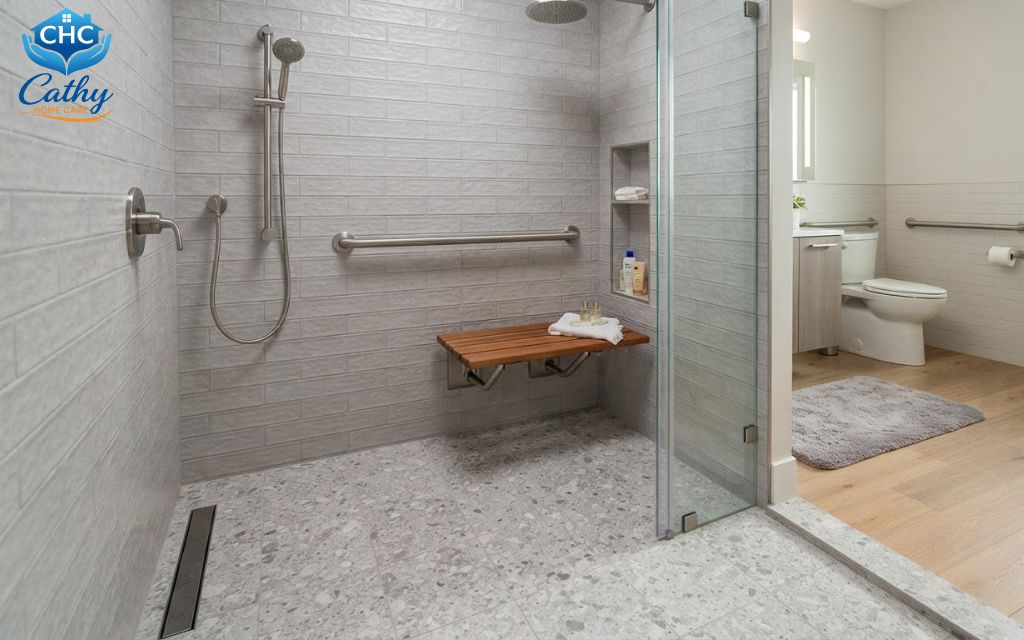
A curbless shower removes the step that trips many older adults. It also fits a walker or shower wheelchair. This change needs a contractor, so plan it with any larger remodel.
Bathtub safety for the elderly: how to make a tub safer
To make a bathtub safe for an elderly person, remove the need to step over the tub wall on one leg. That single motion causes many tub falls.
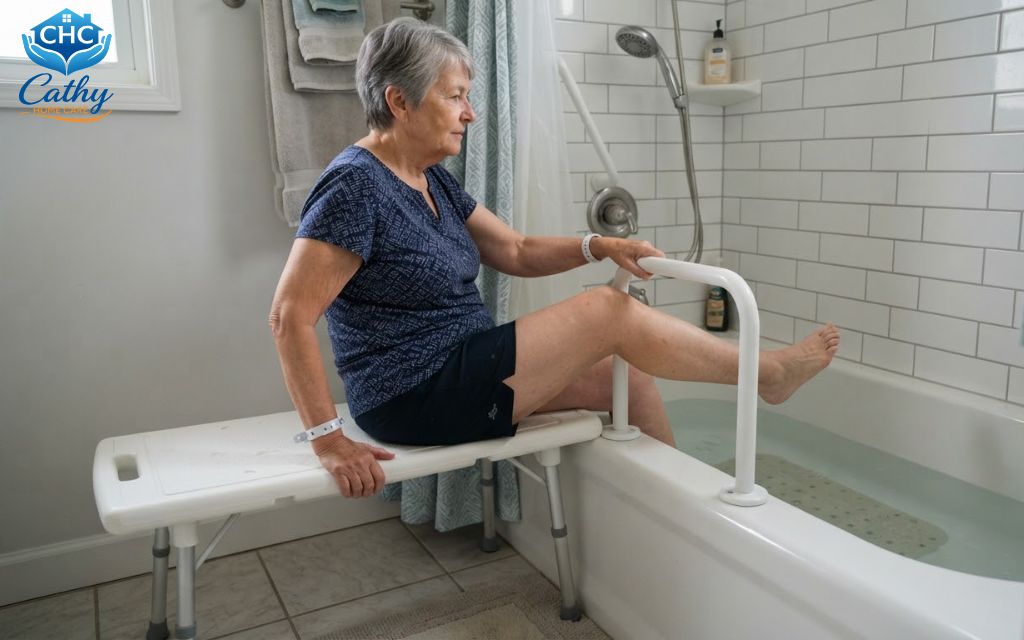
Use a tub transfer bench
A transfer bench sits half inside and half outside the tub. The person sits down outside, then slides across and lifts one leg at a time. Both feet stay planted until the body is seated. A clamp-on tub rail adds a second handhold without drilling into tile.
Shower chair or transfer bench: which one fits?
A shower chair suits a person who can step into the tub or shower safely. A transfer bench suits a person who struggles to lift a leg over the tub wall. Ask a therapist if you are unsure.
Is a walk-in tub worth it?
A walk-in tub has a door, a low step, and a built-in seat. It removes the tub wall but costs far more than a bench. The bather must also wait inside while the tub fills and drains, which can mean sitting wet and cold.
Grab bars: where to install them and what to avoid
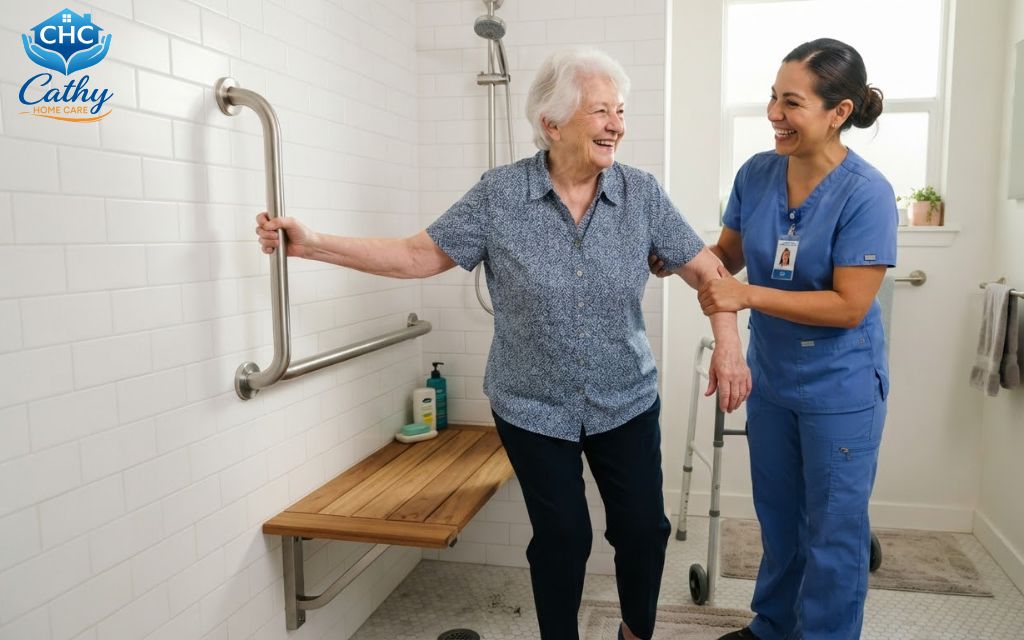
Grab bars give a senior a fixed handhold at the exact moments balance fails: stepping in, standing up, and turning. They are the single most useful bathroom safety upgrade.
Best spots for grab bars
The National Institute on Aging advises bars next to the toilet and both inside and outside the tub or shower. MedlinePlus suggests at least two: one for getting in and out, and one for standing up from a seat. In a walk-in shower, a vertical bar at the entry helps with the step in.
Height, size, and strength
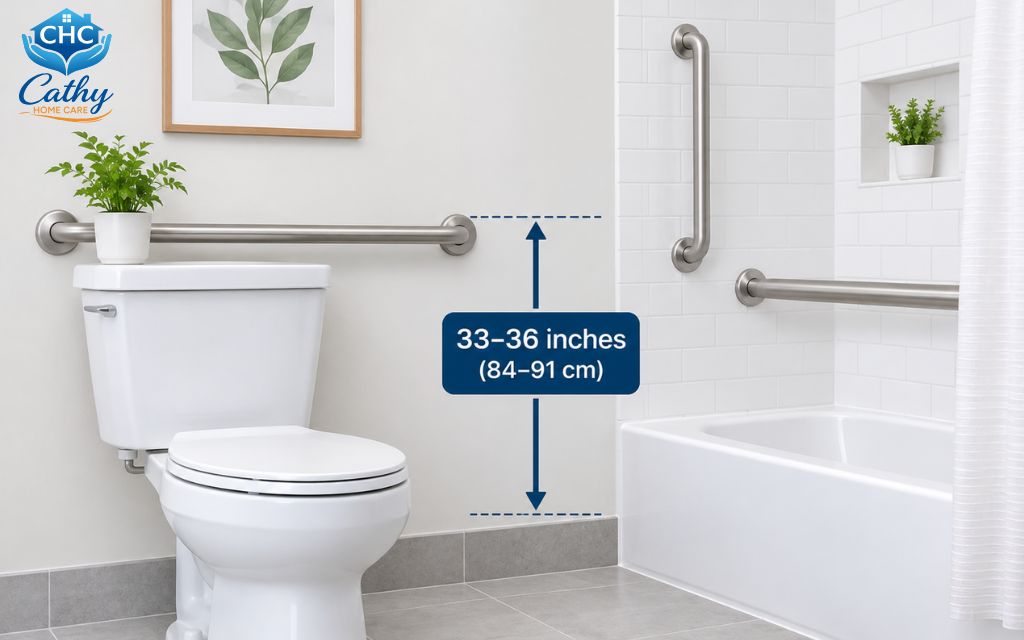
The ADA standards for public restrooms offer a useful reference for home installs:
| Feature | ADA reference |
| Height (horizontal bar) | 33–36 inches (84–91 cm) above the floor |
| Bar diameter | 1¼–2 inches (32–51 mm) |
| Gap from the wall | 1½ inches (38 mm) |
| Strength | Holds 250 pounds (113 kg) of force |
A home bar should fit the person’s height and reach, so these numbers are a starting point.
Vertical, horizontal, or angled?
Advice differs. MedlinePlus recommends vertical or horizontal bars, not diagonal ones. Some hospital guides suggest an angled bar on the tub wall. The right answer depends on how the person moves, so let an occupational therapist choose.
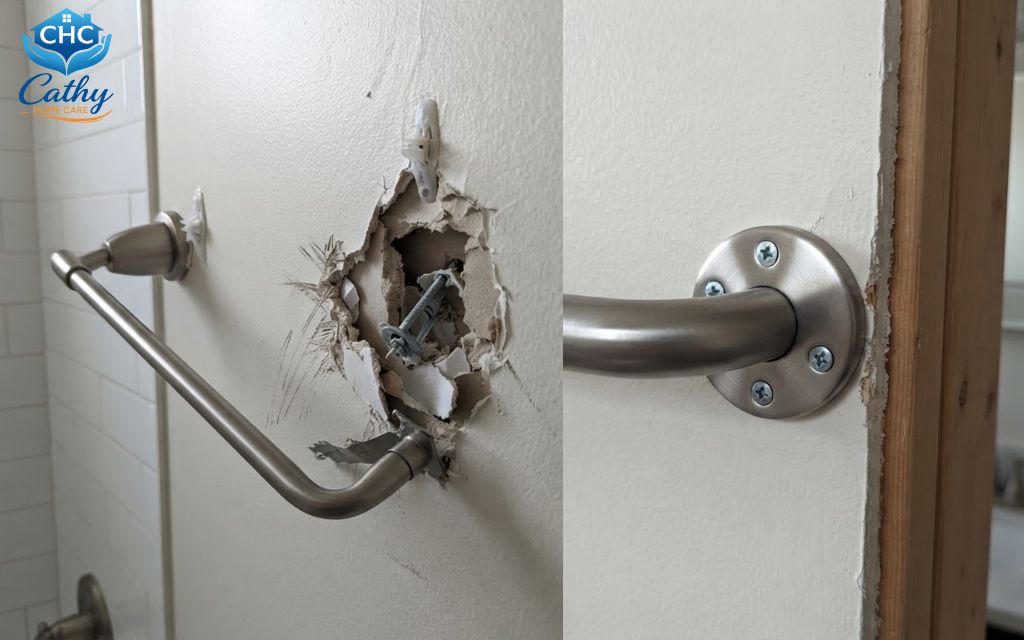
Never use towel bars or suction-cup bars
Towel bars pull out of drywall under body weight. Suction-cup bars can let go without warning. Anchor every grab bar into wall studs or rated anchors, and hire a pro if you are unsure.
Toilet safety: sitting, standing, and nighttime trips
The toilet is a top injury spot for adults over 85, so it deserves the same attention as the tub. The risk peaks when a person sits down or stands up. Night trips add more risk, since the person is drowsy, hurried, and walking in low light.
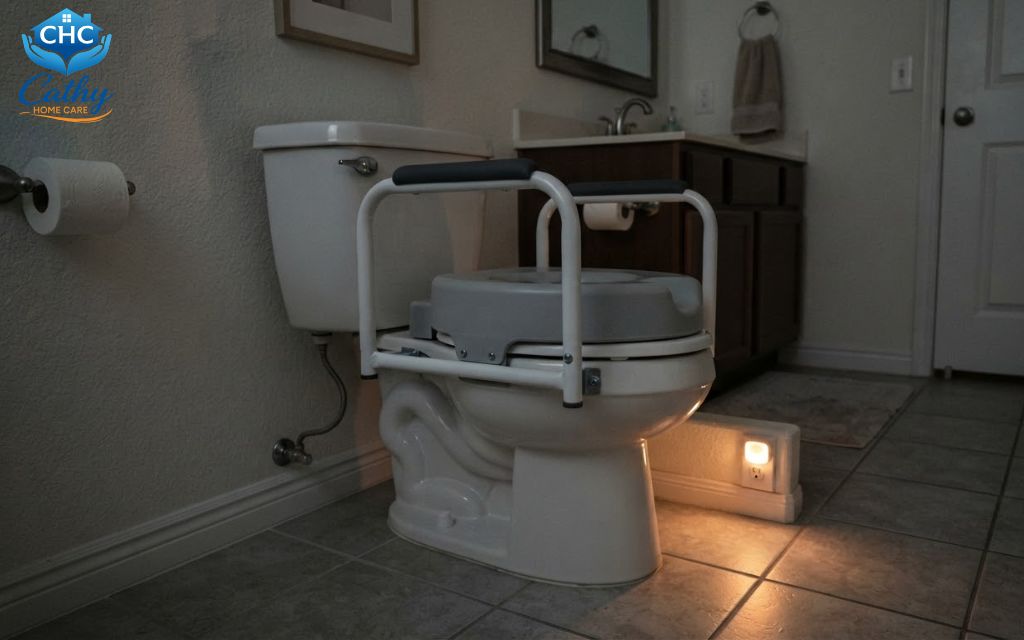
- Raise the seat: A raised toilet seat or a comfort-height toilet shortens the distance to sit and rise.
- Add something to push on: A toilet safety frame or a wall grab bar beats grabbing the sink or the towel bar.
- Use a commode at night: A bedside commode can replace a long, dark walk to the bathroom.
- Light the route: Plug in night lights that turn on by themselves in the dark, from bed to toilet.
- Stand up slowly: Sitting for a moment before rising gives blood pressure time to adjust.
Prevent scalds and other hidden hazards
Set the water heater to 120°F (49°C) or lower. The CPSC notes that water at 140°F (60°C) can cause a third-degree burn in about six seconds. At 120°F (49°C), the same burn takes about five minutes.
Older adults and young children are most at risk. A few more changes close the remaining gaps:
- Anti-scald valve: caps the water temperature at the faucet or showerhead.
- Single-lever faucet: mixes hot and cold in one easy motion, which also helps arthritic hands.
- Clear labels: large, high-contrast “HOT” and “COLD” marks on handles.
- GFCI outlets: cut power fast if a hair dryer meets water.
- An unlockable door: a lock that opens from outside lets help get in quickly.
- Grippy footwear: non-slip shower shoes add traction on wet tile.
Bathroom safety upgrades by budget
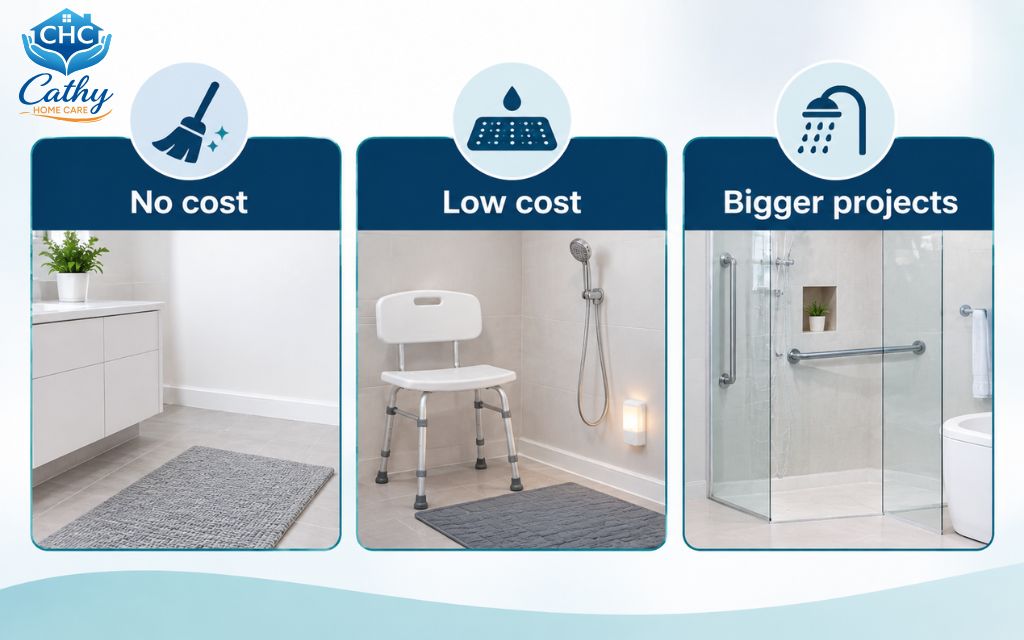
You do not need a remodel to make a real difference. Start with the free fixes this week, then add equipment as needs change.
| Budget level | Changes to make |
| No cost | Clear clutter and cords, move daily items to waist height, wipe floors dry, remove loose rugs |
| Low cost | Non-slip mats and strips, night lights, shower chair, handheld showerhead, raised toilet seat |
| Mid cost | Professionally installed grab bars, toilet safety frame, tub transfer bench, anti-scald valve |
| Remodel | Curbless shower, walk-in tub, wider doorway, comfort-height toilet |
Renting? Ask the landlord before drilling into walls. Clamp-on tub rails and freestanding toilet frames need no drilling at all.
Who pays for bathroom safety equipment?
Most families pay out of pocket, but some programs may help. Cost is a real barrier: a 2021 UCSF study found that 42% of older adults with mobility limits, about 5 million people, lacked the bathroom equipment they needed.
Original Medicare and Medicare Advantage
Original Medicare generally does not pay for grab bars, raised toilet seats, or bath seats. It treats them as comfort or convenience items. Some Medicare Advantage plans offer extra benefits for bathroom safety items, so call the plan and ask what it covers this year.
Texas Medicaid: STAR+PLUS minor home modifications
Texas STAR+PLUS Home and Community Based Services can pay for minor home modifications. These include accessible showers, tub and toilet changes, and grab bars. The lifetime limit is $7,500 per member, plus $300 a year for repairs after that.
The change must be part of the member’s service plan, and a renter needs the owner’s written approval. Ask your service coordinator whether you may qualify.

Elderly bathing solutions: when equipment isn’t enough
The safest bathroom still needs a steady pair of hands for some seniors. Equipment reduces risk, but it cannot catch a stumble or notice a new bruise.
Signs a senior may need help with bathing
Watch for these changes over a few weeks:
- Holding walls, towel bars, or the sink while moving
- Trouble rising from the toilet or a low chair
- Skipping showers or wearing the same clothes for days
- Unexplained bruises, cuts, or a recent fall
- Fear or anxiety about bathing alone
One sign alone may mean little. Several signs together suggest it is time to talk with your loved one and their doctor.
What a caregiver or aide can help with
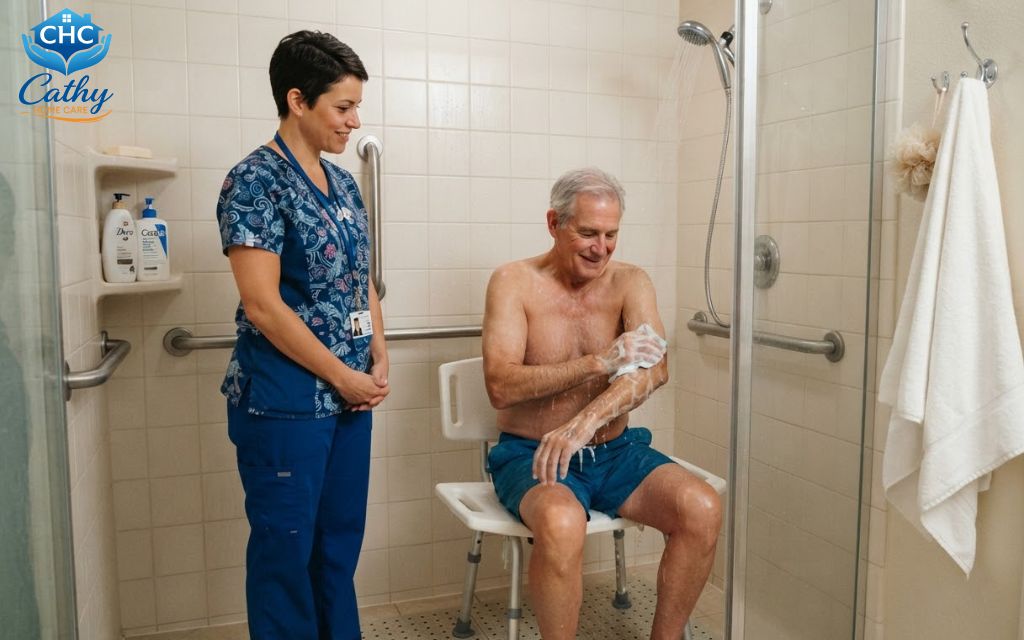
A trained attendant can help a person in and out of the tub or shower, wash and dry, and dress afterward. They can also help with toileting and with moving from sitting to standing. Standby assistance means the aide stays close and steps in only when needed.
When our caregivers support a bath, the aim is the same: keep the person as independent as safety allows.
When a parent resists bathing
Many older adults refuse help because bathing feels private. Offer choices about the time and the order of steps. Keep the room warm and cover the body with a towel during the bath. Some parents accept help from a trained aide more easily than from their own child.
If resistance comes with memory loss or confusion, talk with the person’s doctor.
Bathing support through Texas programs
In Texas, Medicaid programs such as Primary Home Care and Community Attendant Services list bathing, toileting, and transfers among their allowed attendant tasks. The hours and tasks depend on each person’s assessment and service plan.
Have a plan if a fall happens
A fall plan shortens the time a person spends on the floor waiting for help. Agree on these steps as a family:
- Keep a phone or a waterproof help button within reach during every bath.
- Do not lift a fallen person alone; you could injure both of you.
- Call 911 if the person is hurt, confused, or cannot get up.
- Tell the doctor about every fall, even one without injury.
The last step matters. The CDC reports that fewer than half of Medicare members who fall tell their health care provider. Practice the plan once, so everyone knows where the phone sits and who to call first.
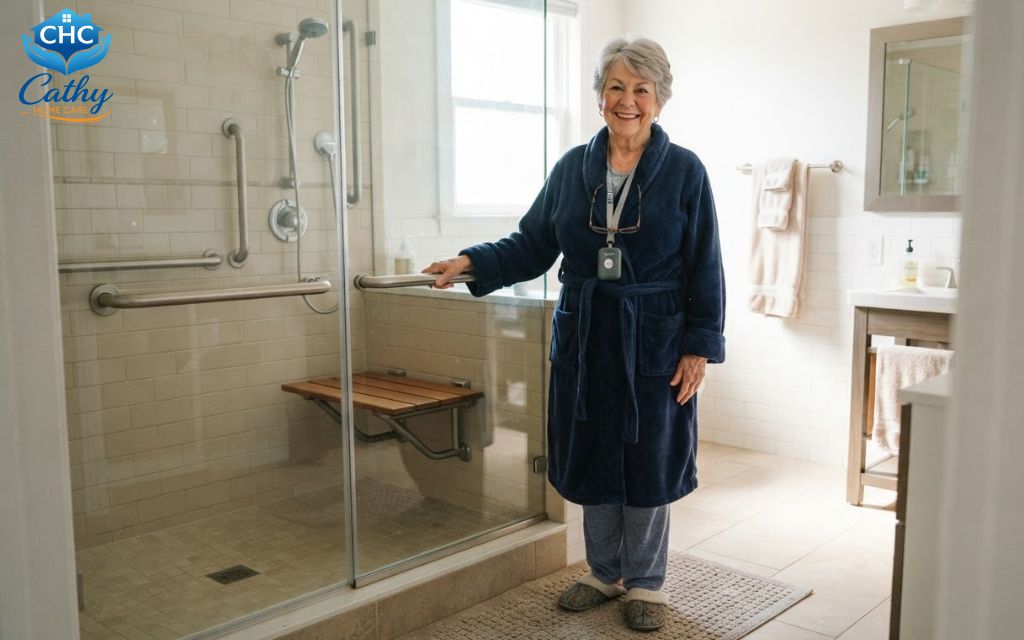
Cathy Home Care support for Houston families
Cathy Home Care has helped seniors and adults with disabilities live safely at home in Houston since 2002. Our caregivers assist with bathing, dressing, toileting, moving around the home, and other daily tasks.
We provide Home Health Aide, Personal Care Services, and Primary Home Care. We also work with several Texas Medicaid health plans and can help you check which programs fit your situation. Our team speaks English, Vietnamese, Spanish, and Chinese.
Safe bathing takes the right room setup and, for some, the right person nearby. Start with grab bars, dry floors, and a seat, then add help when daily care becomes hard. To talk about bathing help at home, call (713) 779-8998 or request a call back. Small steps make bathroom safety for seniors part of every day.

FAQs about bathroom safety for seniors
What is the most important bathroom safety item for seniors?
Grab bars come first for most older adults. They give a fixed handhold when stepping into the tub, standing up from the toilet, or turning. Pair them with non-slip surfaces for the biggest gain.
Where should grab bars go in a bathroom for the elderly?
Place them next to the toilet and both inside and outside the tub or shower. A therapist can set the exact height and angle for the person’s body.
Should a senior use a shower chair or a tub transfer bench?
Use a shower chair if the person can step into the tub safely. Choose a transfer bench if lifting a leg over the tub wall is hard.
What temperature should the water heater be for seniors?
Set it to 120°F (49°C) or lower. At this setting, a serious burn takes minutes instead of seconds.
Does Medicare pay for grab bars or shower chairs?
Original Medicare usually does not. Some Medicare Advantage plans offer extra benefits, and Texas STAR+PLUS may cover minor home modifications for eligible members.
How do I help an elderly parent who refuses to shower?
Offer choices, keep the room warm, and protect privacy with towels. A trained aide is sometimes easier to accept than a family member.
Can a home care aide help with bathing?
Yes. Aides help with getting in and out of the tub, washing, drying, and dressing. They can also give standby help, which supports daily bathroom safety for seniors.