Learning how to prevent falls for elderly at home starts with three moves: fix hazards, build strength, and plan safer routines. This guide gives family caregivers and older adults a room-by-room checklist, health steps to raise with a doctor, and clear signs that extra support at home may help.
How to prevent falls for elderly at home
To prevent falls for elderly at home, combine health care, daily movement, and a safer living space. Falls rarely have a single cause, so the strongest plans address several risks at once.
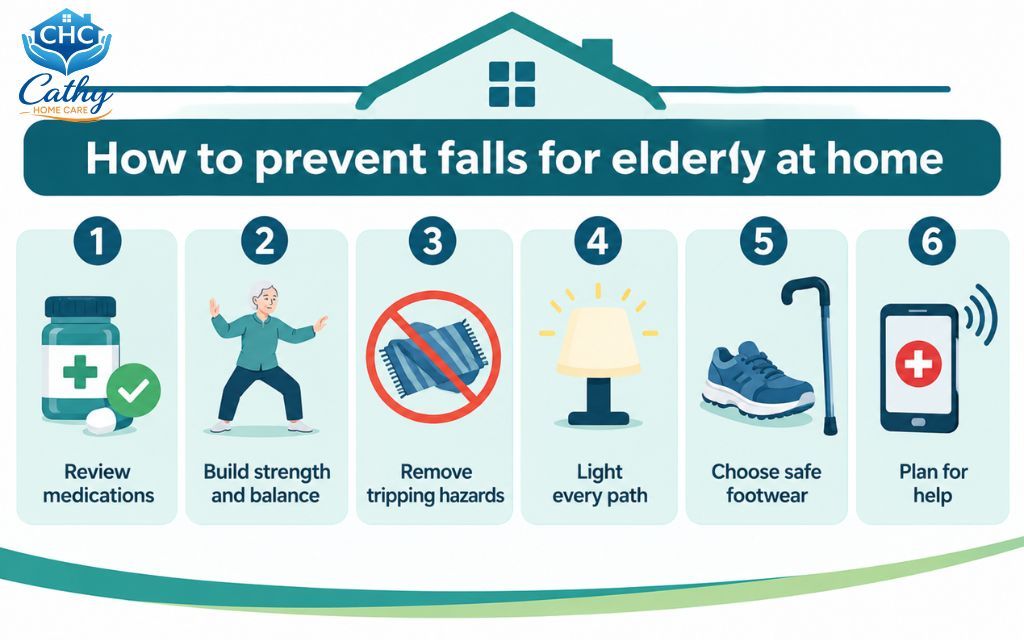
Six steps form the core of a home fall prevention plan:
- Review medications with a doctor or pharmacist. Sleep aids, sedatives, and some blood pressure drugs cause dizziness or drowsiness.
- Build strength and balance through regular exercise. Tai chi, chair rises, and walking keep leg muscles and reflexes responsive.
- Remove tripping hazards in every room. Loose rugs, cords, and clutter trigger many slips and trips.
- Light every path, especially at night. Night lights and bedside lamps prevent blind steps to the bathroom.
- Choose safe footwear and fitted mobility aids. Nonslip soles and a correctly sized cane or walker improve stability.
- Plan how to get help after a fall. A charged phone or a medical alert device shortens time spent on the floor.
The stakes are high for every family. More than 1 in 4 adults age 65 and older report a fall each year, and about 43,000 die from falls annually, according to the CDC. Falls also cause more than 95% of hip fractures in older adults.
Why older adults fall: Common fall risk factors
Older adults fall when several fall risk factors overlap, such as weak muscles, medication side effects, and household hazards. Each factor needs its own fix.
Changes in strength, balance, vision, and hearing
Aging muscles lose power, and slower reflexes make a stumble harder to correct. Weaker depth perception lets a step edge or dark rug blend into the floor.
The inner ear governs balance, which links vertigo and hearing loss to falls. Foot pain, numbness, and loose shoes weaken the base of support.
Medications and chronic health conditions
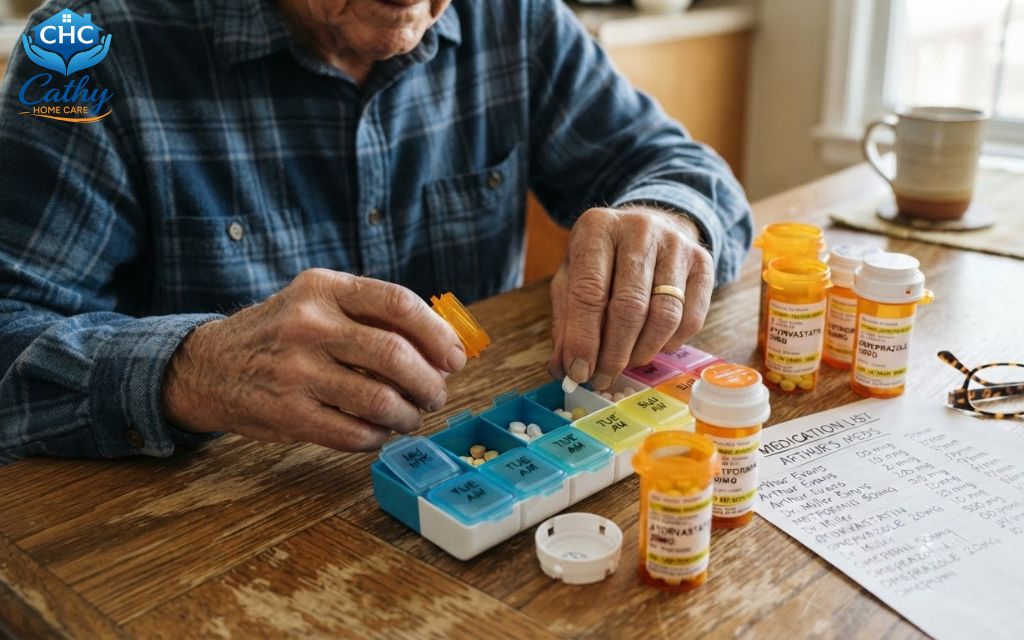
Medication effects drive many preventable falls. Fall risk climbs when a person takes 5 or more medicines, Johns Hopkins Medicine notes. Sedatives, sleep aids, antihistamines, and some antidepressants can cause drowsiness or confusion.
Orthostatic hypotension, a blood pressure drop on standing, brings lightheadedness after leaving a bed or chair. Diabetes, arthritis, Parkinson’s disease, and dementia add further risk. Talk to the prescribing doctor before stopping or changing any medicine.
The highest-risk moments of the day
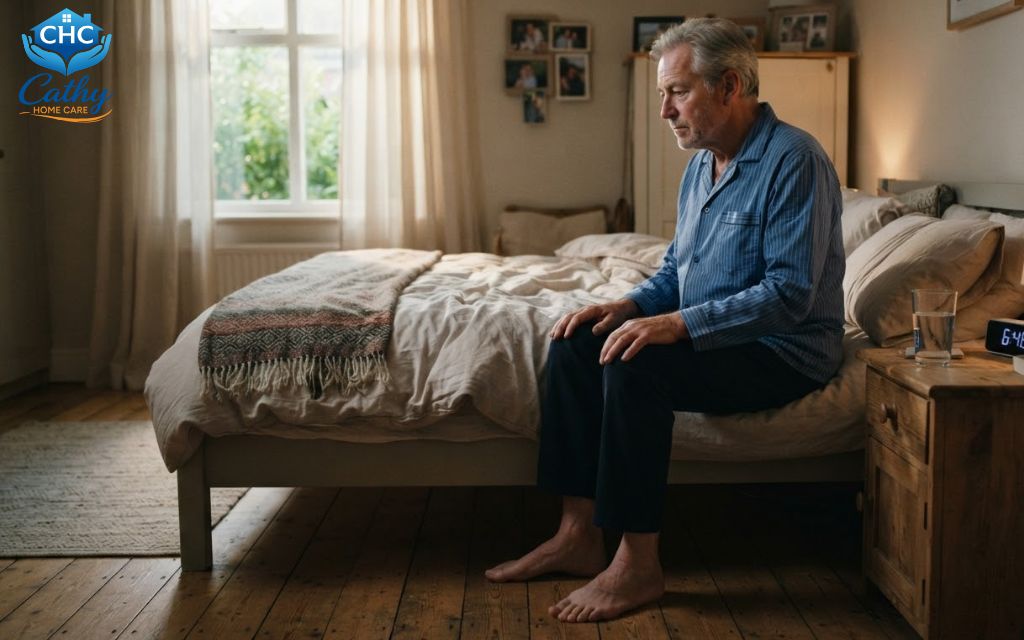
Most falls happen during ordinary transitions. Johns Hopkins Medicine reports frequent falls at the toilet or shower during sitting and standing, and at night in a dark bedroom.
| Daily moment | Why the risk rises | What helps |
| Getting out of bed at night | Darkness, drowsiness, and a blood pressure drop | Bedside lamp and a short pause on the bed edge |
| Toilet and shower transfers | Wet surfaces, twisting, and bending | Grab bars, shower chair, and raised toilet seat |
| Getting dressed | Standing on one leg and long clothing | Sitting in a sturdy chair to dress |
| Carrying items on stairs | Blocked view and no free hand | A shoulder bag and extra trips |
Room-by-room home fall prevention checklist
A room-by-room checklist turns fall prevention into a 15-minute walkthrough. Start with the bedroom, bathroom, and stairs, the most common sites of home falls, according to NCOA. Repeat the walk after dark.
Floors, hallways, and stairs
Floors and stairs need clear surfaces, firm support, and switches within reach:
- Install sturdy handrails on both sides of every staircase.
- Add light switches at the top and bottom of stairs and at each end of long hallways.
- Remove throw rugs, or secure larger rugs with double-sided tape or nonslip backing.
- Clear books, shoes, cords, and laundry from floors and steps.
- Apply nonslip strips to wood or tile steps.
Bathroom
The bathroom combines hard surfaces, water, and frequent transfers, so it needs the most hardware:
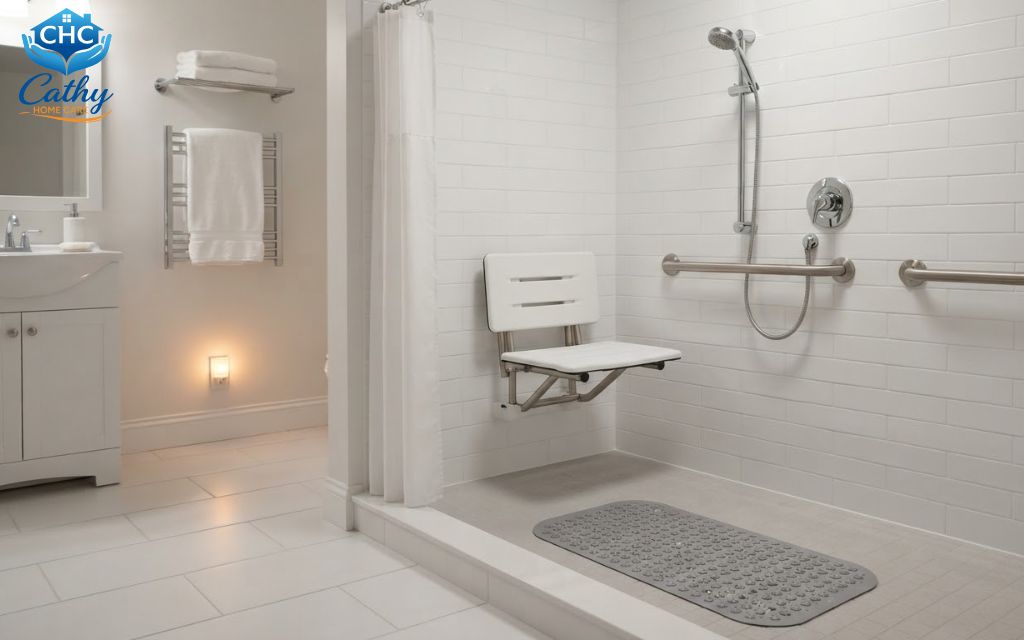
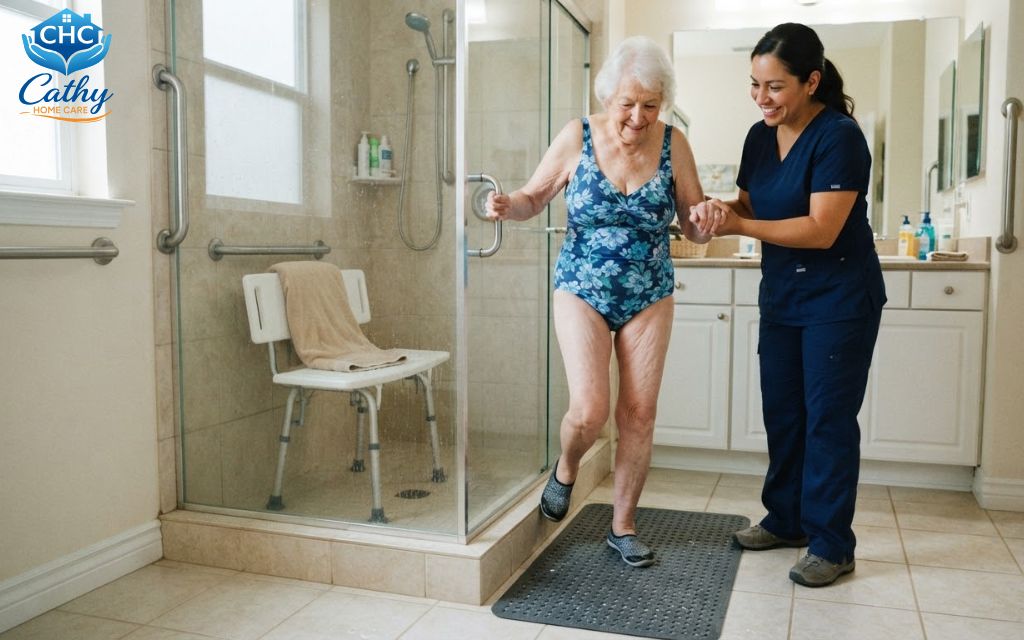
- Mount grab bars beside the toilet and inside and outside the tub or shower. The ADA standard places horizontal bars 33 to 36 inches (84 to 91 cm) above the floor.
- Place nonslip mats or strips on every wet surface.
- Use a shower chair and a hand-held shower head for seated bathing.
- Add a raised toilet seat or a toilet frame with armrests.
Bedroom and the nighttime path to the bathroom
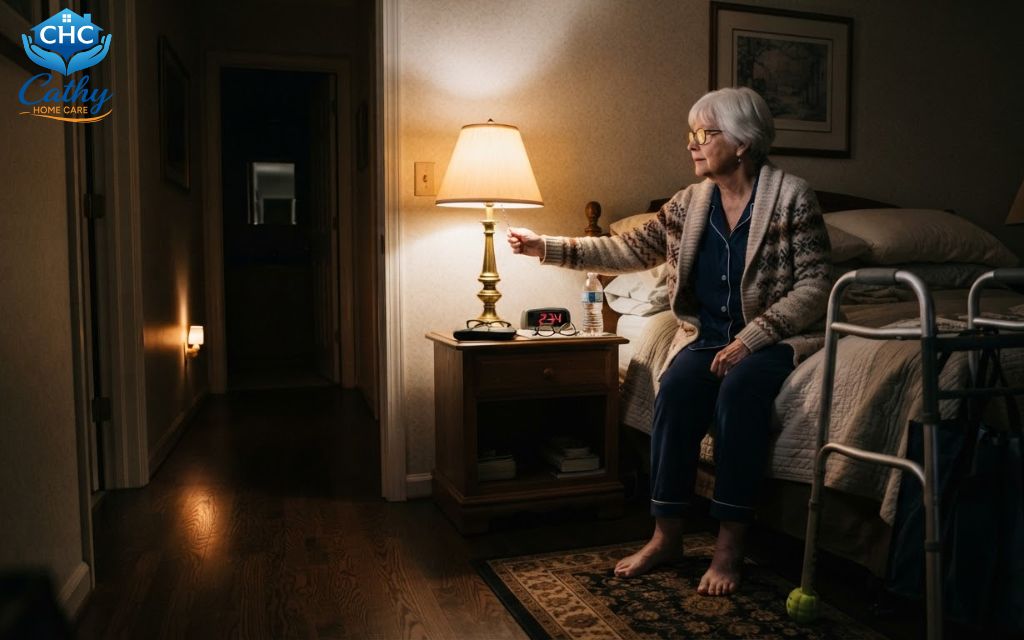
The bedroom matters most at night, when drowsiness and darkness combine:
- Keep a lamp, phone, and flashlight within reach of the bed.
- Install motion-sensor night lights along the path to the bathroom.
- Adjust bed height so both feet rest flat on the floor when sitting on the edge.
- Park the walker or cane within arm’s reach of the bed.
Kitchen and living areas
Kitchens and living rooms cause falls through reaching, climbing, and crowded walkways:
- Store everyday dishes and food between waist and shoulder height.
- Use a reach tool instead of climbing on chairs, and choose a step stool with a handrail if one is needed.
- Wipe spills right away.
- Route electrical cords along walls and away from walkways.
- Arrange furniture to leave wide, open walking paths, and track pets that slip underfoot.
Entryways, porches, and outdoor steps
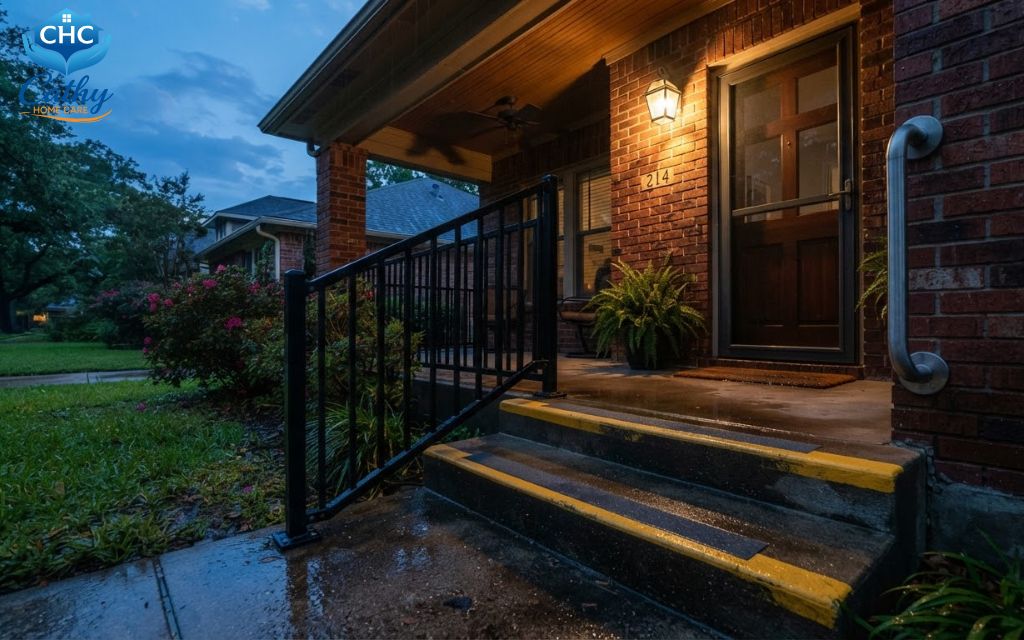
Rain and humidity in the Houston area leave porches, patios, and entry floors slick. Outdoor fixes focus on traction and visibility:
- Repair cracked or uneven steps and walkways.
- Mark step edges with contrasting paint, and add nonslip treads.
- Place an absorbent mat inside the door to catch water from shoes.
- Install a grab bar beside the front door for balance while unlocking.
- Keep porch lights on after dark and flashlights ready for storm outages.
Fall prevention strategies beyond the home
Health-focused fall prevention strategies target why a person falls, while home changes target where.
Ask for a falls checkup and medication review
A falls checkup lets a doctor assess balance, gait, leg strength, blood pressure, vision, and hearing. Mayo Clinic suggests bringing three things to the visit:
- A full list of prescriptions, over-the-counter medicines, and supplements.
- Details of each recent fall or near fall, including the time, place, and activity.
- Notes on symptoms such as dizziness, joint pain, shortness of breath, or numb feet.
Stay active with strength and balance exercise
Exercise lowers fall risk by building leg strength, balance, and coordination. The American Geriatrics Society recommends exercising at least 3 times a week and notes that at least 12 weeks of exercise are needed before fall risk begins to drop.
Evidence-based options include tai chi, the Otago Exercise Program, walking, and chair rises. Johns Hopkins physical therapists suggest balance holds beside a counter, from 10 up to 30 seconds, with someone nearby. Ask a doctor or physical therapist which exercises fit.

Check vision, hearing, feet, and mobility aids
Annual eye and hearing exams protect the senses that guide balance. Bifocals and progressive lenses make curbs harder to judge, the American Geriatrics Society notes, so single-distance glasses help outdoors.
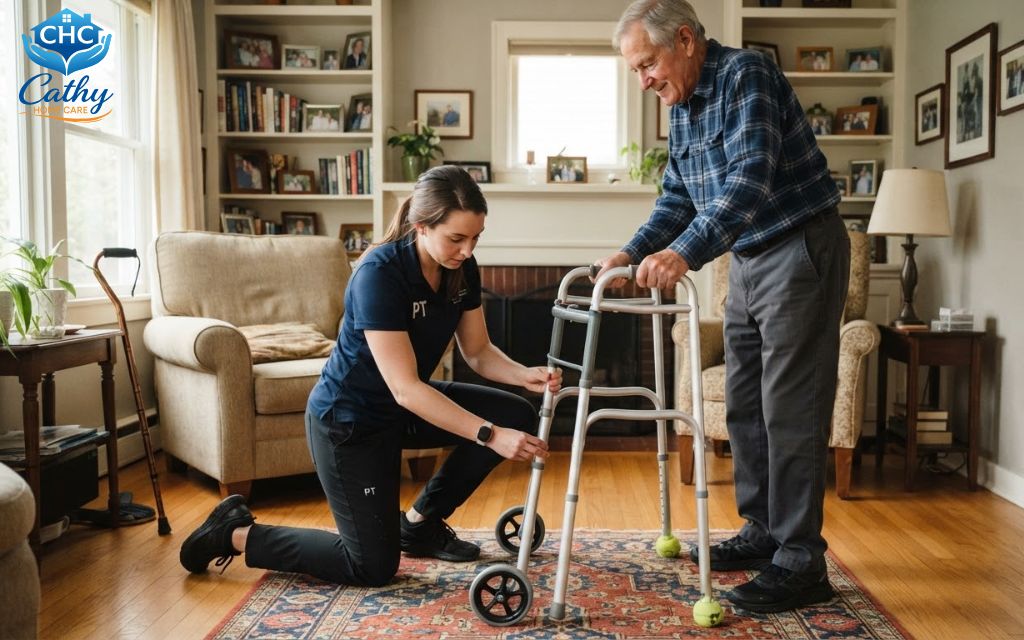
Closed-back shoes with thin, nonslip soles outperform socks or loose slippers on smooth floors. UChicago Medicine warns that a cane or walker set too high or too low shifts balance, so ask a physical therapist to fit the device.
Daily habits that lower fall risk
Daily habits protect against the fall risks that home changes miss. Four routines make the most difference:
- Rise in stages: Sit on the bed edge for a moment, then stand and pause before walking so blood pressure can adjust.
- Drink fluids and eat regular meals: Dehydration and skipped meals bring dizziness and weakness.
- Keep one hand free: Use a shoulder bag or make two trips so one hand stays on the rail.
- Move at a steady pace: Rushing to the phone or door causes many trips, so keep the phone in a pocket.
How family caregivers can help prevent falls
Family caregivers prevent falls by spotting early warning signs, adjusting routines, and arranging support before an injury happens.
Warning signs of higher fall risk
Six warning signs suggest an aging parent or spouse faces higher fall risk:
- Holding walls or furniture while walking.
- Reporting near falls or showing unexplained bruises.
- Avoiding baths or showers.
- Feeling dizzy when standing up.
- Dropping favorite activities out of fear.
- Struggling to rise from a chair without using the arms.
Talking about fall risk while protecting independence
Fear of falling leads many older adults to move less, which weakens muscles and raises fall risk. Frame safety changes as tools for independence, and start with the changes your loved one chooses.
“Falls are not a normal part of aging. They can be prevented.” — Centers for Disease Control and Prevention

When extra help at home makes sense
Extra help at home makes sense when bathing, toileting, dressing, or walking requires another person’s steady hand. A trained aide assists with these activities of daily living, prepares meals, and keeps walkways clear.
Aides provide non-medical support, while nurses and therapists handle clinical care such as wound care. Personal Assistance Services (PAS) and Home Health Aide (HHA) services cover this hands-on help.
What to do if an older adult falls at home
After a fall at home, stay calm, check for injury, and decide whether to call 911 before trying to stand.
Check for injury before getting up
Call 911 if the person lost consciousness, hit their head, seems confused, or cannot bear weight without pain, as the American Geriatrics Society advises. Keep a possibly injured person on the floor, warm and still, until help arrives.
If no injury is present, the person can roll onto one side, rise to hands and knees, and crawl to a sturdy chair. From there, they place both hands on the seat, bring the stronger leg forward, push up, and turn to sit.
Tell the doctor, even after a minor fall
Report every fall to a doctor, including falls without injury. A fall can signal an infection, a medication reaction, or a heart rhythm change. Note the time, place, activity, and symptoms.
Build an emergency plan
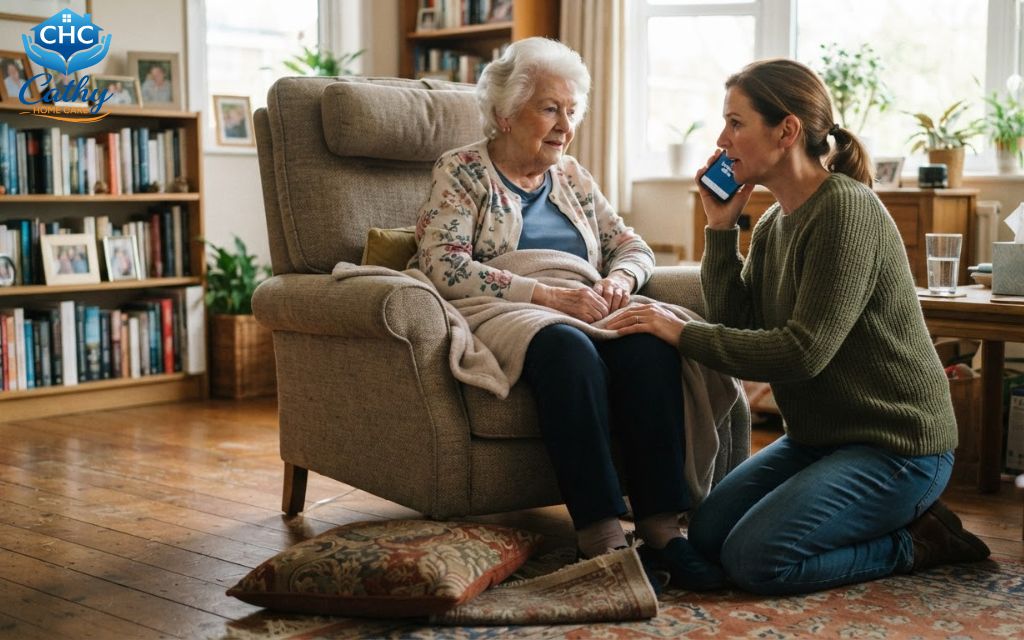
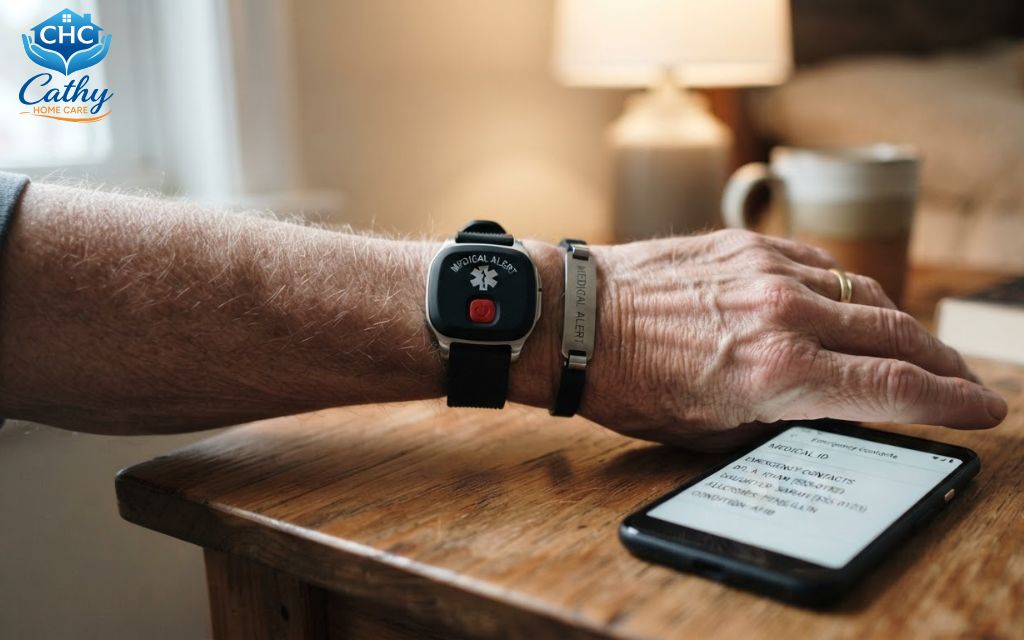
An emergency plan shortens time on the floor after a fall. Keep a charged phone in a pocket and save emergency contacts.
Medical alert pendants, wristbands, and fall-detection smartwatches can summon help, though NIA notes insurance rarely covers the fee. A therapist can teach safe ways to rise from the floor.
Fall prevention resources in Houston and Texas
Houston and Texas families can use local and state resources for home modifications, classes, and care funding.
Area Agency on Aging and the Eldercare Locator
Area Agencies on Aging coordinate services that help older adults stay at home. Over half of these agencies provide home modifications such as handrails and nonslip bath mats, NCOA reports. Call the Eldercare Locator at 800-677-1116 to reach the agency serving Houston and Harris County.
Community fall prevention classes
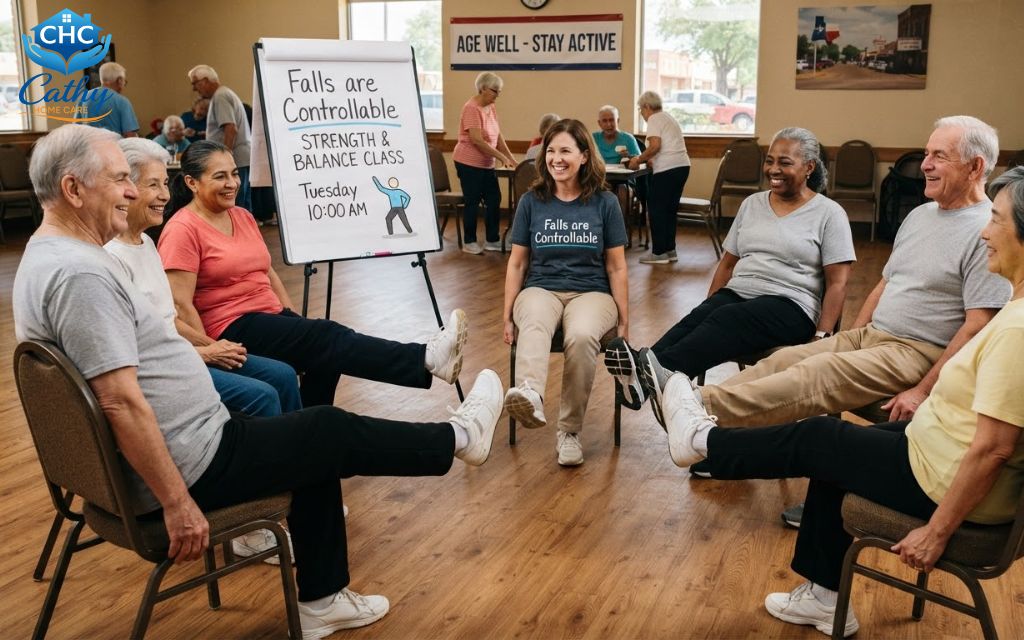
A Matter of Balance is an evidence-based program of 8 two-hour classes that lowers fear of falling and raises activity. Texas Area Agencies on Aging have offered it statewide since 2007, so ask your local agency about Houston classes.
Paying for in-home help
Payment for in-home help depends on the program and the person’s eligibility. Texas Medicaid’s Primary Home Care (PHC) program provides non-technical personal attendant services to eligible adults with functional limitations.
Medicare may cover doctor-ordered physical therapy services. Confirm eligibility with Texas Health and Human Services or the plan.

How Cathy Home Care supports safer living at home in Houston
Cathy Home Care has provided home care to Houston families since 2002. Our caregivers assist older adults and people with disabilities with bathing, dressing, mobility, meal preparation, and light housekeeping, the daily tasks where many falls begin.
We deliver Personal Care Services and Home Health Aide services, and we work with Texas Medicaid programs such as Primary Home Care for eligible clients. Our team speaks English, Vietnamese, Spanish, and Chinese, so families can plan care in a familiar language.
Knowing how to prevent falls for elderly at home protects both safety and independence. Contact Cathy Home Care to talk through in-home support for your loved one.

FAQs about fall prevention for seniors
What is the most common cause of falls in elderly people at home?
Most home falls result from a mix of factors, such as muscle weakness, poor balance, medication side effects, and household hazards. Common triggers include rugs, wet bathroom floors, and dizziness on standing.
What is the most effective fall prevention strategy for seniors?
A multifactor plan that combines exercise, medication review, vision care, and home safety changes works best. Strength and balance exercise sits at the center of most evidence-based programs.
Which medications increase fall risk in older adults?
Sedatives, sleep aids, antihistamines, some antidepressants, and blood pressure drugs can raise fall risk. The risk grows with 5 or more medicines, so ask a doctor or pharmacist for a full review.
Can a home care aide help prevent falls?
Yes. A home care aide lowers daily fall risk by assisting with bathing, toileting, dressing, and walking, and by keeping paths clear. Aides provide non-medical support and share changes with the family.
Does Medicaid or Medicare pay for help at home?
Coverage depends on the program and eligibility. Texas Medicaid programs such as Primary Home Care may cover personal attendant services for eligible adults, while Medicare covers certain skilled services a doctor orders.
Can falls be prevented completely?
No plan prevents every fall, but most fall risks respond to change. Health checks, regular exercise, safe routines, and a safer layout form the core of how to prevent falls for elderly at home.